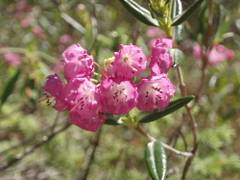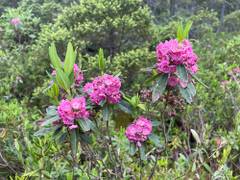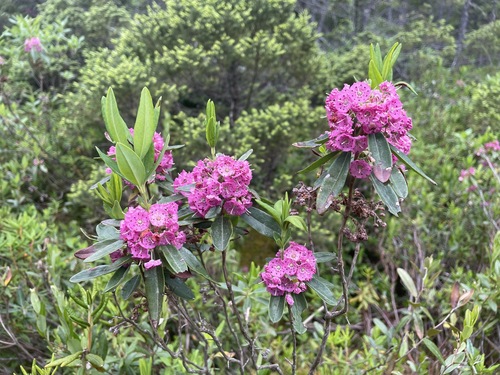
Kalmia, Genus, spp., Multiple species,
- Genus
- Multiple species
North America (mainly eastern); one species in Cuba
Overview
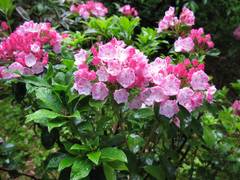
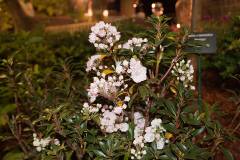
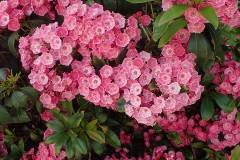
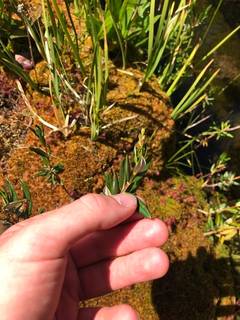
Kalmia is a genus of about ten species of evergreen and semi-evergreen shrubs in the heath family, Ericaceae, native mainly to North America, with one species in Cuba. The plants range from low, mat-forming shrubs to dense rounded bushes, and K. latifolia (mountain laurel) can reach 7 to 15 feet (2 to 4.5 m) tall. The leathery leaves are usually dark green and held year-round. In late spring and early summer the shrubs carry clusters of cup-shaped flowers in white, pink, and rose, often marked with darker spots inside; each bud is crimped, and the opening flower holds its ten stamens under tension in small pockets, so that a visiting insect triggers them to spring inward and dust it with pollen. The genus grows in acid, moist, peaty or sandy soils in woodland, heath, and bog margins across eastern and western North America. All parts of Kalmia contain grayanotoxins and are poisonous to people and to grazing animals, and honey made from the flowers can also be toxic. The plants need acid soil and do not tolerate lime, which limits where they grow.
Native Range
Kalmia is native mainly to North America, from eastern Canada and the eastern United States to the west coast, with one species native to Cuba. The plants grow in acid soils in woodland, heath, mountain slopes, and bog margins.Suggested Uses
Kalmia is used in acid-soil shrub borders, woodland gardens, and naturalistic and bog-edge plantings, and K. latifolia is grown as an evergreen flowering shrub and informal hedge. The evergreen foliage and late-spring flowers suit shaded and woodland settings. Because all parts are poisonous, the shrubs are positioned away from areas grazed by livestock.How to Identify
Appearance
Size & Dimensions
Height1' - 15'
Width/Spread1' - 12'
Bloom Information
Flowering occurs in late spring and early summer, roughly May to July depending on species and climate. The cup-shaped flowers are white, pink, or rose, often with darker internal spots, carried in rounded clusters. Bees are the main pollinators and trigger the spring-loaded stamens, though the resulting honey can be toxic.
Detailed Descriptions
Flower Description
white, pink, or roseFoliage Description
dark greenGrowing Conditions
Sun Requirements
Requires 3-8 hours of direct sunlight daily
• Full Sun: 6+ hours of direct sunlight
• Partial Shade: 3-6 hours of direct sunlight
• Full Shade: Less than 3 hours of direct sunlight
Care & Maintenance
Care Guide
Kalmia grows in part shade to full sun in acid, moist, humus-rich, well-drained soils and does not tolerate lime or long waterlogging. The genus is hardy in roughly USDA zones 4 to 9, with K. latifolia among the more cold-hardy species and others suited to cooler bog and mountain sites. Plants grow slowly and benefit from a mulch of leaf mould or pine needles that keeps the roots cool and moist. Full sun gives denser growth and more flowers where soil moisture is steady, while deep shade reduces flowering. All parts are poisonous if eaten, so the shrubs are positioned away from grazing animals. Propagation is by seed, by layering, or by cuttings, which can be slow to root.Pruning
Spent flower clusters can be removed after bloom to direct energy into growth rather than seed. Old, leggy plants tolerate harder cutting back to renew them, and light shaping is done after flowering. All parts, including sap exposed by pruning cuts, are poisonous if swallowed.Container Growing
Suitable for container growing
Minimum container size: 5 gallons