Iris, Genus, tuberosa, Species,
- Genus & species
widow iris
Overview
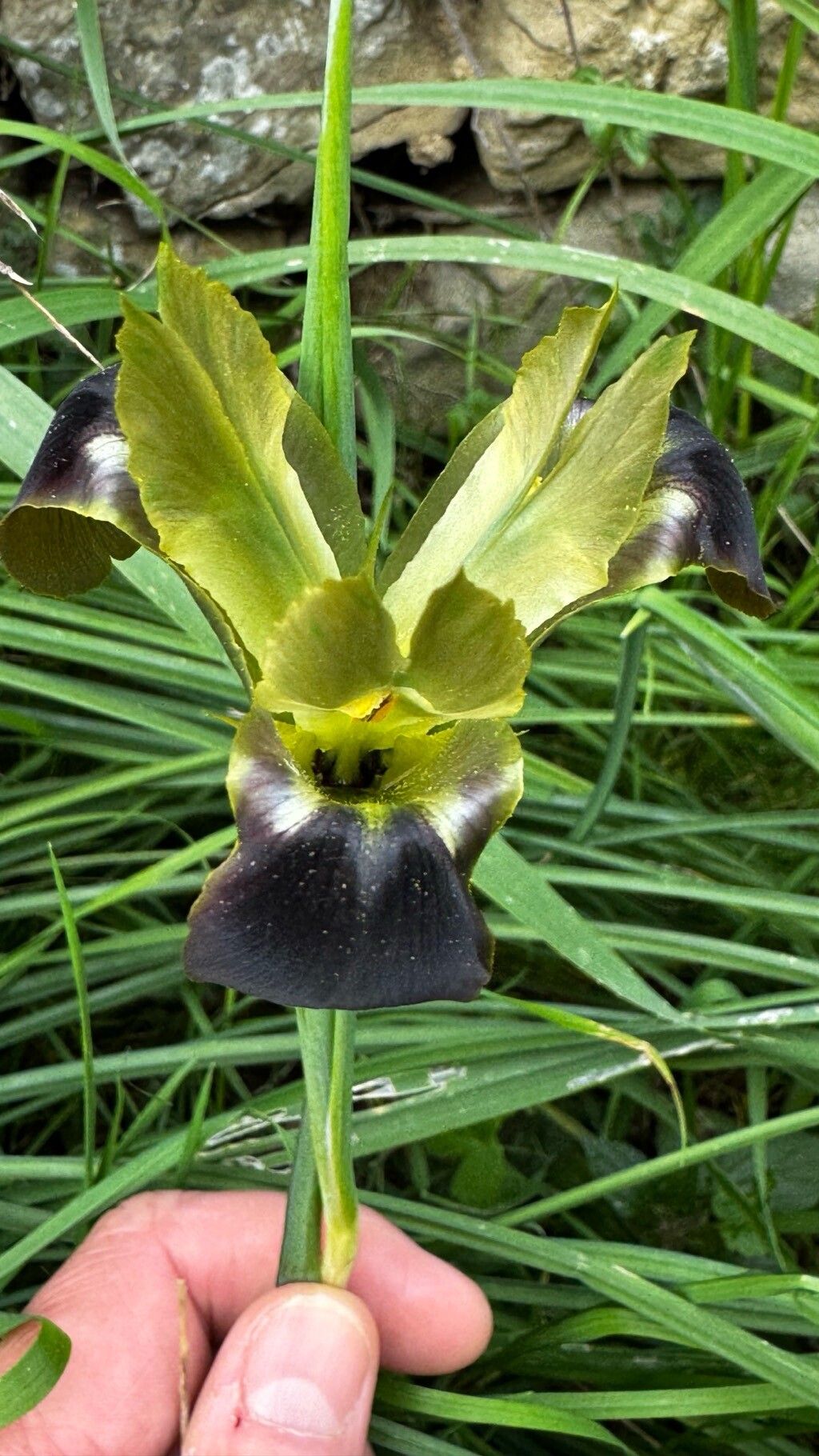
Iris tuberosa, formerly placed in the genus Hermodactylus, is a tuberous perennial in the Iridaceae family, growing 8-16 inches (20-40 cm) tall from finger-like underground tubers. Narrow, four-sided gray-green leaves appear in autumn and persist through winter, often longer than the flower stems. In late winter to early spring each stem carries a single iris flower 2-3 inches (5-8 cm) across, with translucent yellow-green standards and velvety falls in deep blackish-purple, giving rise to the common names widow iris and snake's head iris. The flowers are lightly scented. The plant grows from clusters of slender tubers and spreads slowly into colonies in suitable sites; it goes fully dormant by early summer. Iris tuberosa is hardy in USDA zones 7 through 9 and needs full sun and sharp drainage, with a warm, dry summer rest while dormant. Wet summer soil rots the tubers, and cold below its range kills them. Flowering can be sparse in shade, heavy soil, or after cool, wet summers. The leaves and tubers are toxic if eaten. Native to dry, rocky ground and scrub across the Mediterranean, it is grown in gravel gardens, sunny borders, and at the base of warm walls.
Native Range
Iris tuberosa is native to the Mediterranean region, from southern Europe to North Africa and the eastern Mediterranean, where it grows on dry, rocky slopes, scrub, and olive groves. It is grown in gardens with warm, dry summers.Suggested Uses
Grown in gravel gardens, sunny borders, rock gardens, and at the base of warm, sheltered walls, spaced 4-6 inches (10-15 cm) apart. The early flowers suit winter and early-spring display. It needs a hot, dry summer site to flower reliably.How to Identify
Appearance
Size & Dimensions
Height8" - 1'4"
Width/Spread4" - 6"
Colors
Bloom Information
Flowers in late winter to early spring, roughly February through March in mild climates, with one bloom per stem. Each flower lasts several days, and a clump flowers over two to three weeks. The plant then sets seed and goes dormant by early summer.
Detailed Descriptions
Flower Description
Yellow-green standards with blackish-purple fallsFoliage Description
Gray-greenGrowing Conditions
Sun Requirements
Requires 6-12 hours of direct sunlight daily
• Full Sun: 6+ hours of direct sunlight
• Partial Shade: 3-6 hours of direct sunlight
• Full Shade: Less than 3 hours of direct sunlight
Care & Maintenance
Care Guide
Grows in full sun and gritty, sharply drained soil, with a warm, dry rest while dormant in summer. Water needs are low; wet summer soil rots the dormant tubers. In USDA zones 7 through 9 it is hardy, while colder zones kill the tubers unless they are lifted and stored. Flowering can be sparse in shade, heavy soil, or after cool, wet summers. Leaves emerge in autumn and persist through winter, then die back by early summer. The tubers and leaves are toxic if eaten.Pruning
Spent flower stems are removed after bloom unless seed is wanted. The foliage is left to die back naturally through late spring, as it feeds the tubers for the next season. No other pruning is needed.Pruning Schedule
Prune: March–April
early spring
Container Growing
Suitable for container growing
Minimum container size: 1 gallons