Impatiens, Genus,
- Genus
impatiens
{I. walleriana}: eastern Africa (Tanzania and Mozambique). {I. hawkeri}: New Guinea and the Solomon Islands. The genus contains over 1,000 species worldwide.
Overview
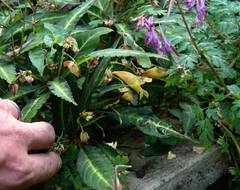
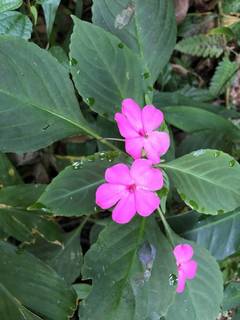
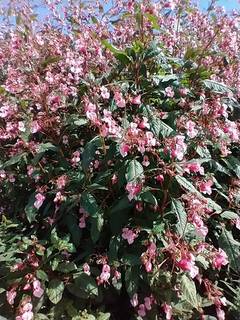
Impatiens is the genus commonly known as impatiens or busy lizzie, a mounding tender annual growing 6-24 inches (15-60 cm) tall and 10-18 inches (25-45 cm) wide. Five-petaled flat-faced flowers 1-3 inches (2.5-7.5 cm) form from May through October (22 weeks of bloom in shade) in white, pink, red, coral, salmon, lavender, orange, and bicolored. Family Balsaminaceae; the genus name Impatiens refers to the explosive seed pods that burst open at the slightest touch when ripe. Two horticultural species predominate: I. walleriana (busy lizzie, native to Tanzania and Mozambique) is the traditional shade impatiens with smaller oval mid-green leaves; I. hawkeri (New Guinea impatiens, native to New Guinea and the Solomon Islands) has larger flowers, lance-shaped often variegated leaves, and tolerates more sun. I. walleriana has been heavily affected by impatiens downy mildew (Plasmopara obducens) since approximately 2004, with sudden complete defoliation and plant collapse in humid summers; in regions where the pathogen is established (much of the eastern and southern United States), I. walleriana cannot be reliably grown — I. hawkeri (immune) and downy-mildew-resistant I. walleriana series ('Beacon', 'Imara XDR') are grown instead. Both species are tender and frost-killed; flowering stops at temperatures below 50°F (10°C). Plants are self-cleaning — spent flowers drop without intervention — and non-toxic to pets and humans.
Native Range
I. walleriana (busy lizzie) is native to eastern Africa, in the lowland forests and forest margins of Tanzania and Mozambique. I. hawkeri (New Guinea impatiens) is native to New Guinea and the Solomon Islands. The genus contains over 1,000 species worldwide, with major centers of diversity in tropical Africa, southern India, Sri Lanka, and Southeast Asia.Suggested Uses
Impatiens is grown in shade bedding, mixed shade containers, hanging baskets, and mass plantings under trees, in containers of at least 2 gallons (7.5 L), spaced 10-18 inches (25-45 cm) apart. The 22-week bloom in shade extends color in low-light beds. I. hawkeri or downy-mildew-resistant I. walleriana series are grown where impatiens downy mildew is established. Plants are self-cleaning and non-toxic. Grown as an annual outside zones 10-11.How to Identify
Appearance
Size & Dimensions
Height6" - 2'
Width/Spread10" - 1'6"
Colors
Bloom Information
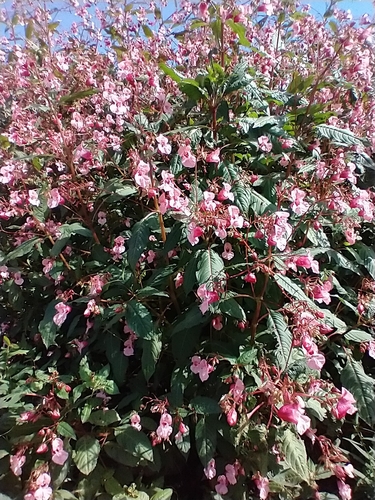
Flowering occurs from May through October, 22 weeks of continuous bloom in shaded sites. Five-petaled flat-faced flowers 1-3 inches (2.5-7.5 cm) form in white, pink, red, coral, salmon, lavender, orange, and bicolored. Bees visit the flowers. Plants are self-cleaning — spent flowers drop without intervention, and no deadheading is required.
Detailed Descriptions
Flower Description
Five-petaled, flat-faced flowers 1-3 inches (2.5-7.5 cm) across in white, pink, red, coral, salmon, lavender, orange, and bicolored; held above the foliage from May through October.Foliage Description
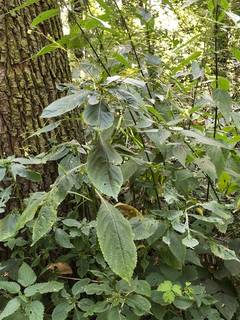
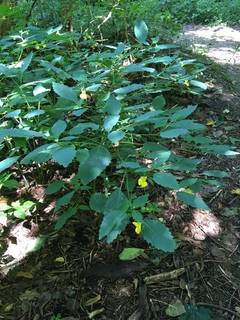
I. walleriana (busy lizzie): oval, slightly toothed, mid-green leaves on succulent stems. I. hawkeri (New Guinea impatiens): lance-shaped, larger, often variegated with yellow or red on the leaf surface.Growing Conditions
Sun Requirements
Requires 1-4 hours of direct sunlight daily
• Full Sun: 6+ hours of direct sunlight
• Partial Shade: 3-6 hours of direct sunlight
• Full Shade: Less than 3 hours of direct sunlight
Care & Maintenance
Care Guide
Grown in part shade to full shade with 1-4 hours of direct sun; New Guinea types tolerate more sun. Soil is moist, well-drained loam with a pH of 6.0-7.0. Plants require consistent moisture; foliage wilts rapidly in heat and dry soil. I. walleriana is susceptible to impatiens downy mildew (Plasmopara obducens); in regions where the pathogen is established, I. hawkeri (immune) or downy-mildew-resistant I. walleriana series ('Beacon', 'Imara XDR') are grown instead. Tender — frost-killed; grown as an annual outside zones 10-11. Plants are self-cleaning and non-toxic to pets and humans.Pruning
Deadheading is not required because plants are self-cleaning and drop spent flowers without intervention. Leggy stems are pinched back in midsummer (June-August) to encourage branching and a fuller habit.Pruning Schedule
Prune: June–August
summer
Container Growing
Suitable for container growing
Minimum container size: 2 gallons
Toxicity
Non-toxicPlanting Guide
Planting Methods & Timing
Planting Method
transplant
Indoor Start
10 weeks before last frost
Direct Sow Timing
Direct sowing is not commonly practiced. Seeds are started indoors 10-12 weeks before last frost; transplants set out after all frost danger has passed and soil temperature exceeds 60°F (15°C).
Plant Spacing
12 inches