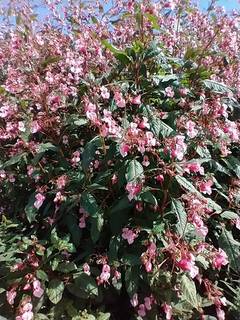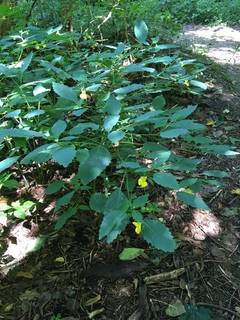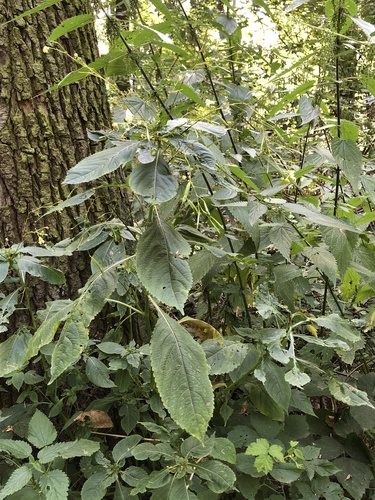
Impatiens, Genus, parviflora, Species,
- Genus & species
small balsam
SunPart Shade – Full Shade
WaterMedium
Overview
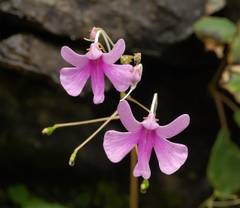
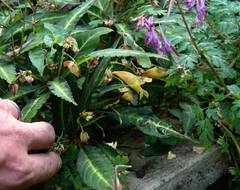
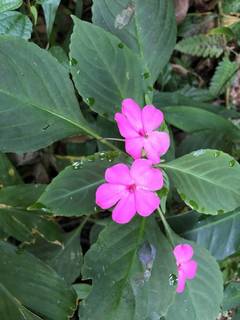
Impatiens parviflora is an annual in the balsam family, growing 8-24 inches (20-60 cm) tall on a soft, translucent, branching stem that roots at the lower nodes. Leaves are alternate, ovate, 2-5 inches (5-12 cm) long, with finely toothed margins and a soft texture. Small pale yellow flowers, about 0.4-0.6 inch (10-15 mm) long, hang from slender stalks and carry a short, straight spur, unlike the curved spur of related species. Flowering runs from June through autumn. The ripe seed capsules are tense and split explosively at a touch, flinging seeds up to several feet. The plant grows in shaded, moist woodland, riverbanks, and disturbed ground, and self-seeds heavily to form dense stands. In much of Europe it is an established invasive species that crowds out native woodland herbs. Plants are shallow-rooted and easily pulled, but the explosive seed dispersal spreads colonies quickly. Stems collapse with the first frost. Seedlings germinate in large numbers the following spring.
Native Range
Impatiens parviflora is native to Central Asia and parts of Siberia. It has spread widely across Europe as a naturalized woodland plant, where it is considered invasive. It grows in shaded, moist soils along woodland floors and streambanks.Suggested Uses
Rarely planted deliberately, this species appears mostly as a self-sown plant of shady, moist ground. In its naturalized range it is more often managed or removed than cultivated. Small bees and hoverflies visit the flowers for nectar.How to Identify
Appearance
Size & Dimensions
Height8" - 2'
Width/Spread8" - 1'4"
Bloom Information
Detailed Descriptions
Foliage Description
greenGrowing Conditions
Sun Requirements
Requires 2-6 hours of direct sunlight daily
• Full Sun: 6+ hours of direct sunlight
• Partial Shade: 3-6 hours of direct sunlight
• Full Shade: Less than 3 hours of direct sunlight
Water & Climate
Water Needs
Care & Maintenance
Care Guide
Plants grow in part to full shade in moist, humus-rich, well-drained soil and tolerate deep woodland shade. Consistent moisture supports growth, while dry soil causes early wilting and seed set. The species self-seeds freely and can form dense colonies, and is treated as an invasive plant in many European woodlands. No fertilizing or staking is needed for this fast-growing annual. Plants collapse at the first frost and regrow from seed the next spring. Shallow roots make hand-removal straightforward.Pruning
No pruning is needed for this soft-stemmed annual. Removing plants before the capsules ripen limits the explosive spread of seed. Spent plants are cleared after frost.Container Growing
Suitable for container growing
Minimum container size: 1 gallons
Toxicity
Non-toxicPlanting Guide
Planting Methods & Timing
Planting Method
direct sow