Impatiens, Genus, glandulifera, Species,
- Genus & species
policeman's helmet
Western Himalayas (India, Pakistan, Nepal)
SunPart Shade – Full Sun
WaterHigh
Overview
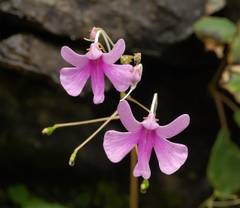
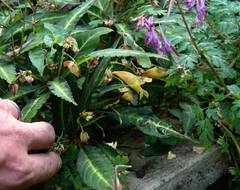
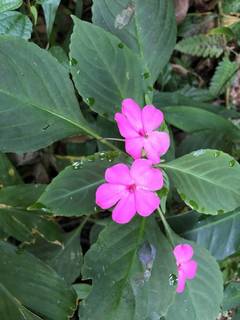
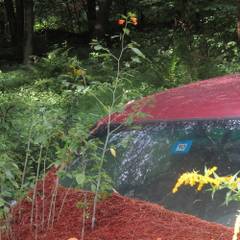
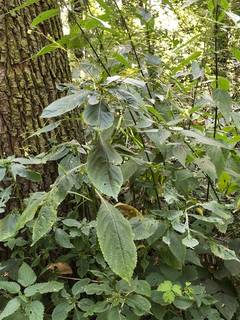
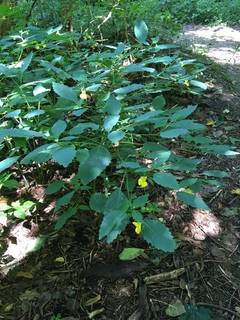
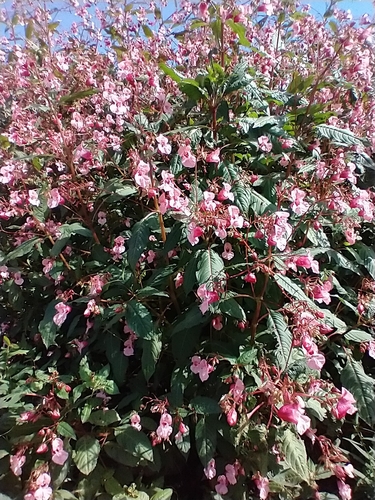
Impatiens glandulifera is a massive annual in the balsam family (Balsaminaceae) reaching 3-10 feet (0.9-3 m) tall with an 18-36 inch (45-90 cm) spread. Few annual herbaceous plants in the Pacific Northwest reach similar stature within a single growing season. Stems are erect, succulent, hollow, smooth, green to reddish-purple, up to 2 inches (5 cm) in diameter at the base, with swollen nodes. Leaves are opposite or in whorls of 3, lance-shaped to elliptic, 4-8 inches (10-20 cm) long, with sharply serrate margins and red glands (the source of the name glandulifera) at the base of each leaf. Flowers are large, 1-1.5 inches (2.5-4 cm) long, pink to purple (occasionally white), helmet-shaped with a short recurved spur, borne in racemes of 2-14 from the upper leaf axils, carrying a sweet fragrance. Fruit is a club-shaped capsule 0.6-1 inch (15-25 mm) long that explodes when ripe, projecting seeds up to 20 feet (6 m). A single plant produces 500-4,000 seeds. Seeds disperse by the explosive mechanism and by water along streams and rivers. I. glandulifera is listed as a Class B noxious weed in Washington State. Dense monoculture stands form along waterways, outcompeting native riparian vegetation.
Native Range
Impatiens glandulifera is native to the western Himalayas of India, Pakistan, and Nepal, occurring along montane stream corridors at 6,000-13,000 feet (1,800-4,000 m). Introduced to Europe in 1839 as an ornamental and to North America subsequently, the species is widely naturalized in the Pacific Northwest, northern Europe, and parts of New Zealand, primarily along rivers, streams, and wet disturbed areas.Suggested Uses
Used in noxious weed identification training and community-organized invasive species removal along Pacific Northwest waterways. The explosive seed dispersal mechanism is used in botanical teaching alongside the native I. capensis. Studied in riparian invasion ecology, pollinator competition (the species outcompetes native flowers for bumblebee visits due to high nectar production), and seed dispersal by water (hydrochory).How to Identify
Appearance
Size & Dimensions
Height3' - 10'
Width/Spread1'6" - 3'
Bloom Information
Flowers appear July through October. Individual flowers last 2-3 days. Racemes of 2-14 flowers bloom sequentially over 6-8 weeks. In the Pacific Northwest, peak bloom occurs in August through September. The sweet fragrance attracts bumblebees, which are the primary pollinators. Capsules mature 3-4 weeks after pollination and explode at the slightest touch.
Detailed Descriptions
Flower Description
Pink to purple (occasionally white) helmet-shaped flowers 1-1.5 inches (2.5-4 cm), with short recurved spur and sweet fragranceFoliage Description
Dark green, lance-shaped to elliptic, opposite or in whorls of 3, with sharply serrate margins and red glands at the leaf baseGrowing Conditions
Sun Requirements
Requires 4-8 hours of direct sunlight daily
• Full Sun: 6+ hours of direct sunlight
• Partial Shade: 3-6 hours of direct sunlight
• Full Shade: Less than 3 hours of direct sunlight