Impatiens, Genus, capensis, Species,
- Genus & species
spotted jewelweed
Eastern and central North America, from Newfoundland to Saskatchewan and south to Florida and Oklahoma; moist to wet shaded habitats including streambanks, floodplains, wet meadows, ditches, and moist woodland edges from sea level to approximately 5,000 feet (1,500 m).
SunPart Shade – Full Shade
WaterHigh
Overview
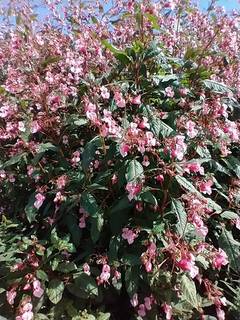
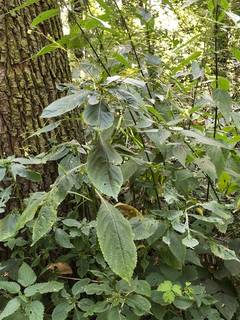
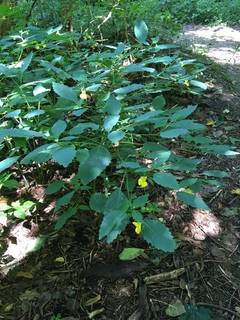
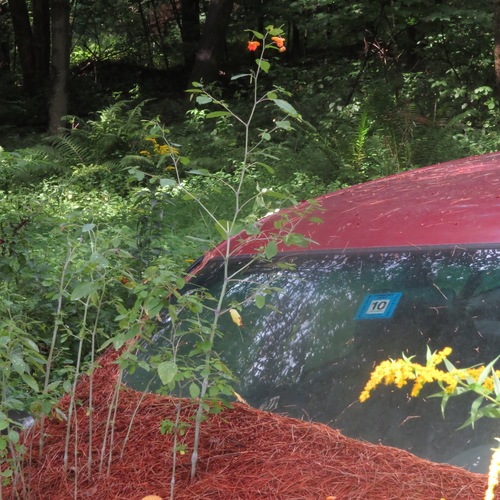
Impatiens capensis is a succulent annual reaching 24-60 inches (60-150 cm) tall and 12-24 inches (30-60 cm) wide, native to eastern and central North America. Stems are erect, smooth, translucent, succulent, and visibly swollen at the nodes, with a watery glassy appearance. Leaves are alternate, ovate to elliptic, 1.5-4 inches (4-10 cm) long, with coarsely toothed (crenate-serrate) margins. When a leaf is submerged in water, the surface traps a silvery air layer from its superhydrophobic cuticle, giving a jewel-like appearance that is the source of the common name jewelweed. Flowers are funnel-shaped with a recurved spur, 0.8-1.2 inches (20-30 mm) long, orange with reddish-brown spots, pendulous on slender peduncles from the upper leaf axils, from June through September. Seed capsules 0.6-1 inch (15-25 mm) long open explosively at the lightest touch when ripe, curling back elastically and projecting seeds up to 6 feet (1.8 m), the source of the second common name touch-me-not. A single plant produces 200-1,500 seeds. Both open insect-pollinated flowers and closed self-pollinated flowers are produced, a breeding system known as cleistogamy that reduces reliance on pollinators in shaded sites. In the Pacific Northwest, the species is established in moist riparian habitat west of the Cascades.
Native Range
Impatiens capensis is native to eastern and central North America, from Newfoundland to Saskatchewan and south to Florida and Oklahoma, where it grows in moist to wet shaded habitats including streambanks, floodplains, wet meadows, ditches, and moist woodland edges from sea level to approximately 5,000 feet (1,500 m). In the Pacific Northwest, the species is established in moist riparian areas west of the Cascades.Suggested Uses
Impatiens capensis is grown in native plant gardens, shaded rain gardens, wet woodland plantings, and hummingbird gardens in its native range of eastern and central North America, where the native-range designation and the hummingbird-pollinated flowers support regional ecological function. The species is used in native plant identification courses and in teaching ballistic seed dispersal; the touch-sensitive capsule is a popular demonstration in botanical teaching. The silvery submerged-leaf effect from the superhydrophobic cuticle is studied in biomimetics research. Not grown in dry, sunny sites, where leaves scorch and flowering drops substantially.How to Identify
Appearance
Size & Dimensions
Height2' - 5'
Width/Spread1' - 2'
Bloom Information
Funnel-shaped pendulous flowers 0.8-1.2 inches (20-30 mm) long open from June through September, with individual flowers lasting 2-3 days and new flowers forming continuously in the upper leaf axils for a 10-14 week bloom span. In the Pacific Northwest, peak bloom runs through July and August. Both open insect-pollinated (chasmogamous) flowers and closed self-pollinated (cleistogamous) flowers are produced in the same plant, the latter providing seed set in the absence of pollinators. Bumblebees and hummingbirds work the open flowers.
Detailed Descriptions
Flower Description
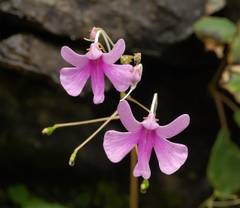
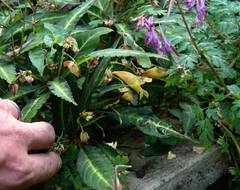
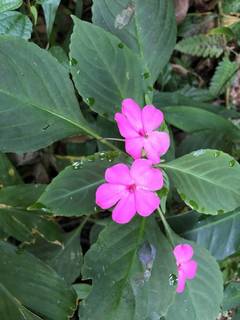
Orange with reddish-brown spots; funnel-shaped flowers 0.8-1.2 inches (20-30 mm) long with a recurved spur, pendulous on slender peduncles from the upper leaf axilsFoliage Description
Light to medium green; ovate to elliptic, alternate, 1.5-4 inches (4-10 cm) long, with coarsely toothed (crenate-serrate) margins; held on succulent translucent stems swollen at the nodesGrowing Conditions
Sun Requirements
Requires 2-6 hours of direct sunlight daily
• Full Sun: 6+ hours of direct sunlight
• Partial Shade: 3-6 hours of direct sunlight
• Full Shade: Less than 3 hours of direct sunlight