Image 1 of 7
1 / 7
Plant Reference
Impatiens, Genus, omeiana, Species,
- Genus & species
golden impatiens
Western China (Sichuan Province, Mount Omei / Emeishan at 3000-6000 feet / 900-1800 m; moist shaded forest floors)
Overview
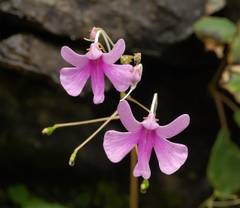
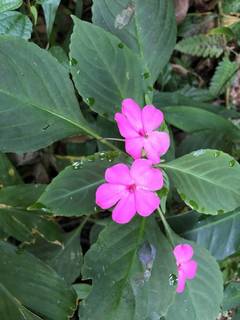
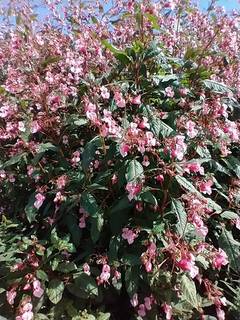
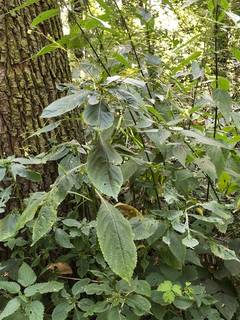
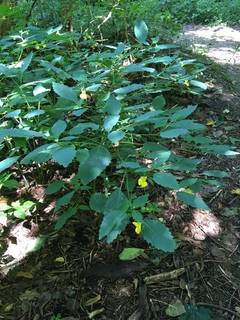
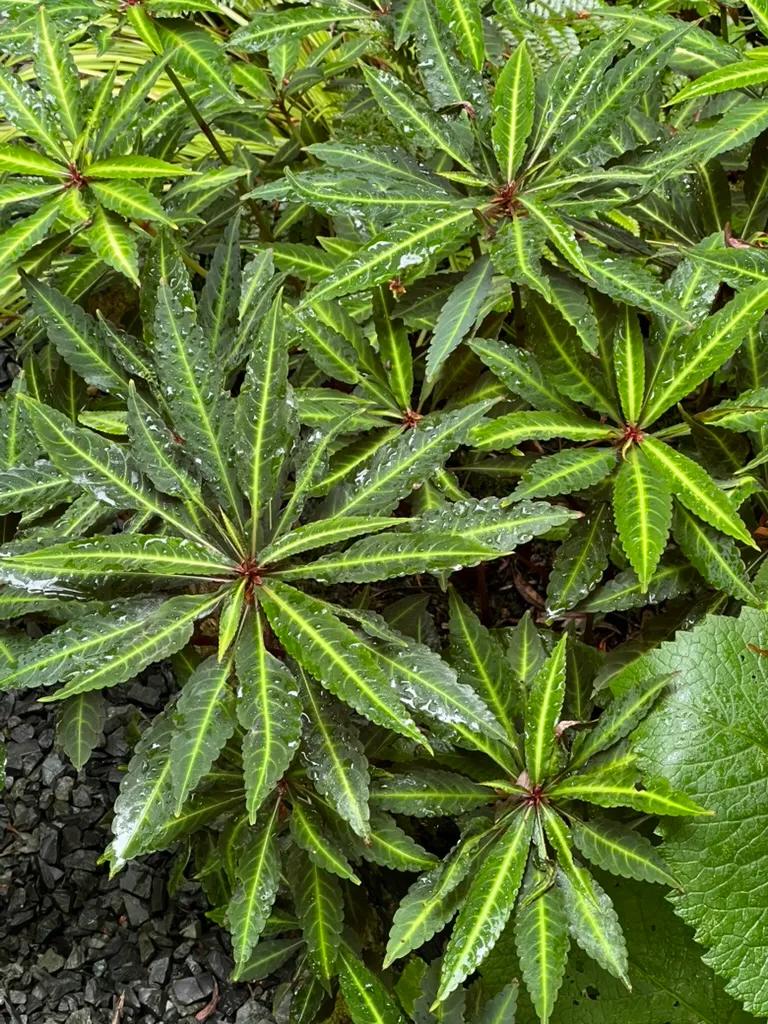
Impatiens omeiana is a spreading herbaceous perennial in the balsam family (Balsaminaceae) reaching 8–12 inches (20–30 cm) tall with a spread of 18–24 inches (45–60 cm). This Chinese species carries a different ornamental profile than the annual bedding impatiens familiar to most gardeners — the plant is grown primarily for foliage rather than for the small autumn flowers. Elliptic to ovate leaves run 3–5 inches (8–13 cm) long, dark olive-green in base color with a prominent central band of gold to creamy-yellow that follows the midrib and the primary leaf veins, which builds a variegated pattern that intensifies under shaded growing conditions. The leaves carry a succulent texture and arrange in whorls along the stems. Small pale yellow to butter-yellow snapdragon-like flowers 0.75–1 inch (2–2.5 cm) long open in September and October — later than most garden perennials flower and filling a bloom-time gap in the shade garden calendar. The plant spreads through thick fleshy surface-level stolons that root at the nodes and extend the colony outward through the growing seasons. Foliage runs semi-evergreen in mild climate zones. Growth rate runs moderate. Hardy to zone 6.
Native Range
Impatiens omeiana is native to western China in Sichuan Province, where wild populations grow on Mount Omei (Emeishan) at elevations between 3,000 and 6,000 feet (900–1,800 m). The species grows on moist shaded forest floors in the understory of mixed-forest canopy.Suggested Uses
Grown as a shade groundcover, woodland understory plant, or container accent at 18–24 inch (45–60 cm) spacing. The gold-banded foliage carries season-long ornamental interest in deep shade where few other variegated plants perform reliably, which gives the species a working role in shade-garden compositions. The autumn flower window fills a calendar gap in the shade-garden bloom sequence between the summer-blooming shade perennials and the winter dormancy period. Spreading stolons colonize over time and can fill large shaded ground areas across several growing seasons. Slugs run a persistent problem in wet weather periods and may require management. Full-sun positions (which bleach the variegation), dry soils, and exposed windy sites are all unsuitable given the cultural profile.How to Identify
Appearance
Size & Dimensions
Height8" - 1'
Width/Spread1'6" - 2'
Bloom Information
Pale yellow to butter-yellow snapdragon-like flowers 0.75–1 inch (2–2.5 cm) long open during September and October across a 4–6-week bloom window. The autumn bloom time runs later than most shade perennials flower, which fills a calendar gap in the shade garden where few other plants contribute flower color during the early autumn transition.
Detailed Descriptions
Flower Description
Pale yellow to butter-yellow snapdragon-like flowers 0.75-1 inch long; autumn-bloomingFoliage Description
Dark olive-green with prominent gold to creamy-yellow central band along midrib and primary veins; 3-5 inches; succulent-texturedGrowing Conditions
Sun Requirements
Requires 1-3 hours of direct sunlight daily
• Full Sun: 6+ hours of direct sunlight
• Partial Shade: 3-6 hours of direct sunlight
• Full Shade: Less than 3 hours of direct sunlight
Care & Maintenance
Care Guide
Grows in full shade to partial shade in moist humus-rich well-drained soil at pH 5.5–7.0, tolerating loam. Hardy to zone 6. Foliage variegation runs vivid under shaded conditions — direct sun exposure bleaches the gold central band and weakens the variegation pattern across the full leaf. The fleshy stolons spread along the soil surface rather than extending below ground, so light mulch around the colony protects the stolons from drying without burying them deeply. The cultivar runs semi-evergreen in mild winter zones and dies back to the stolon network in colder zones before regrowth emerges in spring. Slugs can damage the succulent foliage and may require management during wet weather periods.Pruning
Spent flower stems are removed in late autumn after bloom ends. Winter-damaged foliage is cleaned up in spring as new growth emerges from the stolon network. Regular pruning runs minimal across the full growing season. Thinning overcrowded stolons is done when the colony has spread beyond the allocated space and stolon density has reduced growing vigor within the central colony area.Pruning Schedule
Prune: November
fall
Container Growing
Suitable for container growing
Minimum container size: 3 gallons