Helleborus, Genus, atrorubens, Species,
- Genus & species
dark red hellebore
Slovenia and northwestern Croatia in southeastern Europe; deciduous forests and woodland edges on calcareous soils at elevations of 300-1,500 feet (100-450 m); the species is considered vulnerable in parts of its native range due to habitat loss and wild collection.
Overview
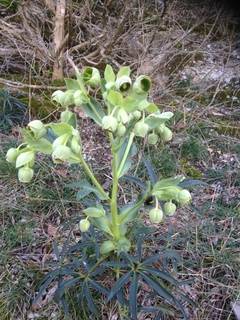
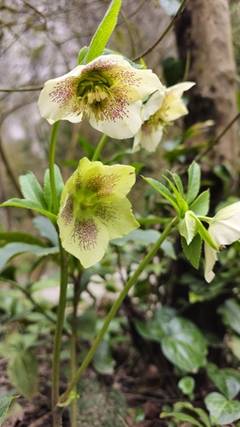
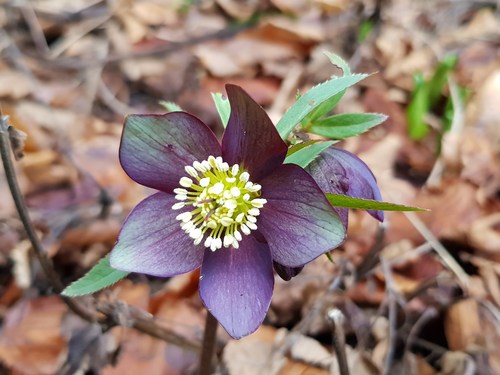
Helleborus atrorubens is a deciduous herbaceous perennial in the buttercup family (Ranunculaceae) reaching 12-18 inches (30-45 cm) tall and 12-15 inches (30-38 cm) wide. The species is one of the parents of many Helleborus × hybridus garden hybrids, contributing the deep purple-red flower color to the breeding pool that produced the dark-toned hybrid hellebores in widespread garden use. Basal leaves are pedately divided into 7-11 narrow lance-shaped segments 4-8 inches (10-20 cm) long with serrated margins, emerging after or during flowering and persisting through summer before dying back in autumn. The fully deciduous habit (with no foliage present at flowering time) separates this species from the evergreen H. × hybridus, where leathery green leaves persist through winter alongside the flowers. Flower stems arise directly from the crown in late winter, bearing 2-5 nodding cup-shaped flowers 1.5-2 inches (4-5 cm) across. The showy floral parts are 5 waxy sepals in deep violet-purple to dark red-brown on the exterior (sometimes greenish on the interior), with a heavy waxy texture that gives the sepals an extended functional period: the tubular green to yellow-green nectaries (which are modified petals in Helleborus) and the numerous stamens are clustered at the flower center. As the flower ages, the sepals gradually fade from deep purple-red to dusty green, but they persist on the developing seed cluster for 4-6 weeks rather than dropping the way true petals would. All plant parts contain bufadienolide cardiac glycosides (including hellebrin and helleborin) and steroidal saponins, secondary metabolites that disrupt cardiac sodium-potassium pump function and cause cellular irritation when ingested. Symptoms after ingestion include gastrointestinal irritation (vomiting and diarrhea) and potential cardiac arrhythmia in larger doses, with the toxicity profile shared across the Helleborus genus. Sap contact can produce contact dermatitis in sensitive individuals from the same compound class. Hardy in USDA zones 5-9 (-20°F / -29°C).
Native Range
Helleborus atrorubens is native to a restricted range in southeastern Europe, primarily Slovenia and northwestern Croatia, where it grows in deciduous forests and woodland edges on calcareous soils at elevations of 300-1,500 feet (100-450 m). The species is considered vulnerable in parts of its native range due to habitat loss from forestry and development, and to commercial wild collection for the horticultural trade. Plants in widespread garden cultivation are nursery-propagated rather than wild-collected.Suggested Uses
Used in woodland gardens and shaded borders at 12-15 inch (30-38 cm) spacing, where the late-winter flowers appear before most other perennials begin growth. Plantings beneath deciduous trees (which are leafless during the late-winter hellebore bloom window) work well, since the species receives full winter sun while the canopy is bare and tolerates the partial summer shade once the canopy fills. Hybridization programs use this species as a key parent of dark-colored H. × hybridus selections, contributing the deep violet-purple to dark red-brown flower color that distinguishes the dark-toned hybrid lines. Combinations with snowdrops (Galanthus), winter aconite (Eranthis hyemalis), and early crocus produce a succession of late-winter bloom across a 6-8 week window from January through March in mild Pacific Northwest gardens.How to Identify
Appearance
Size & Dimensions
Height1' - 1'6"
Width/Spread1' - 1'3"
Bloom Information
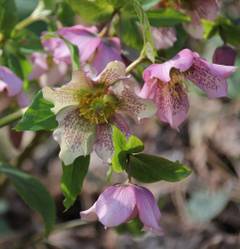
Deep violet-purple to dark red-brown nodding cup-shaped flowers 1.5-2 inches (4-5 cm) across open from February through March in the Pacific Northwest, often before the new season foliage emerges, with bloom progressing on each stem from the lowest flower upward. The showy sepals (which are not true petals) persist for 4-6 weeks as they gradually fade from the deep purple-red through dusty purple to green, extending the visual display well beyond the active floral function. Pollination is by early-season bumblebees and honeybees foraging for nectar in the tubular nectaries when little other forage is available; the late-winter bloom timing fills a critical period in the bee year between the last winter aconite and the first spring crocus.
Detailed Descriptions
Flower Description
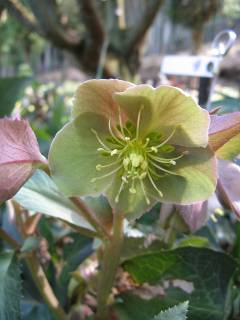
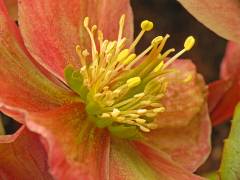
Deep violet-purple to dark red-brown nodding cup-shaped flowers 1.5-2 inches (4-5 cm) across with 5 waxy sepals (the showy floral parts in Helleborus, which produces no true petals) surrounding tubular green to yellow-green nectaries and numerous stamensFoliage Description
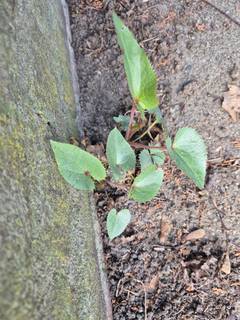
Dark green; pedately divided basal leaves with 7-11 narrow lance-shaped segments 4-8 inches (10-20 cm) long carrying serrated margins; foliage emerges after or during flowering and persists through summer before yellowing and dying back in autumnGrowing Conditions
Sun Requirements
Requires 2-5 hours of direct sunlight daily
• Full Sun: 6+ hours of direct sunlight
• Partial Shade: 3-6 hours of direct sunlight
• Full Shade: Less than 3 hours of direct sunlight
Care & Maintenance
Care Guide
Plant in partial to full shade in humus-rich moist but well-drained neutral to alkaline soil at pH 6.5-8.0, with spacing of 12-15 inches (30-38 cm) apart in mass plantings. Acidic soils are amended with garden lime before planting because the species native calcareous-soil habitat reflects an ecological pH preference rather than a tolerance. Apply 2 inches (5 cm) of leaf mould or composted bark mulch annually in autumn, keeping mulch away from the crown to avoid trapping moisture against the dormant tissue. Watering is regular through the first growing season to establish the root system, and supplemental irrigation is needed only during extended summer drought once mature. Balanced granular fertilizer in late winter as the flower buds develop supports both the bloom and the early foliage expansion. Sap contains the bufadienolide cardiac glycosides and steroidal saponins shared across the Helleborus genus, and skin contact during cutting or division work produces contact dermatitis in sensitive individuals from these same compounds. Old flower stems are cut at the base after seed dispersal in early summer if self-sowing is not desired; allowing seed to drop produces seedlings that flower in 3-4 years.Pruning
Dead foliage is removed in late autumn or early winter as the plant enters dormancy, and the deciduous habit means the plant is leafless through the late winter bloom window without the leaf-removal step required for evergreen H. × hybridus to expose the flowers. Spent flower stems are cut to ground level after seed dispersal in early summer, typically June, to direct plant energy to crown development for the following year. No other pruning is needed.Pruning Schedule
Prune: November–December
fallwinter
Container Growing
Suitable for container growing
Minimum container size: 3 gallons