Image 1 of 10
1 / 10
William Pembroke at English Wikipedia, no rights reserved (CC0) · Wikimedia Commons
Gladiolus, Genus, ×, Hybrid, hortulanus, Species,
- Genus & species
- Hybrid
large-flowered gladiolus
Garden origin; parent species from South Africa
Overview
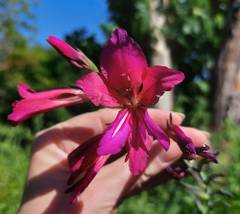
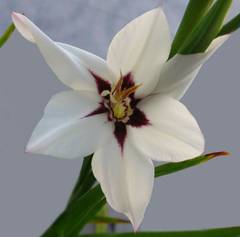
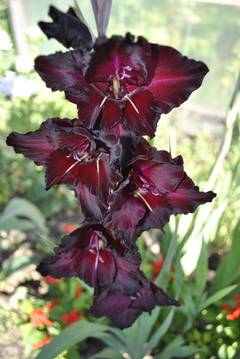
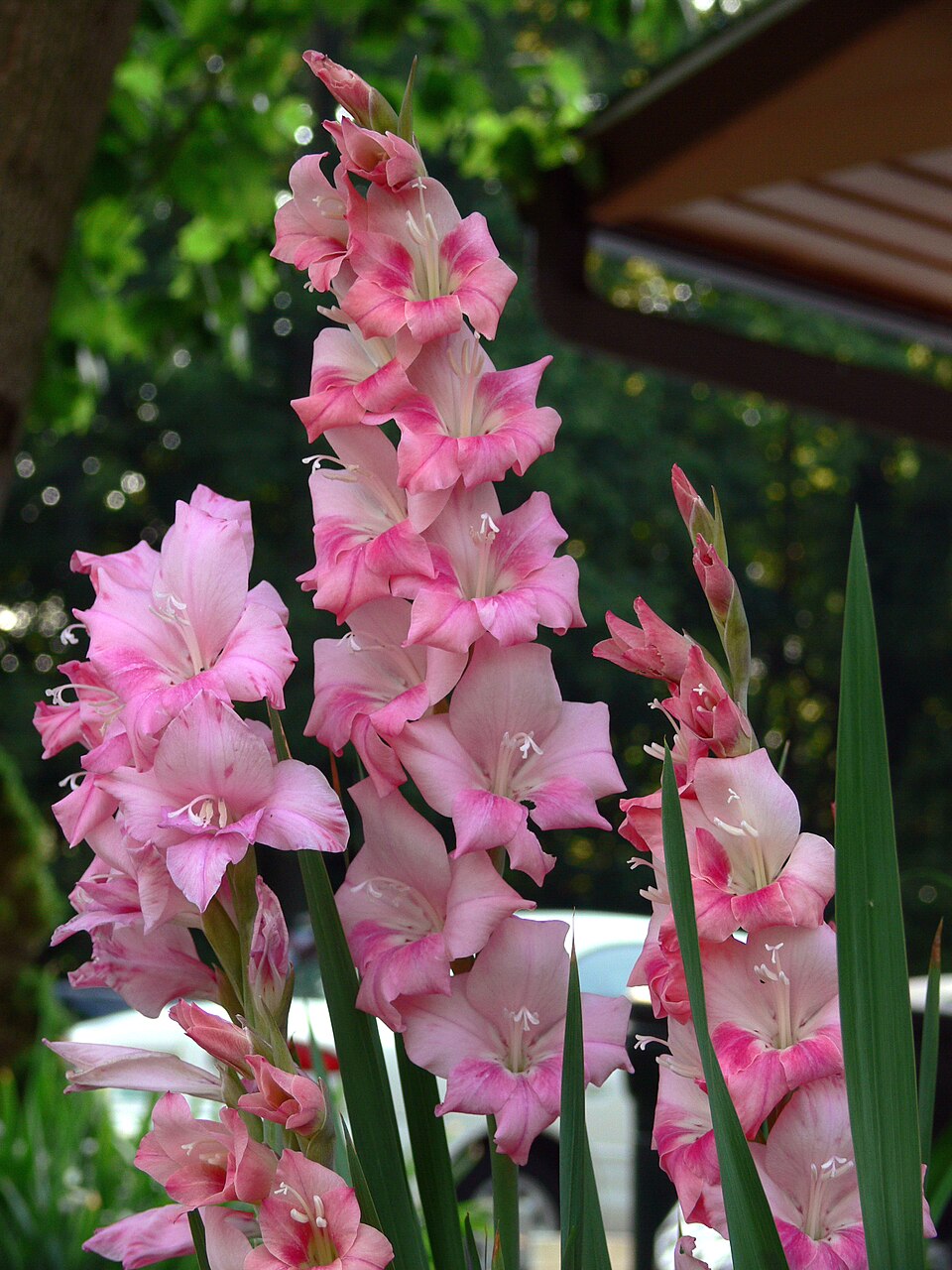
Gladiolus × hortulanus is a cormous perennial grown for its tall flower spikes, reaching 2–5 feet (60–150 cm) in bloom and 6–10 inches (15–25 cm) wide. This large-flowered garden group is a complex hybrid of several southern African Gladiolus species. Flat, sword-shaped green leaves rise in a fan from a rounded underground corm, and a single unbranched spike carries 12–20 funnel-shaped flowers along one side. Flowers 2–5 inches (5–13 cm) across open from the bottom of the spike upward, in colors covering white, pink, red, orange, yellow, purple, and bicolors, many with throat markings. Bloom lasts about one to two weeks per spike in summer, roughly 70–100 days after the corm is planted. The tall spikes are top-heavy and often need staking, and they bend toward the light if not turned. Corms are hardy only to about USDA zone 8, and in colder regions they are lifted and stored over winter. Thrips can scar the leaves and flowers, and corms rot in cold, wet soil. The corms contain compounds that are toxic to pets if eaten.
Native Range
Gladiolus × hortulanus is a hybrid group of garden origin with no wild range. Its parent species are native to South Africa, where wild gladioli grow in grasslands and on rocky slopes. The garden hybrids are propagated by cormels and corm division.Suggested Uses
Grown in cutting gardens and summer borders for its tall spikes, spaced 4–6 inches (10–15 cm) apart and often planted in blocks for mutual support. It is a long-lasting cut flower used in arrangements. Shorter selections are grown in large containers in sunny spots.How to Identify
Appearance
Size & Dimensions
Height2' - 5'
Width/Spread6" - 10"
Bloom Information
Flowering occurs in summer, about 70–100 days after the corm is planted, so staggered plantings extend bloom from early summer into fall. Each spike opens its flowers from the bottom upward over one to two weeks. The flowers draw bees, butterflies, and hummingbirds. Once a spike finishes it does not rebloom, though the corm flowers again the following year.
Detailed Descriptions
Flower Description
white, pink, red, orange, yellow, purple, and bicolorsFoliage Description
greenGrowing Conditions
Sun Requirements
Requires 6-10 hours of direct sunlight daily
• Full Sun: 6+ hours of direct sunlight
• Partial Shade: 3-6 hours of direct sunlight
• Full Shade: Less than 3 hours of direct sunlight
Care & Maintenance
Care Guide
Full sun and well-drained soil at pH 6.0–7.0 suit Gladiolus × hortulanus, with corms planted 4–6 inches (10–15 cm) deep after the soil warms in spring. Even moisture during growth and flowering supports tall spikes, while waterlogged soil rots the corms. The tall stems are staked or grown among supporting plants to stay upright. In USDA zones 8 and warmer the corms overwinter in the ground; in colder zones they are lifted after the foliage yellows and stored dry and frost-free. A balanced feeding as the spikes begin to form supports flowering.Pruning
Cutting the flower spike for the vase, or removing it once flowering ends, prevents seed formation and channels resources back to the corm. The leaves are left in place until they yellow, since they rebuild the corm for next year. Foliage is removed at the base only after it has died down.Pruning Schedule
Prune: September–October
fall
Container Growing
Suitable for container growing
Minimum container size: 3 gallons