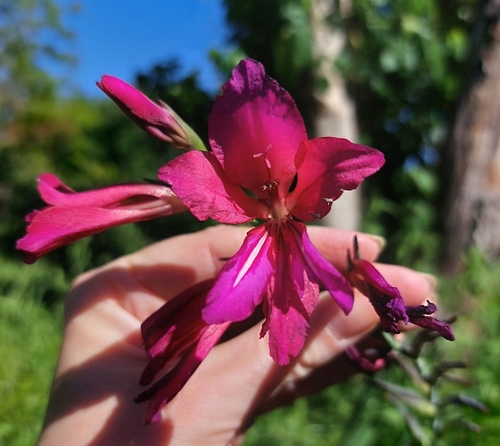
© Bridget McCall, some rights reserved (CC-BY-NC-SA) · iNaturalist
Gladiolus, Genus, communis, Species,
- Genus & species
gladiolus
Overview
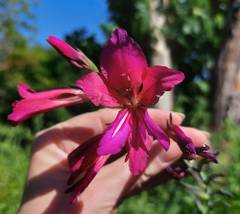
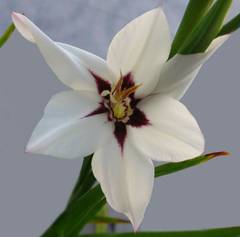
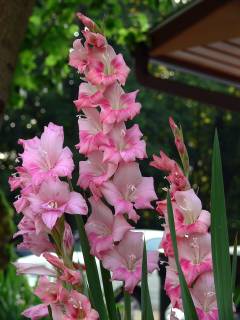
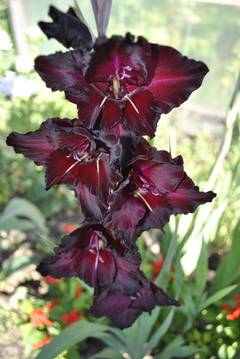
Gladiolus communis is a corm-grown gladiolus (sword lily), growing 24–48 inches (60–120 cm) tall and 6–12 inches (15–30 cm) wide. Pink to magenta funnel-shaped florets 2–3 inches (5–7 cm) arranged along one side of a tall flower spike, opening sequentially from bottom to top over 7–14 days. The genus name comes from the Latin 'gladius' (sword), referring to the sword-shaped leaves 12–24 inches (30–60 cm) long and 0.5–1 inch (12–25 mm) wide. Grows from a corm planted 4–6 inches (10–15 cm) deep in spring after the last frost — the corm is a solid bulb-like structure (not layered like a true bulb). Blooms 70–100 days after planting. Stagger planting dates at 2-week intervals to extend the bloom season. In cold zones (below zone 7), dig corms after the foliage yellows in fall and store in dry peat at 35–50°F (2–10°C) over winter. In zones 7–10, corms can remain in the ground year-round with mulch protection. Thrips are the primary pest — they cause silvered streaks on foliage and distorted, discolored flowers. Gladiolus rust and fusarium corm rot. The tall flower spikes may require staking in exposed positions. Mildly toxic to dogs and cats. Native to southern Europe and the Mediterranean. Full sun (6+ hours). Well-draining soil. Non-hardy corms rot in cold wet winter soil. Growth rate is fast from corm. Zones 6–10. Widely grown as a cut flower — harvest when the lowest 2–3 florets open.
Native Range
The species G. communis is native to southern Europe and the Mediterranean region. The genus Gladiolus includes approximately 300 species, most native to sub-Saharan Africa.Suggested Uses
Grown in borders and containers of 3+ gallons (12+ liters) in full sun. Space corms 6 inches (15 cm) apart. Widely used as a cut flower — harvest when the lowest 2–3 florets open. Stagger planting for extended bloom. Dig and store corms in cold zones. Mildly toxic to pets.How to Identify
Appearance
Size & Dimensions
Height2' - 4'
Width/Spread6" - 1'
Bloom Information
Summer (June–August), with individual spikes lasting 7–14 days as florets open bottom to top. 70–100 days from corm planting to bloom. Stagger planting dates at 2-week intervals to extend the season.
Detailed Descriptions
Flower Description
Pink to magentaFoliage Description
Medium green, sword-shaped, ribbedGrowing Conditions
Sun Requirements
Requires 6-10 hours of direct sunlight daily
• Full Sun: 6+ hours of direct sunlight
• Partial Shade: 3-6 hours of direct sunlight
• Full Shade: Less than 3 hours of direct sunlight
Care & Maintenance
Care Guide
Full sun (6+ hours). Plant corms 4–6 inches (10–15 cm) deep in spring after last frost. Well-draining soil — corms rot in wet winter soil. Dig and store corms in zones below 7. Thrips: silvered streaks on foliage. Staking may be needed. Mildly toxic to pets. Zones 6–10.Pruning
Leave foliage in place for 6 weeks after blooming to replenish the corm. Cut foliage after it yellows. In cold zones, dig corms, trim stems to 1 inch (2.5 cm), dry for 2 weeks, and store in dry peat at 35–50°F (2–10°C).Pruning Schedule
Prune: September–October
fall
Container Growing
Suitable for container growing
Minimum container size: 3 gallons