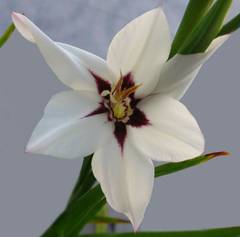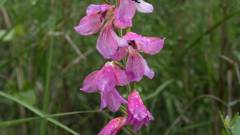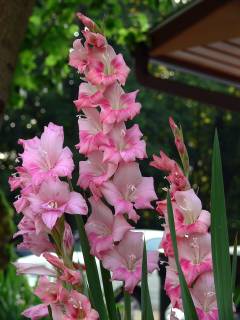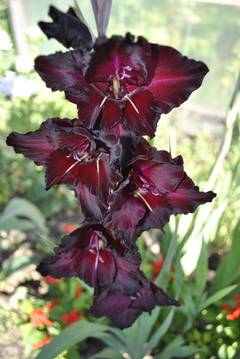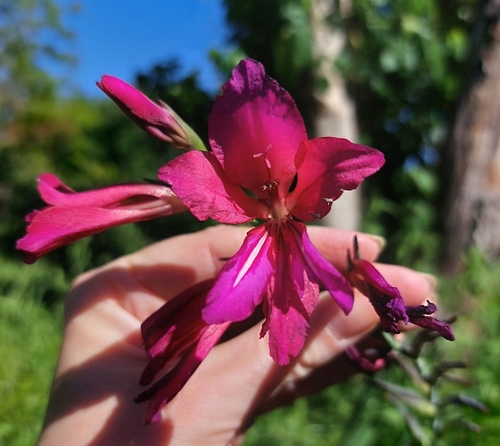
Gladiolus, Genus, communis, Species, ssp., Subspecies, byzantinus, Subspecies,
- Genus & species
- Subspecies
eastern gladiolus
Mediterranean Basin (Spain, N Africa to Turkey; grasslands, rocky slopes, olive groves)
Overview
Gladiolus communis ssp. byzantinus is an upright, cormous, deciduous perennial reaching 24–36 inches (60–90 cm) tall with a spread of 6–12 inches (15–30 cm). Unlike modern hybrid gladioli, this Mediterranean subspecies is fully hardy, naturalizes freely, and has a more graceful, open flower spike rather than a dense, heavy column. Each stem carries 10–20 funnel-shaped flowers 2–2.5 inches (5–6 cm) across in rich magenta-purple to cerise-pink, opening sequentially from the base upward from May through June. The leaves are sword-shaped (gladiate), 12–18 inches (30–45 cm) long, gray-green, appearing in late winter and dying back after flowering. The corms multiply by offsets, forming expanding colonies over time. Growth rate is moderate. Hardy to zone 5.
Native Range
Gladiolus communis ssp. byzantinus is native to the Mediterranean Basin, from Spain and North Africa eastward through southern Europe to Turkey. It grows in grasslands, rocky slopes, scrub, and olive groves.Suggested Uses
Planted in borders, meadow plantings, and naturalistic gardens at 4–6 inch (10–15 cm) spacing, 4–6 inches (10–15 cm) deep. The naturalizing habit suits informal and cottage gardens. Interplant with later-emerging perennials to fill the gap after foliage dies back. Functions as a cut flower. Not suitable for formal beds requiring year-round presence, wet soils, or deep shade.How to Identify
Appearance
Size & Dimensions
Height2' - 3'
Width/Spread6" - 1'
Bloom Information
Funnel-shaped flowers 2–2.5 inches (5–6 cm) across, rich magenta-purple to cerise-pink, 10–20 per stem opening sequentially from base upward, from May through June. Bloom duration is 3–4 weeks per colony (individual stems last 10–14 days).
Detailed Descriptions
Flower Description
Rich magenta-purple to cerise-pink; funnel-shaped; 10-20 per spikeFoliage Description
Gray-green, sword-shaped (gladiate), 12-18 inches longGrowing Conditions
Sun Requirements
Requires 6-10 hours of direct sunlight daily
• Full Sun: 6+ hours of direct sunlight
• Partial Shade: 3-6 hours of direct sunlight
• Full Shade: Less than 3 hours of direct sunlight
Care & Maintenance
Care Guide
Plant corms 4–6 inches (10–15 cm) deep in fall in full sun in well-drained soil. Hardy to zone 5—does not require lifting. Naturalizes freely by offset corms. Foliage emerges late winter and dies back after flowering—mark locations to avoid disturbing dormant corms. Tolerates drought during summer dormancy.Pruning
Allow foliage to yellow and die back naturally after flowering—the corms store energy for the next season. Remove dead foliage when fully brown. No other pruning needed.Pruning Schedule
Prune: July
summer
Container Growing
Suitable for container growing
Minimum container size: 3 gallons