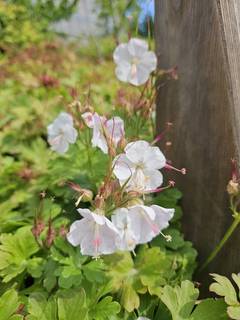
Geranium, Genus, robertianum, Species,
- Genus & species
herb-Robert, stinky Bob
Europe, western Asia, and northern Africa, with some populations in eastern North America possibly native; shaded rocky habitats, woodland margins, hedgebanks, and disturbed forest understory from sea level to approximately 5,500 feet (1,700 m).
Overview
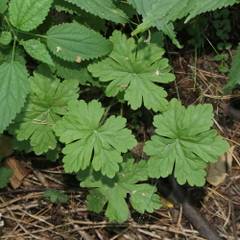
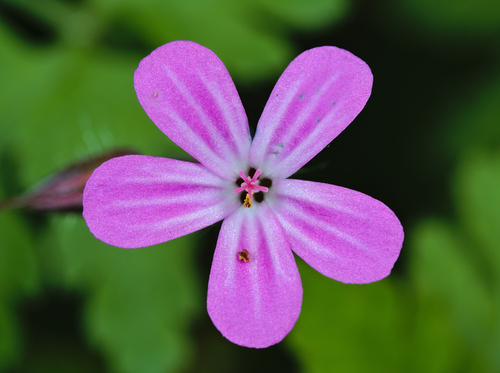
Geranium robertianum is a freely branching winter annual or biennial reaching 6-18 inches (15-45 cm) tall and 6-24 inches (15-60 cm) wide. All parts release a strong pungent disagreeable odor when crushed, leading to the common name stinky Bob. Stems are spreading to ascending, hairy, often reddish, and freely branching. Leaves are deeply palmately 3-5 divided into stalked finely dissected segments, each segment further divided into toothed or lobed leaflets, giving the foliage a fern-like appearance; leaves and stems are hairy, medium green, and often turn bright red in sun or under stress. Five-petaled flowers 0.4-0.6 inch (10-15 mm) across open pink with darker pink veins and entire (not notched) petals, carried in the upper leaf axils continuously from April through October. Fruit is a cranesbill schizocarp with a beak 0.5-0.8 inch (12-20 mm) long; the mericarps are smooth with a network of ridges. The explosive coiling of the awn ejects seeds up to 15 feet (4.5 m) at the lightest touch when ripe. A single plant produces 300-3,000 seeds, and seeds germinate year-round in the Pacific Northwest. The species is listed as a Class B noxious weed in Washington State, where it forms dense populations in shaded forest understory and displaces native ground cover.
Native Range
Geranium robertianum is native to Europe, western Asia, and northern Africa, where it grows in shaded rocky habitats, woodland margins, hedgebanks, and disturbed forest understory from sea level to approximately 5,500 feet (1,700 m). Some populations in eastern North America are considered possibly native. The species has naturalized widely in western North America and forms dense populations in Pacific Northwest urban forests and riparian areas.Suggested Uses
The species is used in noxious weed identification training for Pacific Northwest land managers, urban foresters, and park staff. The three weedy Geranium species present in the region (G. robertianum, G. lucidum, and G. molle) are taught as a comparative identification group. The species is studied in forest understory invasion ecology and in shade-tolerant weed biology, and has a long historical record of use in European folk medicine.How to Identify
Appearance
Size & Dimensions
Height6" - 1'6"
Width/Spread6" - 2'
Bloom Information
Five-petaled pink flowers 0.4-0.6 inch (10-15 mm) across with darker pink veins open continuously from April through October, for a total bloom span of 24-28 weeks in the Pacific Northwest where mild winters extend the growing season. Individual flowers open for 2-3 days. Cranesbill fruit matures 3-4 weeks after pollination, and the explosive coiling of the awn ejects seeds up to 15 feet (4.5 m) at the lightest touch when ripe. Flowers are self-pollinating.
Detailed Descriptions
Flower Description
Pink five-petaled flowers 0.4-0.6 inch (10-15 mm) across with darker pink veins and entire (not notched) petals, produced continuously in the upper leaf axils from April through OctoberFoliage Description
Medium green, turning bright red in sun or under stress; deeply palmately 3-5 divided into stalked finely dissected segments, each segment further divided into toothed or lobed leaflets; hairy; crushed foliage and stems release a pungent disagreeable odorGrowing Conditions
Sun Requirements
Requires 2-6 hours of direct sunlight daily
• Full Sun: 6+ hours of direct sunlight
• Partial Shade: 3-6 hours of direct sunlight
• Full Shade: Less than 3 hours of direct sunlight