Geranium, Genus, 'Johnson's Blue', Cultivar,
- Genus
- Cultivar
Johnson's blue geranium
Garden hybrid (G. himalayense × G. pratense); named for A. T. Johnson of Tyn-y-Groes, Wales
Overview
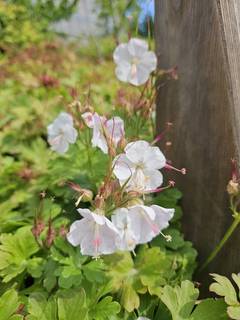
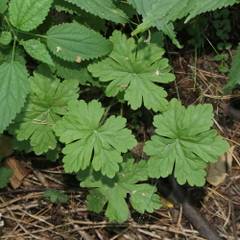
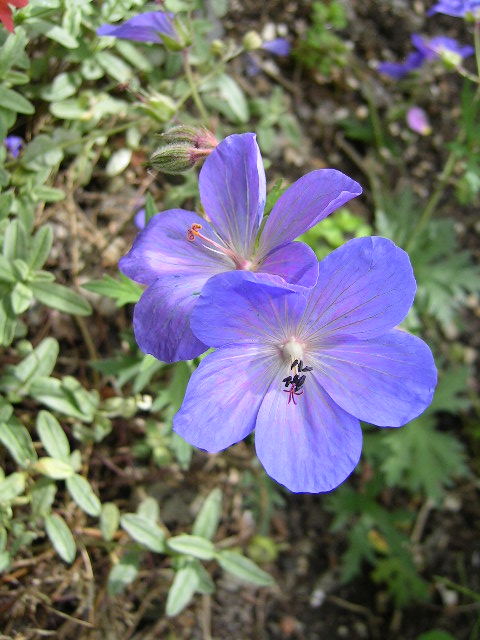
Geranium 'Johnson's Blue' is a mounding to spreading deciduous perennial in the geranium family (Geraniaceae) reaching 12–18 inches (30–45 cm) tall with a spread of 24–30 inches (60–75 cm). This hybrid (G. himalayense × G. pratense) has been a widely planted hardy geranium in the trade since the mid-20th century and stands as the selection that brought blue-flowered hardy geraniums to broad garden use before newer cultivars like 'Brookside' and 'Rozanne' entered the trade. Flowers are saucer-shaped 1.5–2 inches (4–5 cm) across, lavender-blue carrying faint darker veining — a softer blue tone than the true blue of 'Brookside'. Bloom runs profuse from June through August across an 8–10-week main-flush window. Foliage is deeply palmately divided medium green. After the main bloom flush the plant develops an open sprawling habit, and cutting back hard rejuvenates the clump and produces a second flush of foliage and sporadic rebloom. Growth rate runs moderate. Sterile hybrid — produces no viable seed, which keeps the cultivar exactly where it is planted. Hardy to zone 4.
Native Range
Geranium 'Johnson's Blue' is a garden hybrid (G. himalayense × G. pratense), named after nursery owner A. T. Johnson of Tyn-y-Groes in Wales.Suggested Uses
Grown in mixed borders and cottage gardens at 24–30 inch (60–75 cm) spacing. The lavender-blue flowers complement yellow-flowering and white-flowering companions in color compositions. The plant functions in mid-border positions where the mounding form holds the center-scale role between front-of-border plants and taller backdrop perennials. Sterile-hybrid status means no self-seeding occurs — the plant stays exactly where it was planted across the years. The midsummer cutback requirement makes this cultivar a working choice only in gardens where the maintenance step will actually happen; low-maintenance plantings that skip the cutback will not carry the cultivar to its peak visual state. Deep shade and waterlogged soils are not suitable given the cultural preferences.How to Identify
Appearance
Size & Dimensions
Height1' - 1'6"
Width/Spread2' - 2'6"
Bloom Information
Saucer-shaped flowers 1.5–2 inches (4–5 cm) across, lavender-blue with faint darker veining, open profusely from June through August across an 8–10-week main flush. The hybrid is sterile and produces no viable seed. The main flush runs heavy, and sporadic rebloom follows the midsummer cutback through the later summer and early fall months.
Detailed Descriptions
Flower Description
Lavender-blue with faint darker veining; saucer-shaped 1.5-2 inches acrossFoliage Description
Medium green deeply palmately dividedGrowing Conditions
Sun Requirements
Requires 4-10 hours of direct sunlight daily
• Full Sun: 6+ hours of direct sunlight
• Partial Shade: 3-6 hours of direct sunlight
• Full Shade: Less than 3 hours of direct sunlight
Care & Maintenance
Care Guide
Grows in full sun to partial shade in average well-drained soil at pH 6.0–7.5, tolerating loam, clay, and sand. Hardy to zone 4. After the main bloom flush (typically late July), cutting the entire plant back hard to 2–3 inches (5–8 cm) from the ground triggers fresh foliage regrowth and a second bloom flush within 2–3 weeks. Without the midsummer cutback, the plant becomes open and sprawling as flowering winds down, which gives the cultivar a tired appearance through August and September.Pruning
The plant is cut back hard to 2–3 inches (5–8 cm) after the main bloom flush in late July or August. This cutback is the key maintenance step for the cultivar and is required for a tidy appearance and rebloom through the later summer. Fresh foliage regrows within 2–3 weeks of the cutback.Pruning Schedule
Prune: July–August
summer
Container Growing
Suitable for container growing
Minimum container size: 3 gallons