Image 1 of 10
1 / 10
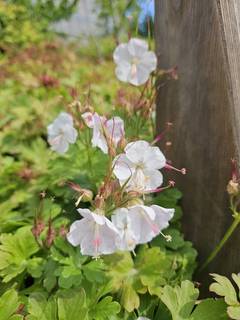
© Harry Rose from South West Rocks, Australia, some rights reserved (CC-BY) · Wikimedia Commons
Geranium, Genus, solanderi, Species,
- Genus & species
Solander's geranium
Overview
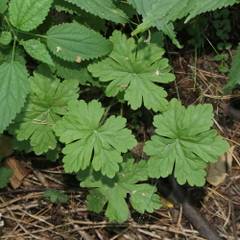
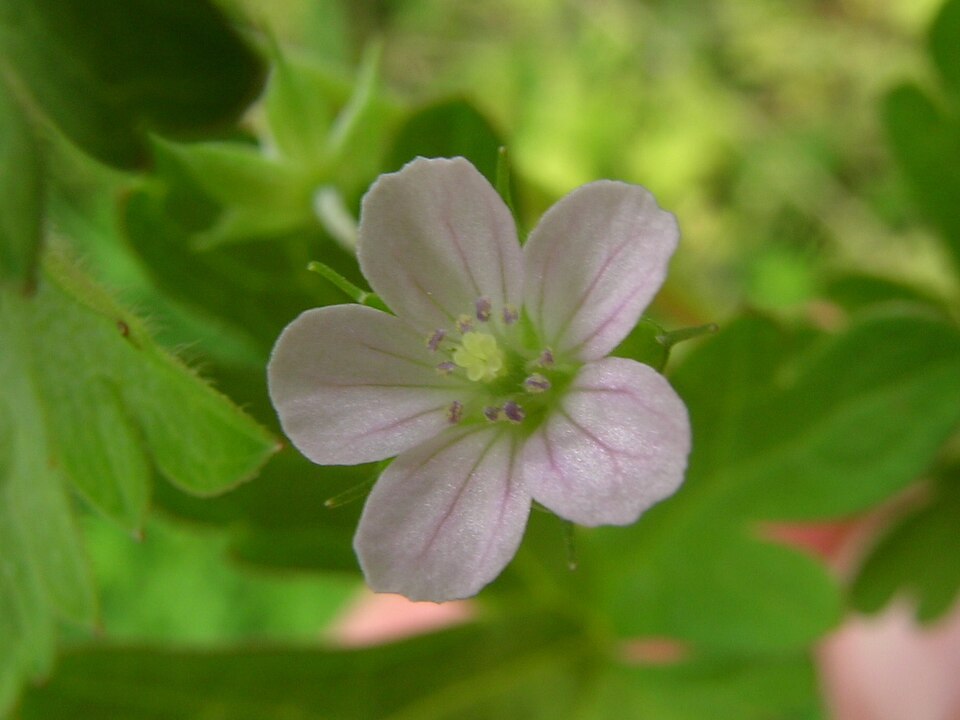
Geranium solanderi is a low, sprawling perennial herb growing from a thickened taproot, reaching 4-12 inches (10-30 cm) tall and spreading 12-28 inches (30-70 cm) wide. The stems trail along the ground and root at the nodes. Leaves are rounded in outline, 0.6-2.4 inches (15-60 mm) across, and deeply cut into 5 to 7 wedge-shaped lobes that are themselves divided, with a soft covering of hairs. Flowers are pink to purplish-pink, five-petalled, 0.4-0.8 inch (10-20 mm) across, held singly or in pairs on slender stalks. Flowering occurs from spring through summer, mainly September to February. The fruit is a beaked capsule that splits and flings its seeds when ripe, the form that gives cranesbills their name. The taproot is fleshy and was eaten by Aboriginal people. Plants die back in dry or cold periods and reshoot from the taproot. The species grows in grassland, open woodland, and disturbed ground on a range of soils.
Native Range
Native to Australia and New Zealand, occurring in all Australian states in grassland, grassy woodland, and along roadsides and clearings. Grows on clay, loam, and sandy soils from the coast to montane areas.Suggested Uses
Used as a low groundcover in native and meadow plantings and in grassland restoration, spaced 12-18 inches (30-45 cm) apart. Suits informal banks and the front of borders where its trailing habit fills spaces between other plants. Self-seeds into surrounding ground.How to Identify
Appearance
Size & Dimensions
Height4" - 1'
Width/Spread1' - 2'4"
Bloom Information
Flowers from spring through summer, mainly September to February in southern Australia. Individual flowers are short-lived, but the plant flowers in succession over several weeks. Bloom is heavier with spring rain and reduced under drought.
Detailed Descriptions
Flower Description
pink to purplish-pinkFoliage Description
greenGrowing Conditions
Sun Requirements
Requires 4-12 hours of direct sunlight daily
• Full Sun: 6+ hours of direct sunlight
• Partial Shade: 3-6 hours of direct sunlight
• Full Shade: Less than 3 hours of direct sunlight
Care & Maintenance
Care Guide
Grows in full sun to part shade on most well-drained soils, including clay and loam. Established plants draw on the taproot to survive dry spells, dying back above ground and reshooting when moisture returns. Occasional watering through the first season aids establishment, after which the plant is largely self-reliant. It tolerates frost and mowing, persisting in lawns and grassland. Self-sown seedlings appear around established plants. Few pests trouble it.Pruning
No formal pruning is needed. Trailing stems can be trimmed to keep the plant within bounds, and cutting back tired growth prompts fresh shoots from the taproot. Spent flower stalks may be removed to limit self-seeding.Pruning Schedule
Prune: March–April
fall
Container Growing
Suitable for container growing
Minimum container size: 3 gallons