Geranium, Genus, wlassovianum, Species,
- Genus & species
Wlassov's geranium
Siberia, Mongolia, northern China, Korea, and Japan (subalpine meadows, forest margins, grasslands at 3,000-8,000 feet / 900-2,400 m)
Overview
Geranium wlassovianum is a mounding to spreading deciduous perennial in the geranium family (Geraniaceae) reaching 12–18 inches (30–45 cm) tall with a spread of 18–24 inches (45–60 cm). This Siberian and East Asian species is cold-hardy to zone 3, surviving winter temperatures to −40°F (−40°C), which places it at the cold-tolerant end of the hardy-geranium range in cultivation. Flowers are 1–1.25 inches (2.5–3 cm) across, deep violet-purple with darker veining and a dark center, carried from June through August across an 8–10-week bloom window. Foliage is the primary ornamental feature: velvety dark green leaves palmately 5-lobed with rounded lobes, developing prominent dark chocolate-brown to maroon veining and zoning as the growing season progresses. By midsummer the foliage carries a dark-patterned visual effect that holds through the remainder of the summer. Fall color turns vivid red-orange across the cooler end of the hardiness range. Growth rate runs moderate. Hardy to zone 3.
Native Range
Geranium wlassovianum is native to Siberia, Mongolia, northern China, Korea, and Japan, where it grows in subalpine meadows, forest margins, and grasslands at 3,000–8,000 feet (900–2,400 m).Suggested Uses
Grown in mixed borders and cottage gardens at 18–24 inch (45–60 cm) spacing. The progressive foliage darkening carries season-long visual interest beyond the bloom period — the leaves gain visual complexity as the summer advances, which gives this species a foliage-design role that most flowering geraniums do not fill. The vivid red-orange fall color adds a third season of interest beyond the foliage and bloom windows. The plant functions in cold-climate gardens where less cold-hardy geraniums fail through the winter. Hot humid climates and waterlogged soils are not suitable given the continental native range.How to Identify
Appearance
Size & Dimensions
Height1' - 1'6"
Width/Spread1'6" - 2'
Bloom Information
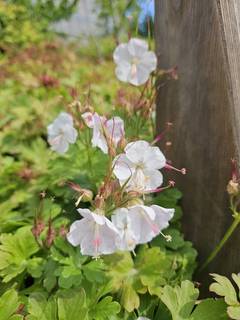
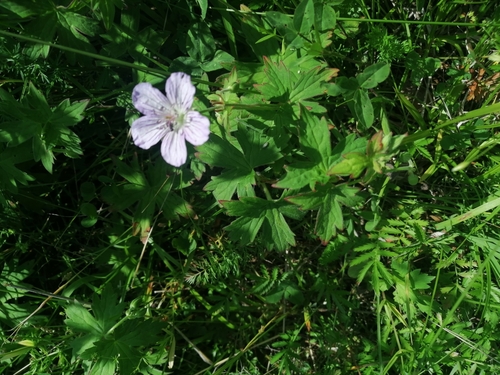
Saucer-shaped flowers 1–1.25 inches (2.5–3 cm) across, deep violet-purple with darker veining and dark center, open from June through August across an 8–10-week bloom window. The flower display runs secondary to the progressive foliage coloring that develops across the summer.
Detailed Descriptions
Flower Description
Deep violet-purple with darker veining and dark center; saucer-shaped 1-1.25 inches acrossFoliage Description
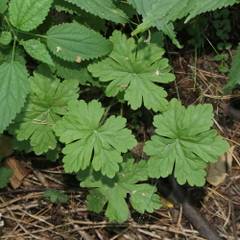
Dark green velvety with progressive chocolate-brown veining and zoning through season; palmately 5-lobed with rounded lobes; vivid red-orange fall colorGrowing Conditions
Sun Requirements
Requires 4-10 hours of direct sunlight daily
• Full Sun: 6+ hours of direct sunlight
• Partial Shade: 3-6 hours of direct sunlight
• Full Shade: Less than 3 hours of direct sunlight
Care & Maintenance
Care Guide
Grows in full sun to partial shade in average well-drained soil at pH 6.0–7.5, tolerating loam, clay, and sand. Hardy to zone 3, which makes this species a working choice for continental cold-climate gardens where less cold-tolerant hardy geraniums fail through the winter months. Tolerance for cold continental climates is the species' defining cultural feature, and the foliage markings develop most strongly in full-sun positions. Moderate water needs through the growing season. No serious pest or disease problems.Pruning
All growth is cut to the ground in late fall or early spring. No midsummer cutback is needed — the progressively darkening foliage is a season-long visual feature that would be lost to a summer cutback.Pruning Schedule
Prune: March
early spring
Container Growing
Suitable for container growing
Minimum container size: 3 gallons