Geranium, Genus, cantabrigiense, Species,
- Genus & species
Cambridge geranium
Hybrid of garden origin (G. macrorrhizum × G. dalmaticum) first arising at the Cambridge University Botanic Garden; parent species native to southeastern Europe (Balkans)
Overview
Geranium × cantabrigiense is a low spreading semi-evergreen perennial in the geranium family (Geraniaceae) reaching 6–10 inches (15–25 cm) tall with a spread of 18–24 inches (45–60 cm), forming a dense weed-suppressing ground-cover mat via creeping rhizomes. This natural hybrid (G. macrorrhizum × G. dalmaticum) first occurred at the Cambridge Botanic Garden, which gives the hybrid its specific epithet. Flowers are saucer-shaped 1 inch (2.5 cm) across, pale pink with slightly darker veining, carried in loose clusters above the foliage from May through July. Leaves are palmately 5–7-lobed, 1–2 inches (2.5–5 cm) across, bright green, semi-evergreen through mild winters, and strongly aromatic when handled or crushed — the scent inherits from the G. macrorrhizum parent. Growth rate runs moderate, and the clump spreads steadily via rhizomes to form closed ground-cover mats over 2–3 seasons. Hardy to zone 4.
Native Range
Geranium × cantabrigiense is a hybrid of garden origin (G. macrorrhizum × G. dalmaticum) that first arose at the Cambridge University Botanic Garden in England. The parent species are native to southeastern Europe (the Balkan region and adjacent mountain areas).Suggested Uses
Grown as a weed-suppressing ground cover at 12–18 inch (30–45 cm) spacing across sun-to-shade exposures. The dense mat suppresses weed establishment once the clumps have closed over the planting area, which reduces long-term maintenance on slopes, pathways, and difficult dry-shade sites where hand weeding would otherwise be an ongoing task. The plant functions under shallow-rooted trees, on slopes that resist other ground covers, along garden pathways, and in difficult dry-shade sites where most perennials fail. The aromatic foliage deters deer and rabbits across the planting. Root competition from trees is tolerated at levels that eliminate most perennial ground-cover options. Wet waterlogged soils are not suitable given the drainage preference.How to Identify
Appearance
Size & Dimensions
Height6" - 10"
Width/Spread1'6" - 2'
Bloom Information
Saucer-shaped flowers 1 inch (2.5 cm) across, pale pink with slightly darker veining, open in loose clusters above the foliage from May through July across a 6–8-week bloom window. The bloom caps the spring-to-early-summer display on mat-forming foliage that persists through the remainder of the year.
Detailed Descriptions
Flower Description
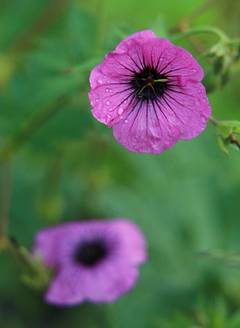
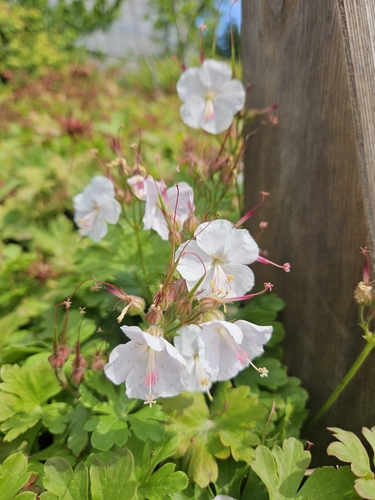
Pale pink with slightly darker veining; saucer-shaped 1 inch acrossFoliage Description
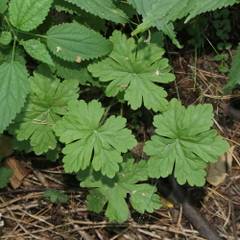
Bright green palmately 5-7 lobed; strongly aromatic when handled; semi-evergreenGrowing Conditions
Sun Requirements
Requires 3-10 hours of direct sunlight daily
• Full Sun: 6+ hours of direct sunlight
• Partial Shade: 3-6 hours of direct sunlight
• Full Shade: Less than 3 hours of direct sunlight
Care & Maintenance
Care Guide
Grows in full sun to partial shade in average to dry well-drained soil at pH 6.0–7.5, tolerating loam, clay, sand, and chalk. Hardy to zone 4. The plant tolerates drought, poor soils, and root competition from shallow-rooted trees, which opens dry-shade positions where most perennials struggle. Aromatic foliage deters deer and rabbits reliably — the terpene-based scent that repels herbivores also comes through when the leaves are handled during garden work. Semi-evergreen status means foliage persists through mild winters but may burn back in severe cold snaps in the colder end of the hardiness range. No serious pest or disease problems, and the species runs reliably low-maintenance once established.Pruning
Shearing the clump back after flowering refreshes the foliage mat for the remainder of the growing season. Old or damaged foliage is removed in early spring to make way for fresh growth. The dense ground-cover habit requires minimal maintenance through the growing season beyond the once-per-year shear.Pruning Schedule
Prune: July
summer
Container Growing
Suitable for container growing
Minimum container size: 2 gallons