Geranium, Genus,
- Genus
hardy geranium; cranesbill
Temperate regions worldwide; commonly cultivated species from Europe, western Asia, and the Himalayas
Overview
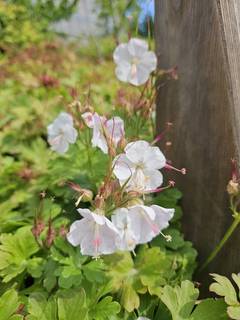
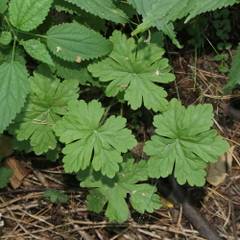
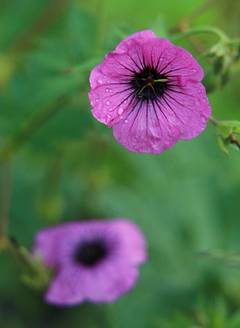
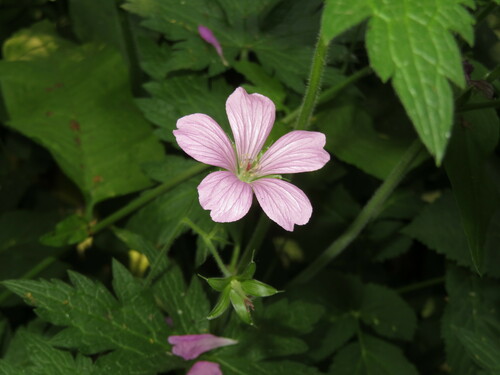
Geranium is a genus of approximately 400 species of perennials (hardy geraniums, cranesbills) growing 6-30 inches (15-75 cm) tall and 12-36 inches (30-90 cm) wide. Five-petaled saucer-shaped flowers, 0.75-2 inches (18-50 mm), in blue, violet, pink, magenta, white, or bicolor bloom from late spring to midsummer — some species and cultivars rebloom into fall. Palmately lobed leaves (5-7 lobes), 2-5 inches (5-13 cm), with many species developing red-orange fall color. The beak-shaped seed capsule (resembling a crane's bill) gives the common name cranesbill. In Geraniaceae. Not to be confused with Pelargonium — the tender windowbox and bedding geraniums are a different genus. Commonly cultivated species include G. × 'Rozanne' (violet-blue, continuous bloom June-frost, 18 inches / 45 cm — a bloom season longer than that of most cultivated perennials), G. macrorrhizum (bigroot cranesbill — aromatic semi-evergreen foliage, shade-tolerant), G. sanguineum (bloody cranesbill — magenta, 12 inches / 30 cm, drought-tolerant), and G. pratense (meadow cranesbill — blue-violet, 30 inches / 75 cm). Shearing the entire mound by half after the main flush removes spent flowers, stimulates fresh foliage, and often triggers a second bloom. Drought-tolerant once established (most species). Non-toxic. Deer-resistant. This entry represents the genus.
Native Range
Temperate regions worldwide — approximately 400 species. Commonly cultivated species native to Europe, western Asia, and the Himalayas.Suggested Uses
Grown in borders, as groundcover, and in containers of at least 3 gallons (11 L) in zones 4-8, spaced 12-36 inches (30-90 cm) apart depending on species. G. × 'Rozanne' for continuous bloom. G. macrorrhizum for dry shade. G. sanguineum for drought-tolerant groundcover. Not to be confused with Pelargonium. Non-toxic. Deer-resistant.How to Identify
Appearance
Size & Dimensions
Height6" - 2'6"
Width/Spread1' - 3'
Bloom Information
Detailed Descriptions
Flower Description
blue, violet, pink, magenta, white, or bicolor; 5-petaled, saucer-shaped, 0.75-2 inches (18-50 mm)Foliage Description
medium to dark green, palmately lobed (5-7 lobes), 2-5 inches (5-13 cm); some species have aromatic foliage; many develop red-orange fall colorGrowing Conditions
Sun Requirements
Requires 3-8 hours of direct sunlight daily
• Full Sun: 6+ hours of direct sunlight
• Partial Shade: 3-6 hours of direct sunlight
• Full Shade: Less than 3 hours of direct sunlight
Care & Maintenance
Care Guide
Site in part shade to full sun (3-8 hours direct sun) in well-drained soil with a pH of 5.5-7.0. Drought-tolerant once established (most species). Shear by half after the main flush for fresh foliage and rebloom. Not to be confused with Pelargonium (tender windowbox geraniums). Non-toxic. Deer-resistant. Hardy in zones 4-8.Pruning
Shear the entire mound by half to two-thirds after the main flowering flush (July). This removes spent flowers, stimulates fresh foliage, and triggers a second bloom. G. × 'Rozanne' blooms continuously without shearing.Pruning Schedule
Prune: July
summer
Container Growing
Suitable for container growing
Minimum container size: 3 gallons