Fallopia, Genus, ×, Hybrid, bohemica, Species,
- Genus & species
- Hybrid
bohemian giant knotweed
Hybrid origin; parents from East Asia (Japan, Sakhalin Island)
Overview
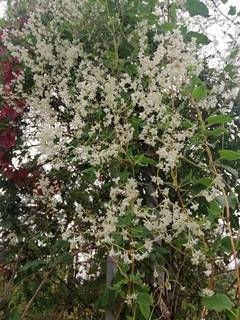
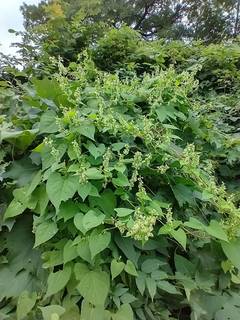
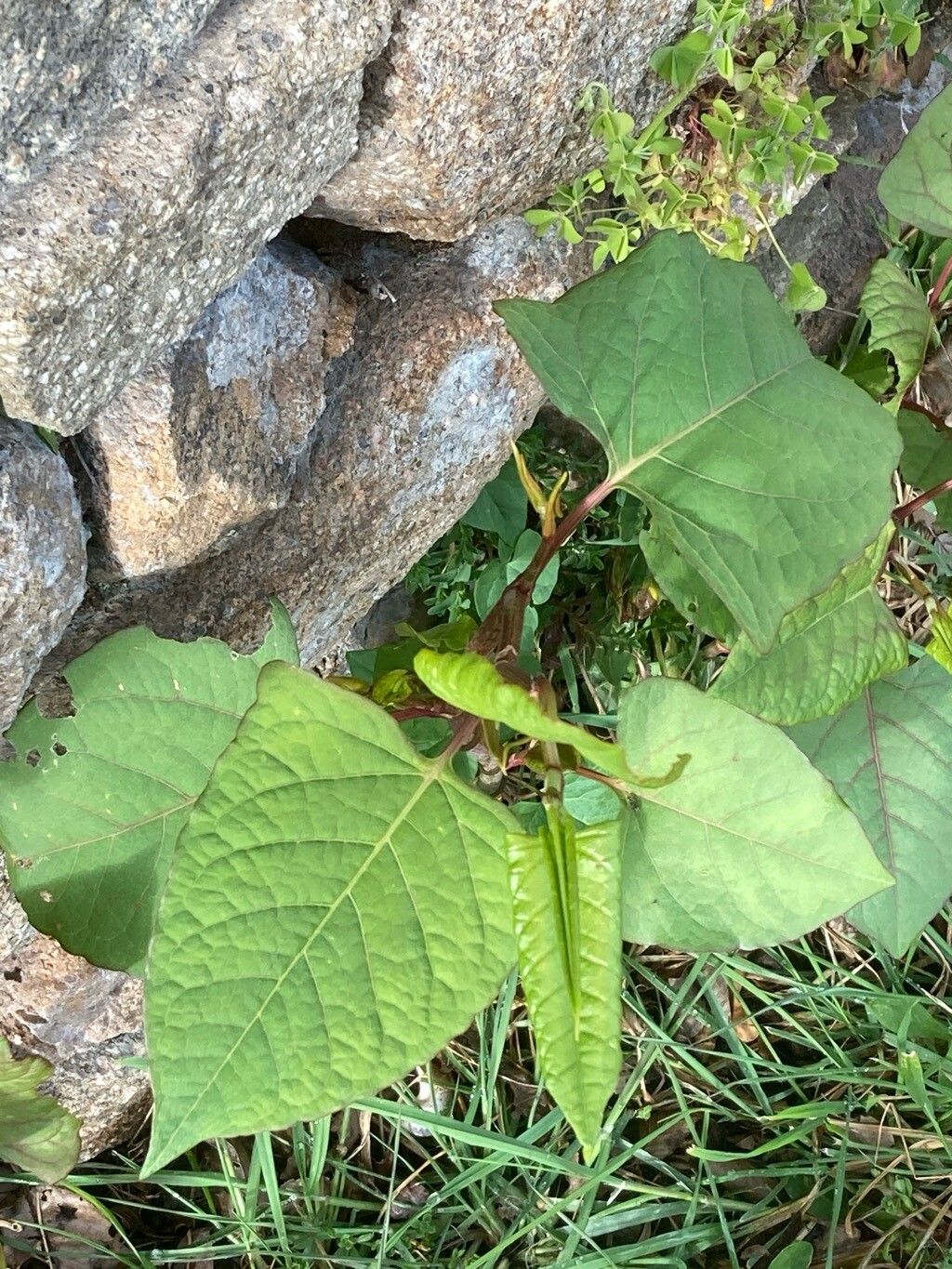
Fallopia × bohemica (syn. Reynoutria × bohemica) is the hybrid between F. japonica (Japanese knotweed) and F. sachalinensis (giant knotweed), combining traits of both parents into a vigorous, rhizomatous, herbaceous perennial reaching 5–13 feet (1.5–4 m) tall with colonies spreading 6–20 feet (1.8–6 m) or more. Stems are erect, hollow, bamboo-like, with swollen nodes. Leaves are intermediate between the parents: broadly ovate, 5–10 inches (13–25 cm) long and 3–8 inches (8–20 cm) wide, with a slightly cordate to truncate base. Leaf undersides have scattered short hairs on the veins, less dense than F. sachalinensis but present (unlike the glabrous undersides of F. japonica). Flowers are small, white to greenish-white, in axillary panicles. The hybrid frequently exhibits greater vegetative vigor than either parent, with faster rhizome extension rates. Both male and female flowers may be produced, and backcrossing with either parent species generates genetically diverse offspring. Rhizome biology mirrors F. japonica: lateral extension 15–65 feet (4.5–20 m) at depths to 10 feet (3 m), with fragments as small as 0.5 inch (1 cm) regenerating. Listed as a noxious weed in Washington State and other jurisdictions. Increasingly recognized as the most common knotweed taxon in many invaded areas, as many populations previously identified as F. japonica are actually the hybrid.
Native Range
Hybrid origin; does not occur naturally in the native ranges of the parent species. Arises where F. japonica and F. sachalinensis co-occur in North America, Europe, and elsewhere. Naturalized in riparian corridors, roadsides, disturbed urban sites, and construction waste areas throughout the Pacific Northwest, northeastern United States, and northern Europe.Suggested Uses
Used in invasive species identification training alongside the parent species for teaching the knotweed species complex. Studied in hybridization genetics, invasion biology, and the role of polyploidy in invasive vigor. The increasing recognition that many knotweed infestations are hybrid rather than pure species is an important lesson in applied taxonomy for land managers.How to Identify
Appearance
Size & Dimensions
Height5' - 13'
Width/Spread6' - 20'
Bloom Information
Flowers from August through September. Panicles are intermediate in size and density between the parents. Unlike F. japonica populations in North America (predominantly female), hybrid populations may produce both male and female flowers, enabling seed production and backcrossing with parent species. Pollinated by bees and flies.
Detailed Descriptions
Flower Description
White to greenish-whiteFoliage Description
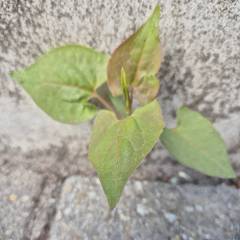
Dark green, broadly ovate, intermediate in size between parents; base slightly cordate to truncate; scattered short hairs on veins beneathGrowing Conditions
Sun Requirements
Requires 4-12 hours of direct sunlight daily
• Full Sun: 6+ hours of direct sunlight
• Partial Shade: 3-6 hours of direct sunlight
• Full Shade: Less than 3 hours of direct sunlight