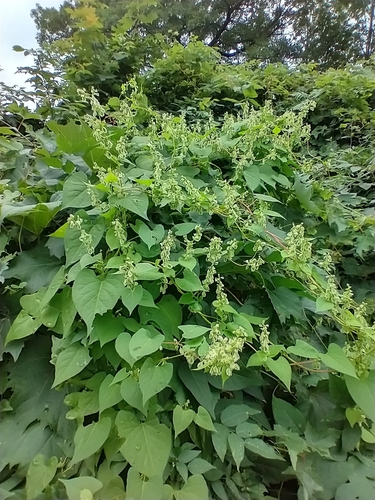
Fallopia, Genus, scandens, Species,
- Genus & species
climbing false buckwheat
Overview
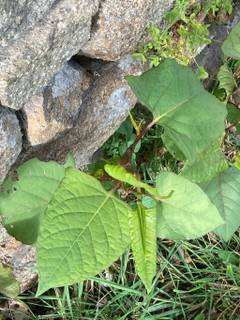
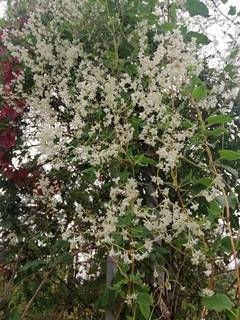
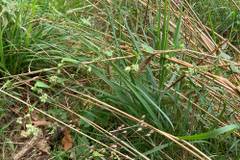
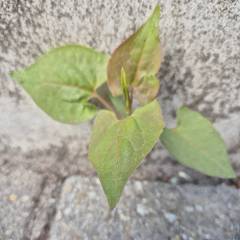
Fallopia scandens is a herbaceous perennial vine in the buckwheat family, twining over surrounding vegetation and structures. Stems reach 3-16 ft (1-5 m) in a single season, dying back to the root each winter and regrowing from a woody rootstock. Leaves are alternate, 1.5-6 in (4-15 cm) long, heart-shaped to arrow-shaped with a pointed tip and a membranous sheath (ocrea) wrapping each node. From August to October the vine produces branched racemes of small greenish-white flowers, each about 0.2 in (4-5 mm) across. The fruit is a three-angled black achene enclosed in a winged calyx; the three wings run down to the stalk and give the seed head a papery look. The plant spreads by seed and by its perennial root system, and dense growth can shade out low vegetation it climbs over. Its twining stems lack tendrils and wrap directly around supports. Native stands occur in moist woodland edges, fencerows, thickets, and streambanks across eastern and central North America. It is sometimes confused with Fallopia cilinodis, which has bristly fringes at the leaf-node sheaths, and with upright Fallopia relatives such as Japanese knotweed, from which it differs in its slender climbing rather than cane habit.
Native Range
Fallopia scandens is native to eastern and central North America, ranging from Quebec and Ontario south to Florida and Texas. It grows in moist thickets, woodland borders, floodplains, and along fences and streambanks.Suggested Uses
Fallopia scandens is grown on fences, arbors, and trellises in native and naturalistic plantings where a fast seasonal screen is wanted. It supports small pollinators, and birds eat the seeds. In restoration settings it is used for quick cover on disturbed woodland edges.How to Identify
Appearance
Size & Dimensions
Height3' - 16'
Width/Spread3' - 6'
Bloom Information
Flowering runs from August to October, peaking in September across most of the range. The greenish-white racemes are wind- and insect-pollinated and give way to winged fruits that persist into late autumn. Seeds ripen 4-6 weeks after flowering and drop through winter.
Detailed Descriptions
Foliage Description
greenGrowing Conditions
Sun Requirements
Requires 4-8 hours of direct sunlight daily
• Full Sun: 6+ hours of direct sunlight
• Partial Shade: 3-6 hours of direct sunlight
• Full Shade: Less than 3 hours of direct sunlight
Care & Maintenance
Care Guide
Fallopia scandens grows in full sun to part shade and tolerates soils from sandy loam to clay, favoring moist, well-drained sites near water. Established plants need little supplemental water once the perennial root system develops. The twining stems require a fence, trellis, or neighboring shrubs to climb, reaching full length in one season. Annual dieback to the root means no winter protection is needed within its hardiness range. Because seedlings and root spread colonize quickly, the vine can overtop small shrubs and perennials within a season. Removing fruiting stems before seed drop limits self-seeding.Pruning
Pruning is done in late winter or early spring, cutting the previous season's dead stems back to the rootstock before new growth emerges. Mid-season stems can be shortened to contain the vine on its support, though regrowth is rapid. Removing flower racemes before the winged fruits mature reduces volunteer seedlings the following year.Pruning Schedule
Prune: February–March
winterearly spring