Euphorbia, Genus, nicaeensis, Species,
- Genus & species
nice spurge
Southern Europe and the Mediterranean
Overview
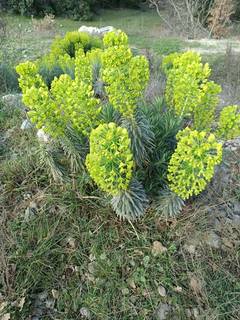
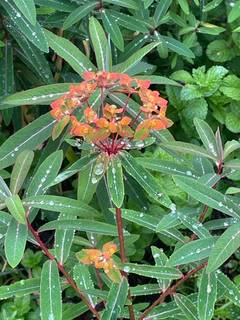
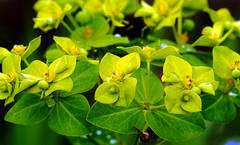
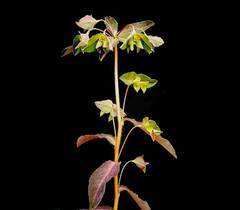
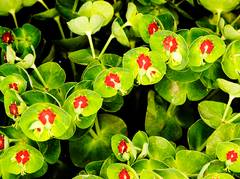
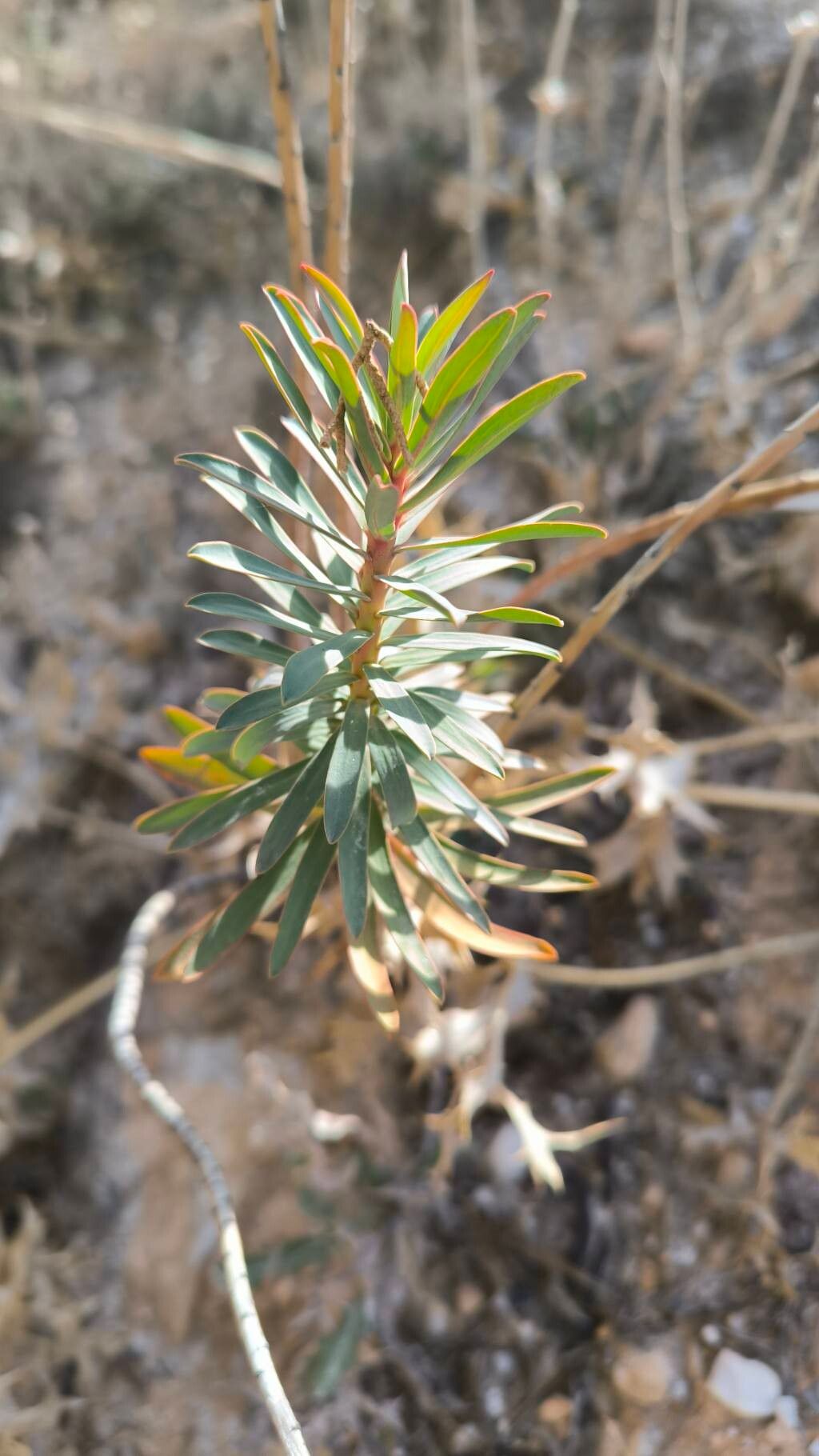
Euphorbia nicaeensis is an evergreen herbaceous perennial in the Euphorbiaceae family, forming an upright clump 18-24 inches (45-60 cm) tall and 18-24 inches (45-60 cm) wide. Reddish stems carry narrow, blue-green leaves 1-2 inches (2.5-5 cm) long arranged in spirals, often flushed purple at the base. From late spring into summer the stems are topped with rounded clusters of chartreuse-yellow bracts 3-5 inches (8-13 cm) across, surrounding small true flowers; the bracts age to amber and reddish tones. The plant grows from a woody crown and tolerates poor, stony, alkaline soils and drought once established. All parts exude a milky white latex when cut or broken; the sap is a skin and eye irritant and is toxic if ingested by people or animals. Euphorbia nicaeensis is hardy in USDA zones 5 through 9 and keeps its blue-green foliage through mild winters, dying back in colder ones. In wet or heavy soil the crown is prone to rot, and stems splay open in shade or rich ground. The plant can self-seed where conditions suit. Native to dry, rocky slopes and garrigue across southern Europe and the Mediterranean, it is grown in gravel gardens, dry borders, and Mediterranean-style plantings.
Native Range
Euphorbia nicaeensis is native to dry, rocky slopes, garrigue, and open grassland across southern Europe and the Mediterranean region. It grows on alkaline, stony ground in full sun.Suggested Uses
Grown in gravel gardens, dry sunny borders, rock gardens, and Mediterranean-style plantings, spaced 18-24 inches (45-60 cm) apart. The blue-green foliage and chartreuse bracts contrast with darker or finer-leaved plants. It suits hot, dry sites with poor soil.How to Identify
Appearance
Size & Dimensions
Height1'6" - 2'
Width/Spread1'6" - 2'
Colors
Bloom Information
Detailed Descriptions
Flower Description
Chartreuse-yellow bracts aging to amberFoliage Description
Blue-greenGrowing Conditions
Sun Requirements
Requires 6-12 hours of direct sunlight daily
• Full Sun: 6+ hours of direct sunlight
• Partial Shade: 3-6 hours of direct sunlight
• Full Shade: Less than 3 hours of direct sunlight
Care & Maintenance
Care Guide
Grows in full sun and poor, stony, sharply drained soil, including alkaline ground, and tolerates drought once established. Water needs are low, and wet or heavy soil rots the crown, especially in winter. In USDA zones 5 through 9 the plant is cold hardy and stays evergreen in mild winters. Stems splay open in shade or rich soil, so lean conditions and full sun hold the habit upright. All parts release an irritant milky latex when cut, which can inflame skin and eyes. Cutting back flowered stems to the base after bloom holds the clump dense.Pruning
Flowered stems are cut back to the base once the bracts fade, since each stem flowers only once and then declines. Fresh shoots from the crown carry the next year's growth. The milky latex released by cut stems is a skin and eye irritant.Pruning Schedule
Prune: July–August
summer
Container Growing
Suitable for container growing
Minimum container size: 3 gallons