Euphorbia, Genus, cyparissias, Species,
- Genus & species
cypress spurge
Overview
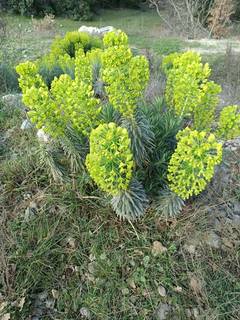
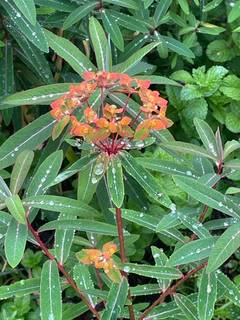
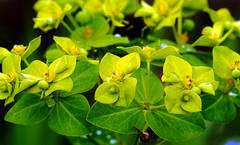
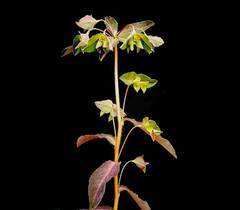
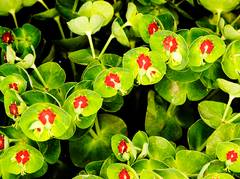
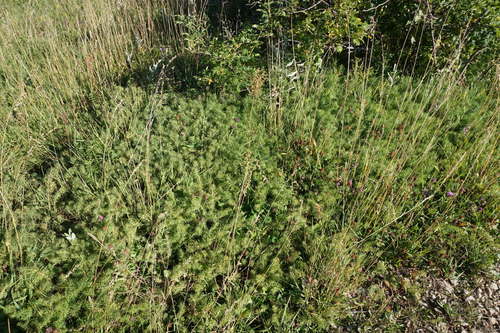
Euphorbia cyparissias is a rhizomatous perennial in the spurge family, forming dense, spreading patches 6-16 inches (15-40 cm) tall from running underground stems. The slender, upright shoots are crowded with soft, linear blue-green leaves 0.4-1.2 inches (1-3 cm) long that recall the foliage of a cypress. In spring the stems are topped by flat clusters of tiny yellow-green cyathia framed by paired greenish-yellow bracts that age to reddish-purple. All parts exude a milky white latex when cut that is toxic and can irritate skin and eyes. The species spreads aggressively by rhizome and seed, forming dense stands that crowd out other vegetation. It is regulated as a noxious or invasive weed in several U.S. states including Colorado, Massachusetts, and Oregon. On open, dry, infertile ground it persists for years and is hard to remove because rhizome fragments resprout. The blue-green summer foliage takes on yellow and orange tints before dying back in autumn.
Native Range
Native to Europe and temperate western Asia, from Spain and Britain east across central Europe to the Caucasus. It has naturalized widely in North America, where it is treated as invasive in pastures, roadsides, and open ground.Suggested Uses
Grown historically as a dry-bank and groundcover plant on poor soils and in gravel gardens, spaced 12-18 inches (30-45 cm) apart. Its rhizomatous spread makes it suited to confined or contained sites rather than open borders. In regions where it is regulated as invasive, planting is restricted.How to Identify
Appearance
Size & Dimensions
Height6" - 1'4"
Width/Spread1' - 2'
Bloom Information
The yellow-green bracts and cyathia appear from April to June and hold color for several weeks as the bracts shift toward reddish-purple. A lighter second flush sometimes follows in late summer. Small three-lobed seed capsules ripen and split through summer, ejecting seed a short distance.
Detailed Descriptions
Flower Description
Yellow-green aging to reddish-purpleFoliage Description
Blue-green, yellow-orange in autumnGrowing Conditions
Sun Requirements
Requires 6-12 hours of direct sunlight daily
• Full Sun: 6+ hours of direct sunlight
• Partial Shade: 3-6 hours of direct sunlight
• Full Shade: Less than 3 hours of direct sunlight
Care & Maintenance
Care Guide
Grows in full sun and dry, poor, freely draining soil across a wide pH range. It tolerates drought, heat, and infertile or stony ground once established and needs no irrigation. Rich or moist soil increases its already vigorous spread. Plants are hardy to roughly -30F (-34C) in zones 4-8 and die back to the rhizome each winter. Because the rhizomes travel widely and resprout from fragments, the species is hard to confine in cultivated beds. The milky latex can cause skin and eye irritation on contact.Pruning
Stems can be sheared after the spring display to limit self-seeding and tidy the patch. Cutting alone does not control spread, as the rhizomes resprout. Spent top growth can be removed in late autumn after it yellows.Container Growing
Suitable for container growing
Minimum container size: 2 gallons