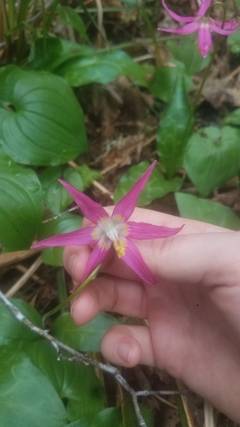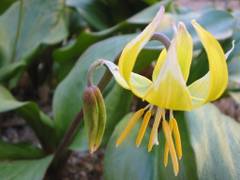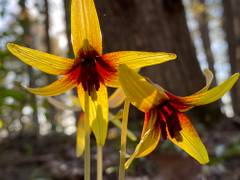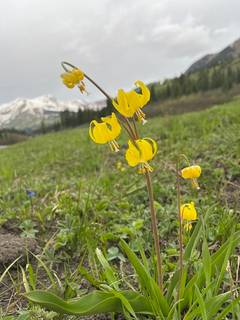
Erythronium, Genus, oregonum, Species,
- Genus & species
Oregon fawn lily
Pacific Northwest of North America — southwestern British Columbia, western Washington, and the Willamette Valley of Oregon; open woodlands, meadow edges, and grassy slopes under Garry oak ({Quercus garryana})
Overview
Erythronium oregonum is Oregon fawn lily (white fawn lily), a spring-ephemeral bulbous perennial growing 8-16 inches (20-40 cm) tall and 4-8 inches (10-20 cm) wide. Creamy white nodding flowers 1.5-2 inches (4-5 cm) with recurved petals, a yellow-green basal zone, and a maroon central ring, 1-3 per stem, in March-May (4 weeks). Deep green elliptical basal leaves 4-8 inches (10-20 cm) boldly mottled with white, brown, and grayish-green. In Liliaceae. Oregonum = from Oregon. Native to the Pacific Northwest — southwestern British Columbia through the Willamette Valley of Oregon in open Garry oak (Quercus garryana) woodlands and meadow edges. A spring ephemeral — the entire plant disappears by early summer. Grows from a deeply buried elongated corm that must not dry out — plant immediately after purchase. This intolerance of dry storage and the slow naturalization rate (decades to form a colony) are the primary limitations. Not drought-tolerant during the active growth period (moist spring soil required). Deer browse the flowers. Toxicity unknown. Zones 4-9. Part shade to full shade. Growth rate is very slow.
Native Range
Native to the Pacific Northwest — southwestern British Columbia, western Washington, and the Willamette Valley of Oregon. Found in open Garry oak (Quercus garryana) woodlands, meadow edges, and grassy slopes.Suggested Uses
Grown in woodland gardens, native plant gardens, and under Garry oaks in the Pacific Northwest, spaced 4-8 inches (10-20 cm). Spring ephemeral — interplant with ferns. Very slow to colonize. Native to PNW. Zones 4-9.How to Identify
Appearance
Size & Dimensions
Height8" - 1'4"
Width/Spread4" - 8"
Bloom Information
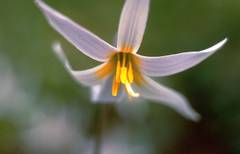
Early to mid spring (March-May). Creamy white nodding flowers 1.5-2 inches (4-5 cm) with recurved petals, yellow-green basal zone, maroon ring. 1-3 per stem. 4 weeks. Bee-visited. Spring ephemeral — dormant by early summer.
Detailed Descriptions
Flower Description
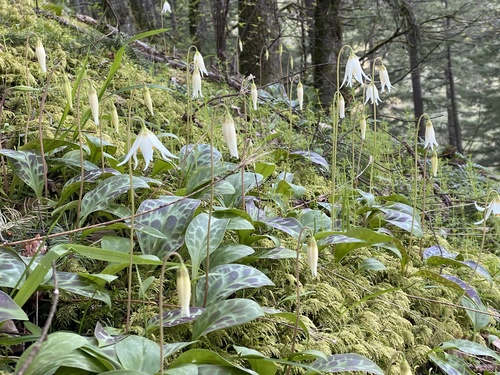
Creamy white with a yellow-green basal zone and maroon ring at the center; recurved (swept-back) petals, 1.5-2 inches (4-5 cm), nodding, 1-3 per stemFoliage Description
Deep green broadly mottled with white, brown, and grayish-green patches, basal, elliptical, 4-8 inches (10-20 cm); the mottling pattern resembles the spots on a young deerGrowing Conditions
Sun Requirements
Requires 1-4 hours of direct sunlight daily
• Full Sun: 6+ hours of direct sunlight
• Partial Shade: 3-6 hours of direct sunlight
• Full Shade: Less than 3 hours of direct sunlight
Care & Maintenance
Care Guide
Part shade to full shade (1-4 hours — under deciduous trees). Moist soil pH 5.5-7.0 during spring growth. Plant corms 4-6 inches (10-15 cm) deep immediately after purchase — do not store dry. Spring ephemeral — allow foliage to die back naturally. Very slow to naturalize. Deer browse flowers. Toxicity unknown. Zones 4-9.Pruning
No pruning needed. Allow foliage to yellow and die back naturally by early summer (June). Do not disturb dormant corms.Pruning Schedule
Prune: June
late spring