Erythronium, Genus, grandiflorum, Species,
- Genus & species
glacier lily
Overview
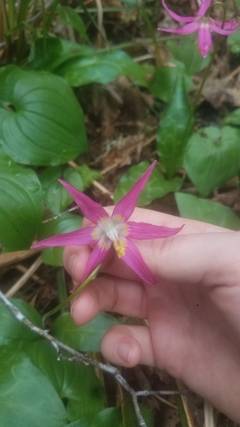
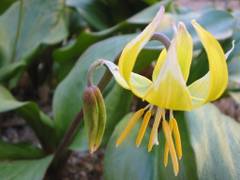
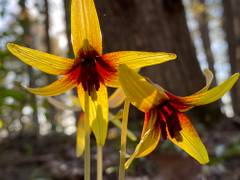
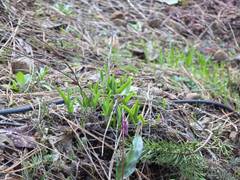
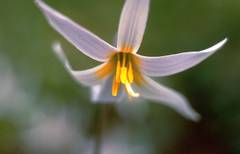
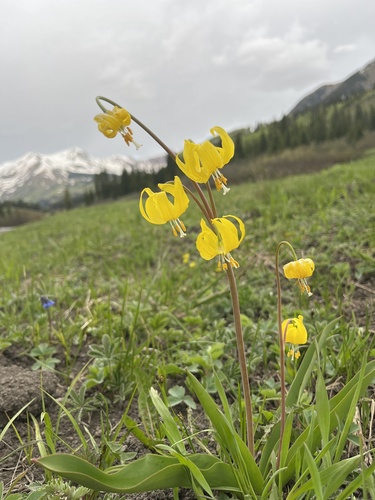
Erythronium grandiflorum is a spring-ephemeral perennial bulb reaching 6-12 inches (15-30 cm) tall in flower and spreading in colonies via offset bulbs. Each plant produces two opposite, lance-shaped basal leaves 4-8 inches (10-20 cm) long, glossy green and unmottled. A single leafless flowering stem emerges between the leaves, bearing 1-3 nodding yellow flowers with strongly reflexed tepals 0.8-1.5 inches (2-3.8 cm) long. Anthers are white, cream, red, or purple depending on regional variety. Bloom occurs as snow recedes, generally April through July depending on elevation. Fruit is a 3-celled capsule 0.6-1.2 inches (1.5-3 cm) long, splitting at maturity to release flat brown seeds. Foliage yellows and dies back 6-8 weeks after bloom, leaving the bulb dormant through summer until the next snowmelt. Bulbs sit 4-12 inches (10-30 cm) deep in soil and may persist 30-50 years in stable mountain habitats. Wild-collected plants rarely survive transplant; the deep contractile root system reaches 12+ inches (30+ cm) and breaks during excavation.
Native Range
Native to western North America from southern British Columbia south to Colorado and east to Alberta and Montana. Found in subalpine and alpine meadows, open forests, and seasonally moist slopes at 4,000-12,000 feet (1,200-3,650 m) elevation, often in massed populations on slopes recently uncovered by retreating snow.Suggested Uses
Used in woodland gardens, meadows, and alpine rock gardens at 4-6 inch (10-15 cm) bulb spacing. Suited to native plant restoration, bulb meadows, and naturalized woodland plantings under deciduous trees. Performs poorly in containers, summer-irrigated borders, and warm-summer climates south of zone 7.How to Identify
Appearance
Size & Dimensions
Height6" - 1'
Width/Spread4" - 6"
Bloom Information
Flowers open as snow recedes, typically April through July depending on elevation and aspect. Peak bloom occurs in May at 4,000-6,000 feet (1,200-1,800 m) and in late June through July at subalpine and alpine sites. Individual flowers last 5-10 days; total bloom period extends 2-3 weeks at any given site. Bloom triggers within 7-14 days of soil thaw and is shortened by warm dry springs.
Detailed Descriptions
Foliage Description
glossy green, unmottledGrowing Conditions
Sun Requirements
Requires 4-8 hours of direct sunlight daily
• Full Sun: 6+ hours of direct sunlight
• Partial Shade: 3-6 hours of direct sunlight
• Full Shade: Less than 3 hours of direct sunlight
Care & Maintenance
Care Guide
Bulbs are planted 4-6 inches (10-15 cm) deep in fall in cool, gritty, humus-rich soil with consistent winter and spring moisture. Bulbs require summer dormancy with reduced moisture; rot occurs when bulbs sit in saturated summer soil. Vole and pocket gopher damage is common where these rodents are present, eliminating colonies within 2-3 years on susceptible sites. Slugs feed on emerging foliage in cool wet springs. Plants take 4-7 years to flower from seed and 2-3 years to flower from offset bulblets. Established colonies expand at 1-2 inches (2.5-5 cm) per year.Pruning
Foliage yellows and dies back 6-8 weeks after bloom; dead leaves are removed once they detach with a gentle pull. No other pruning is required. Removing green foliage in summer prevents the bulb from storing reserves for the following year's bloom.Pruning Schedule
Prune: June–July
summer