Image 1 of 8
1 / 8
Plant Reference
Erythronium, Genus, 'Pagoda', Cultivar,
- Genus
- Cultivar
pagoda fawn lily
The cultivar is a hybrid of garden origin — {Erythronium tuolumnense} from the Tuolumne Sierra of California × {Erythronium revolutum} (or another Pacific Northwest species) as the likely parentage; the species parents are native to moist coniferous forests and stream banks of western North America
Overview
Erythronium 'Pagoda' is a hybrid spring-ephemeral bulbous perennial in the family Liliaceae, growing 10-14 inches (25-35 cm) tall and 4-8 inches (10-20 cm) wide from a deeply buried elongated corm. The cultivar is a hybrid of garden origin with E. tuolumnense (a California species from the Tuolumne Sierra) crossed with E. revolutum (or a similar Pacific Northwest species) as the likely parentage, and the hybrid shows the sulfur-yellow flower color inherited from the E. tuolumnense parent alongside the vigorous hybrid growth habit that gives 'Pagoda' its horticultural advantage over either parent species. Paired glossy green basal leaves 4-8 inches (10-20 cm) long emerge directly from the corm in early spring and unfurl with faint brown mottling that is less pronounced than in the species parents — some plants show nearly unmottled green leaves while others carry the mottled patterning. Large sulfur-yellow nodding flowers 1.5-2 inches (4-5 cm) across with 6 swept-back recurved tepals open on slender upright stalks above the foliage during April and May for approximately 2 weeks, with 5-10 flowers borne on each stem. The higher flower count per stem compared to the species parents (which typically carry only 1-3 flowers per stem) is the main reason 'Pagoda' dominates the garden trade for Erythronium cultivation — a single mature corm produces a far more substantial display than any of the parent species, and offset corms multiply faster so that an initial planting fills in to a sizable colony within 3-5 growing seasons. The plant is a spring ephemeral: the entire above-ground growth dies back to the soil by early summer (typically June), and the corms remain dormant below ground through summer, fall, and winter until the next year's spring emergence. This spring-ephemeral habit means the plant leaves a bare gap in the garden for 9-10 months of the year, and companion plantings of ferns, Hosta, and other shade perennials that fill the space after dormancy are the standard approach for managing the seasonal gap. The main cultivation limitation is that the elongated corms must not dry out during storage or transport — corms bought dry from mass-market catalog sources often fail to establish because the exposed corms have lost too much internal moisture during storage. Fresh corms from specialty bulb sources or potted plants from nurseries establish more reliably, and in either case the corms should be planted 4-6 inches (10-15 cm) deep in well-drained acidic soil immediately after purchase without any intervening dry storage. Despite the hybrid vigor advantage over the species parents, corms still require 2-3 growing seasons from planting to full flowering display. The species is drought-tolerant during the summer dormancy period, deer-resistant, and non-toxic.
Native Range
'Pagoda' is a hybrid of garden origin rather than a wild species, with Erythronium tuolumnense (a California species from the Tuolumne Sierra at mid elevations) crossed with Erythronium revolutum (a Pacific Northwest species from moist coniferous forests and stream banks) as the likely parentage — the cross was made in British horticulture in the mid-20th century. Both species parents are native to western North America: E. tuolumnense grows on wooded slopes in the California Sierra at 1,000-6,000 feet (300-1,800 m), and E. revolutum grows in moist woodland and stream banks from northern California through Oregon, Washington, and British Columbia. The hybrid combines the yellow flower color of E. tuolumnense with the vigorous growth habit and higher flower count that the hybrid expression produces, and the cultivar has dominated Western garden cultivation of Erythronium since its introduction because the parent species are rarely available through commercial bulb channels.Suggested Uses
Planted in woodland gardens, under deciduous tree canopy, in shaded mixed borders with spring-ephemeral companions, in raised beds with acidic loam, and in containers of 2 gallons (7.5 L) or larger at 4-8 inch (10-20 cm) spacing in zones 4-9. The hybrid vigor, the higher flower count per stem (5-10 flowers compared to 1-3 on species), and the availability through standard bulb suppliers make 'Pagoda' the common garden choice for Erythronium cultivation where the rarer species parents are usually unavailable through commercial channels. Combined with Hosta cultivars, ferns, Tiarella, and other shade perennials that fill the vertical space after the 'Pagoda' foliage dies back in early summer — the companion plantings handle the 9-10 month seasonal gap when the bulb is dormant below ground. Not suited to alkaline soils where the acidic pH requirement is not met, sunny exposed positions where spring foliage scorches before dormancy, dry positions without spring moisture where the corms fail to flower, or landscapes where the spring-ephemeral dormancy gap is aesthetically unacceptable without companion plantings filling the empty space.How to Identify
Appearance
Size & Dimensions
Height10" - 1'2"
Width/Spread4" - 8"
Bloom Information
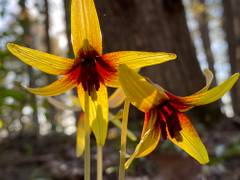
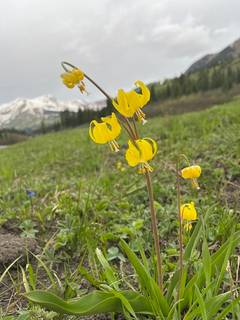
Sulfur-yellow nodding flowers 1.5-2 inches (4-5 cm) across with 6 swept-back recurved tepals open on slender upright stalks during April and May in zones 4-9, lasting approximately 2 weeks. Each stem carries 5-10 flowers, a higher flower count than the species parents (which typically produce only 1-3 flowers per stem) and the main reason 'Pagoda' is chosen for garden display over the species. Flowers are bee-visited. The plant is a spring ephemeral — above-ground growth dies back to the soil by early summer (typically June) and the corms remain dormant below ground through the rest of the year.
Detailed Descriptions
Flower Description
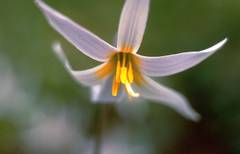
sulfur-yellow; large nodding flowers 1.5-2 inches (4-5 cm) across with 6 swept-back recurved tepals, borne 5-10 per stem on slender upright stalks held above the basal foliageFoliage Description
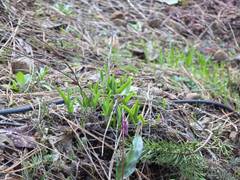
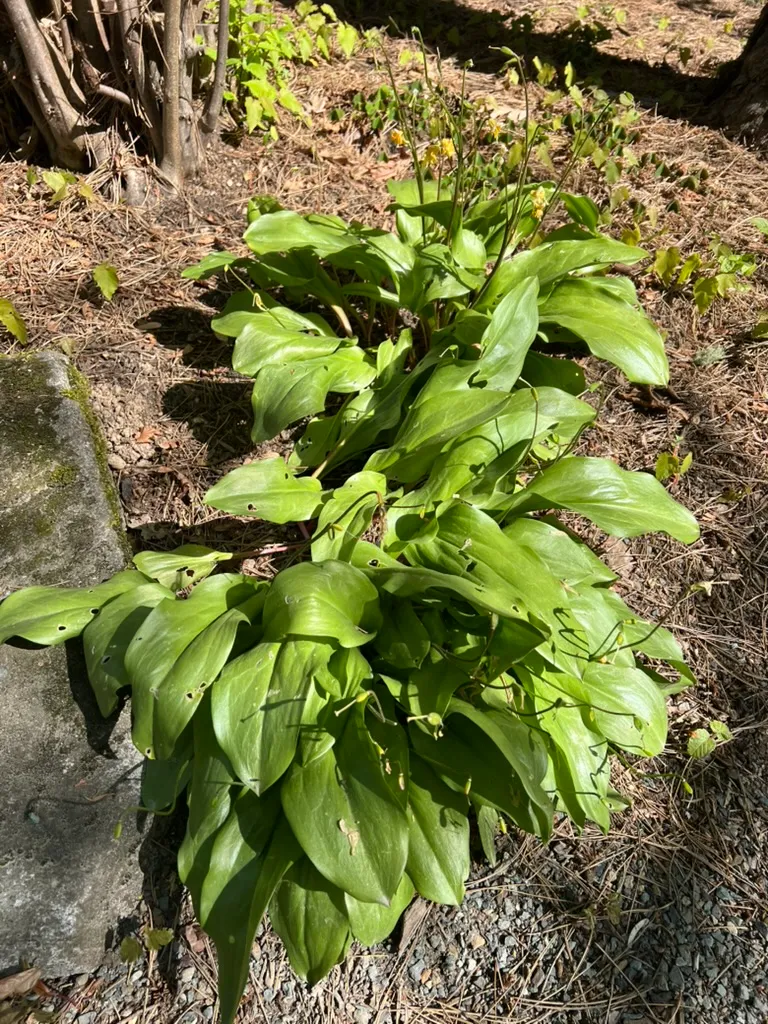
glossy green with faint brown mottling; elliptical basal leaves 4-8 inches (10-20 cm) long held in pairs emerging directly from the corm; the brown mottling is less pronounced than in the species parents and some plants show nearly unmottled green leavesGrowing Conditions
Sun Requirements
Requires 3-5 hours of direct sunlight daily
• Full Sun: 6+ hours of direct sunlight
• Partial Shade: 3-6 hours of direct sunlight
• Full Shade: Less than 3 hours of direct sunlight
Care & Maintenance
Care Guide
Plant in well-drained humus-rich acidic soil with a pH of 5.5-6.5 in part shade (3-5 hours of direct sun) under deciduous woodland canopy where cool moist spring conditions and a deep leaf-litter layer approximate the native Pacific forest habitats of the parent species. Corms are planted 4-6 inches (10-15 cm) deep in the ground immediately after purchase without any intervening dry storage — the elongated corms are intolerant of drying out and corms from mass-market catalog sources that have been stored dry for weeks often fail to establish because the exposed corms have lost too much internal moisture during shipping. Fresh corms from specialty bulb sources or potted plants from nurseries establish reliably. Allow foliage to yellow and die back naturally during May and June after the flowering display ends — the foliage is photosynthesizing energy back into the corm during this period and removing it early reduces the vigor of the following year's bloom. Corms multiply by offset production and the colony fills in to a sizable planting within 3-5 growing seasons from an initial planting of 3-5 corms. The plant is drought-tolerant during the summer dormancy period (when it is below ground and needs no water) and benefits from consistent moisture during the active spring growth period. Deer avoid the foliage. Non-toxic.Pruning
No active pruning is needed. Foliage is allowed to yellow and die back naturally by early summer (June) after the flowering display ends because the yellowing leaves are photosynthesizing energy into the corm for the following year's bloom, and any foliage removal before natural senescence weakens the plant. Dormant corms are left undisturbed in place through the summer, fall, and winter dormancy period. Offset corms can be divided during dormancy (July-September) if an established colony becomes crowded, though colonies generally thrive without division for many years.Pruning Schedule
Prune: June
late spring
Container Growing
Suitable for container growing
Minimum container size: 2 gallons