Erythronium, Genus, hendersonii, Species,
- Genus & species
fawn lily
Klamath-Siskiyou region of Oregon and California
Overview
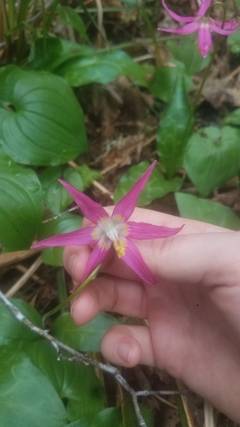
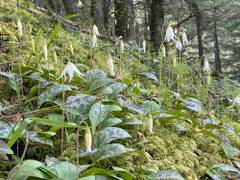
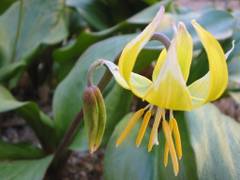
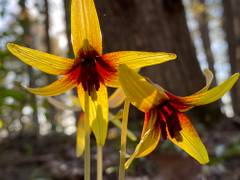
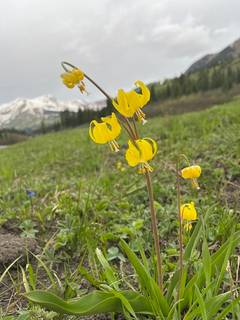
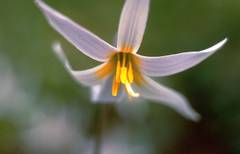
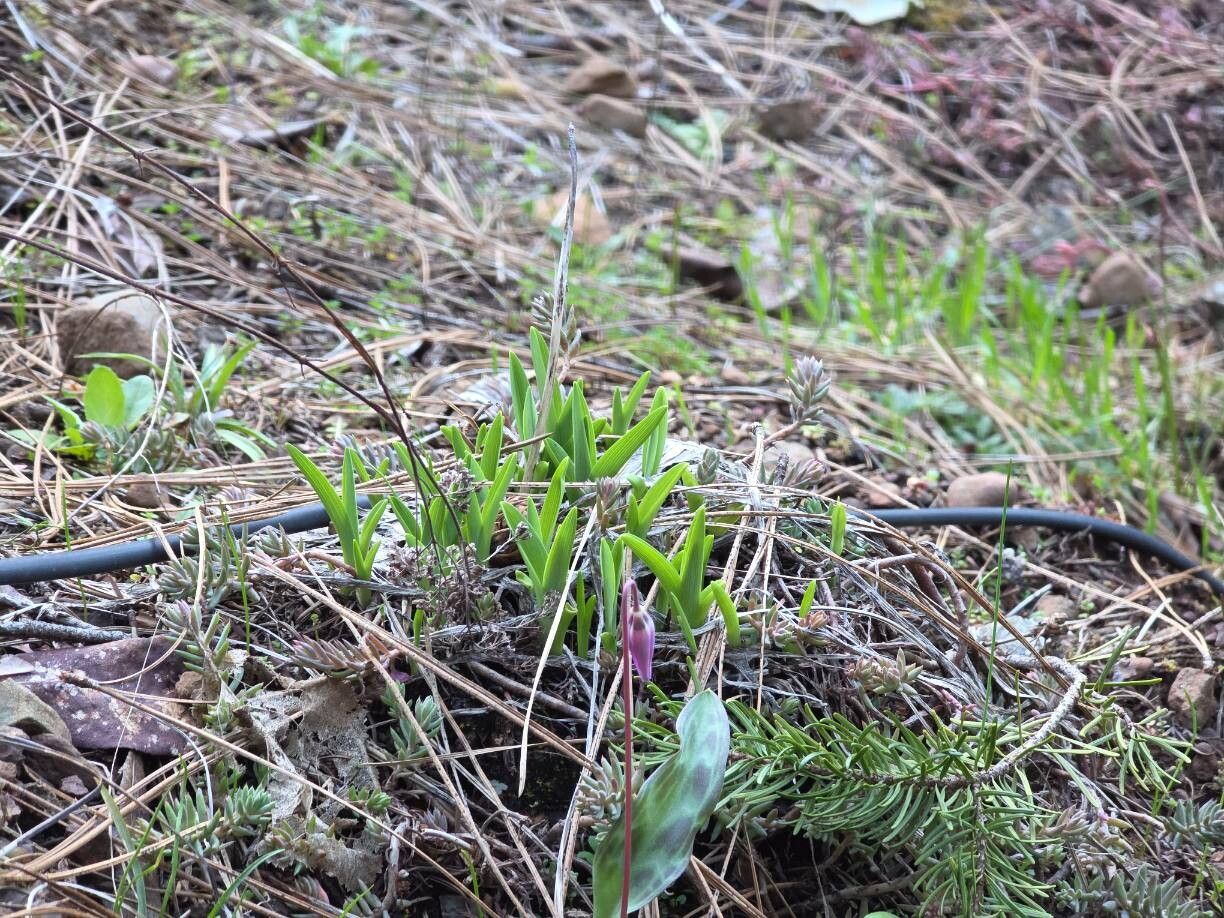
Erythronium hendersonii is a spring-ephemeral perennial bulb reaching 8-14 inches (20-35 cm) tall in flower and forming small colonies via offset bulbs. Each plant produces two opposite, lance-shaped basal leaves 4-7 inches (10-18 cm) long, glossy green with brown or maroon mottling along the upper surface. A single leafless flowering stem holds 1-3 nodding flowers with strongly reflexed tepals 1-1.5 inches (2.5-4 cm) long. Tepals are pale lavender-pink fading to nearly white at the tips, with a deep purple to nearly black zone and yellow ring at the base. Anthers and stigma are dark purple. Bloom occurs from late March through May. Fruit is a 3-celled capsule 0.6-1 inch (1.5-2.5 cm) long, ripening 4-6 weeks after bloom. Foliage yellows and dies back 6-8 weeks after flowering, leaving the bulb dormant through summer until fall rains. Bulbs sit 4-8 inches (10-20 cm) deep and may persist 20-40 years in stable forest habitats. The species has a small native range and is uncommon in cultivation.
Native Range
Native to a small range in southwestern Oregon and adjacent northern California, within the Klamath, Siskiyou, and Cascade-Siskiyou regions. Found in open mixed conifer-oak woodlands, chaparral edges, and dry rocky slopes at 500-5,000 feet (150-1,500 m) elevation, often on serpentine or other mineral-rich substrates.Suggested Uses
Used in woodland gardens, native plant gardens, and shaded rock gardens at 4-6 inch (10-15 cm) bulb spacing. Suited to seasonally dry shade beneath deciduous oaks and naturalized woodland plantings in mediterranean-climate regions. Performs poorly in summer-irrigated borders, containers smaller than 5 gallons (19 L), and warm-summer climates south of zone 8.How to Identify
Appearance
Size & Dimensions
Height8" - 1'2"
Width/Spread4" - 6"
Bloom Information
Flowers open from late March through May depending on elevation; peak bloom occurs in mid-April at low elevations and in early May at higher sites. Individual flowers last 5-7 days; total bloom period extends 2-3 weeks per plant. Flowers fade from lavender-pink to dull white as they age. Bloom is reduced in unusually warm late-winter periods that trigger early emergence followed by frost damage.
Detailed Descriptions
Flower Description
pale lavender-pink with deep purple base and yellow ringFoliage Description
glossy green with brown or maroon mottlingGrowing Conditions
Sun Requirements
Requires 3-6 hours of direct sunlight daily
• Full Sun: 6+ hours of direct sunlight
• Partial Shade: 3-6 hours of direct sunlight
• Full Shade: Less than 3 hours of direct sunlight
Care & Maintenance
Care Guide
Bulbs are planted 4-6 inches (10-15 cm) deep in fall in gritty, well-drained, organically rich soil with consistent winter and spring moisture. Bulbs require summer dormancy with reduced moisture; rot occurs in saturated summer soil or heavily irrigated borders. Slugs feed on emerging foliage in cool wet springs and can defoliate plants in 1-2 nights. Vole damage may eliminate small colonies within 2-3 years where rodent pressure is high. Plants take 4-6 years to flower from seed and 2-3 years from offset bulblets. Established colonies expand at 0.5-1 inch (1.5-2.5 cm) per year.Pruning
Foliage yellows and dies back 6-8 weeks after bloom; dead leaves are removed once they detach with a gentle pull. No other pruning is required. Removing green foliage in summer prevents the bulb from storing reserves for the following year's bloom.Pruning Schedule
Prune: June
summer