Image 1 of 10
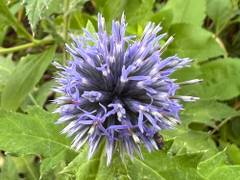
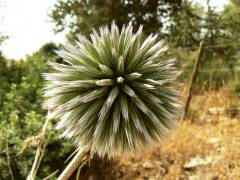
© Kristian Peters -- Fabelfroh 14:27, 27 July 2006 (UTC), some rights reserved (CC-BY-SA) · Wikimedia Commons
1 / 10
Echinops, Genus, ritro, Species,
- Genus & species
Globe thistle
Southern and eastern Europe to western and central Asia
Overview
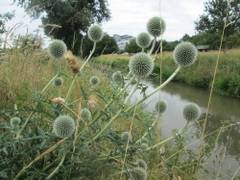
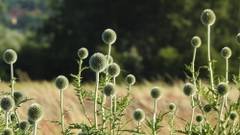
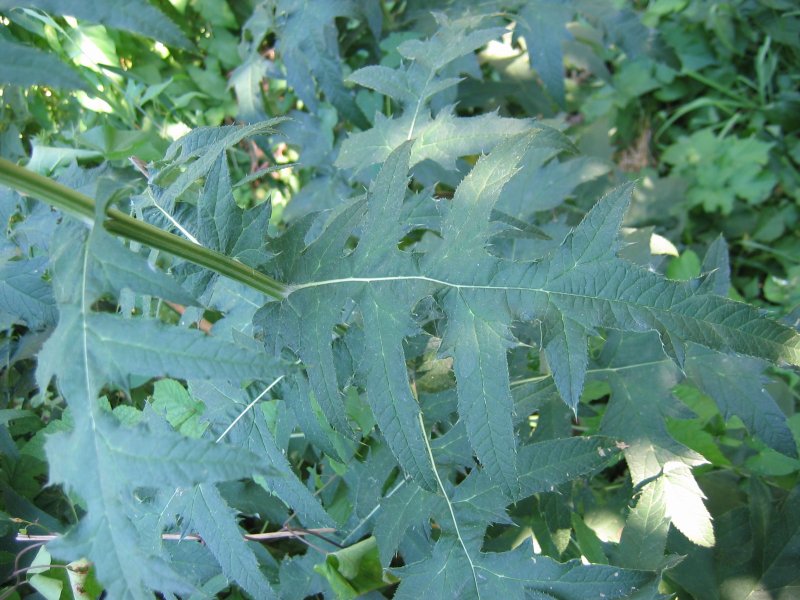
Echinops ritro is a herbaceous perennial forming an upright clump 24-36 inches (60-90 cm) tall and 18-24 inches (45-60 cm) wide from a deep taproot. Stems are stiff, ridged, and coated in white wool. Leaves reach 4-8 inches (10-20 cm) long, cut nearly to the midrib into pointed lobes ending in spines 0.1-0.2 inch (3-5 mm) long, dark green and rough above and covered in dense white felt beneath. Flower heads are spheres 1.5-2 inches (4-5 cm) across, each holding 100-200 tubular florets that open steel-blue from metallic gray-blue buds. Heads open over 2-3 weeks from the top of the stem downward between July and September. Seed heads dry to gray-brown and hold their shape into December. The taproot descends 18-24 inches (45-60 cm), so established plants transplant poorly and root fragments left in the ground regrow. Each plant sheds enough seed for 20-50 self-sown seedlings when heads are left to ripen. Lower leaves brown and drop from August in dry summers, and stems lean or fall in soil rich in nitrogen.
Native Range
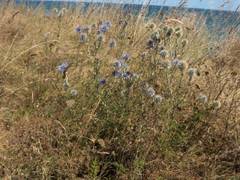
Native to southern and eastern Europe and western Asia, from Spain and Italy through the Balkans and Ukraine to Turkey, the Caucasus, and central Asia. Grows on dry stony grassland, rocky slopes, and roadside banks at 300-6,600 feet (90-2,000 m). Naturalized in parts of North America, where it appears on roadsides and in old fields.Suggested Uses
Planted at 18-24 inch (45-60 cm) spacing in gravel gardens, dry borders, and prairie-style plantings among grasses. Heads are cut for fresh arrangements at first color and dried by hanging stems upside down in shade for 2-3 weeks, holding blue color for 6-12 months. Spined foliage and stems limit its placement beside paths and seating.How to Identify
Appearance
Size & Dimensions
Height2' - 3'
Width/Spread1'6" - 2'
Colors
Flower Colors
Foliage Colors
Bloom Information
Flower heads open from July into September in zones 4-8, each head taking 2-3 weeks to open fully from top to bottom. Total bloom runs 6-8 weeks. Heads cut at first color trigger side shoots that flower 3-4 weeks later. Flowering begins 2-3 weeks earlier in zones 8-9 and ends by late August under sustained heat above 95F (35C).
Detailed Descriptions
Foliage Description
Dark green above, white-felted beneathGrowing Conditions
Sun Requirements
Requires 6-10 hours of direct sunlight daily
• Full Sun: 6+ hours of direct sunlight
• Partial Shade: 3-6 hours of direct sunlight
• Full Shade: Less than 3 hours of direct sunlight
Care & Maintenance
Care Guide
Water through the first season only; the taproot then reaches deeper moisture and plants hold through 6-8 weeks of drought without wilting. Lean, sharply drained soil at pH 6.0-8.0 keeps stems upright, while rich or moist soil produces growth that leans and falls at flowering. Crowns rot between November and February in soil that stays saturated through winter, which accounts for most losses. Aphids cluster on stems below the flower heads in warm dry spells. Division is impractical because cutting the taproot kills a high proportion of pieces; propagation runs from root cuttings 2-3 inches (5-8 cm) long taken in late winter, or from seed. Clumps stand 8-10 years without lifting.Pruning
Stems are cut to ground level in late autumn once seed heads darken, or left standing into winter and cut in March before new growth appears. Cutting flowered stems to the base in late August triggers a second, shorter flush of smaller heads in some seasons. Heads removed before seed ripens in September stop the 20-50 self-sown seedlings that otherwise appear around each clump.Pruning Schedule
Prune: March & September–October
fallearly spring