Echinops, Genus, ruthenicus, Species,
- Genus & species
Russian globe thistle
Eastern Europe and Central Asia (Ukraine, Russia, Kazakhstan; dry steppes)
Overview
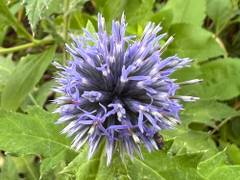
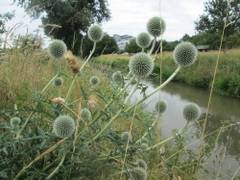
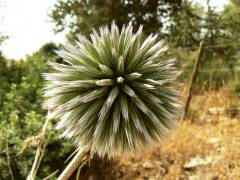
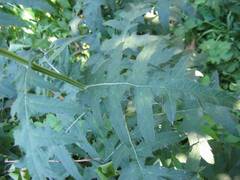
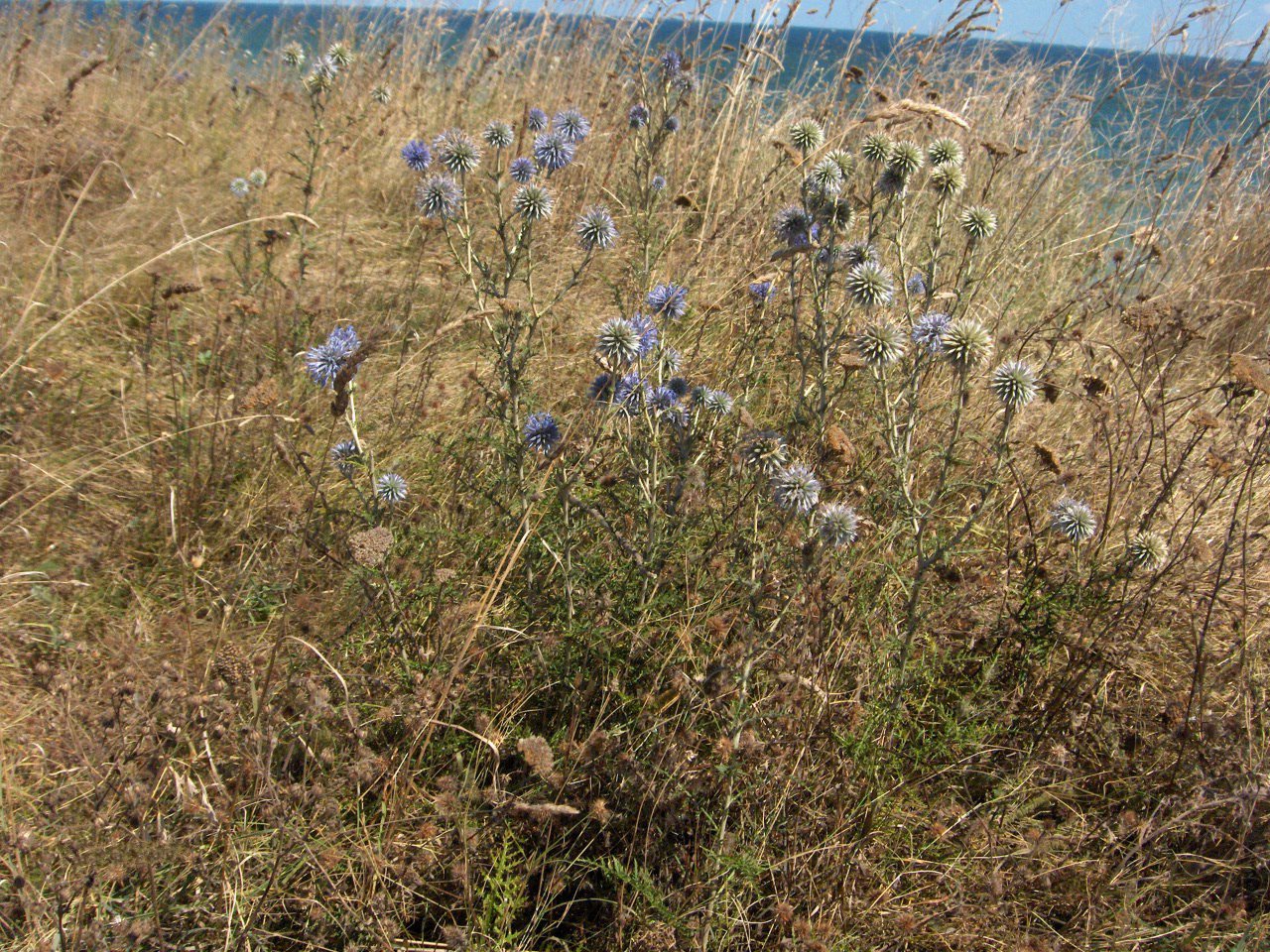
Echinops ruthenicus is an upright, clumping, herbaceous perennial reaching 30–42 inches (75–105 cm) tall with a spread of 18–24 inches (45–60 cm). The species from the dry steppes of eastern Europe and Central Asia is closely related to E. ritro and has been treated at various times as a subspecies (E. ritro ssp. ruthenicus) or a full species; molecular work published in the 2000s supports species-level recognition. The spherical flower heads carry 1–1.5 inches (2.5–4 cm) across in steel-blue to medium blue, similar in size to E. ritro but slightly less saturated in color. Leaves are the most finely dissected foliage of any commercial Echinops—deeply cut into very narrow, spine-tipped, almost thread-like lobes, 4–8 inches (10–20 cm) long, dark green above and white-tomentose beneath. The filigree-like leaf texture gives the species a more refined appearance than the broader-leaved E. bannaticus or E. sphaerocephalus. Flowers are borne on gray-white stems in July–August. Growth rate is moderate. A deep taproot anchors the plant and makes transplanting of established specimens unreliable. Cold hardiness reaches zone 3 (−40°F / −40°C), which matches the continental steppe climate of the native range where winter temperatures regularly drop below −30°F (−34°C).
Native Range
Echinops ruthenicus is native to eastern Europe and Central Asia, specifically Ukraine, southern Russia, and Kazakhstan, growing in dry steppes, rocky grasslands, and calcareous hillsides at elevations below 3,000 feet (900 m). The species epithet 'ruthenicus' derives from Ruthenia, a historical Latin name for the territories of modern Ukraine, Belarus, and western Russia.Suggested Uses
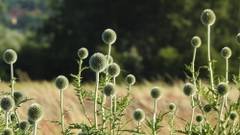
Planted in gravel gardens, steppe-style plantings, dry borders, and crevice gardens at 18–24 inch (45–60 cm) spacing. The thread-like foliage adds a refined texture to dry-garden compositions that the coarser-leaved Echinops species cannot match—use this species where filigree leaf texture matters visually. Paired with ornamental grasses such as Stipa species, low sedums, and other steppe plants (Perovskia atriplicifolia, Salvia nemorosa cultivars), the species combines well in naturalistic dry-garden plantings. The globes dry well for indoor arrangements. Shade, wet soils, and rich, fertile borders are poor fits for the species—all three reduce the characteristic vigor and cause stem flop.How to Identify
Appearance
Size & Dimensions
Height2'6" - 3'6"
Width/Spread1'6" - 2'
Bloom Information
Spherical steel-blue to medium blue globe flower heads 1–1.5 inches (2.5–4 cm) across open in July–August over 3–4 weeks. The globes dry well and retain color in dried arrangements.
Detailed Descriptions
Flower Description
Steel-blue to medium blue, spherical bristly globesFoliage Description
Dark green above, white-tomentose beneath; finely dissected thread-like lobesGrowing Conditions
Sun Requirements
Requires 6-12 hours of direct sunlight daily
• Full Sun: 6+ hours of direct sunlight
• Partial Shade: 3-6 hours of direct sunlight
• Full Shade: Less than 3 hours of direct sunlight
Care & Maintenance
Care Guide
Plant in full sun in well-drained, lean, gritty soil. Drought-tolerant once established. The species evolved on the dry Eurasian steppes and grows vigorously on the same lean, dry, low-fertility substrates found in its native habitat. Hardy to zone 3. Self-seeds moderately. The deep taproot makes division impractical—propagation is from seed or root cuttings. No serious pest or disease problems.Pruning
Spent flower stems are cut back after bloom in September. All foliage is cut back to ground level in late fall or early spring before new growth begins.Pruning Schedule
Prune: September
fall