Echinops, Genus, exaltatus, Species,
- Genus & species
Russian globe thistle
SE Europe and W Asia (Balkans, Ukraine, Turkey, Caucasus; dry meadows, steppe)
Overview
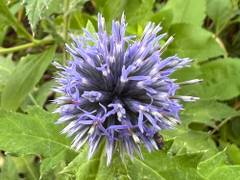
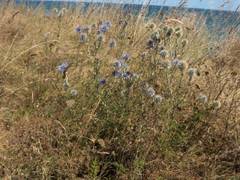
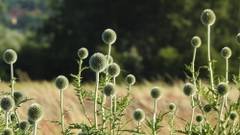
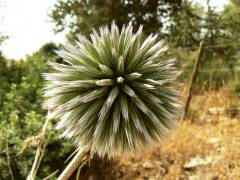
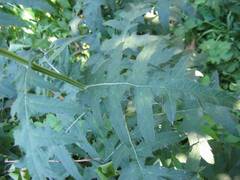
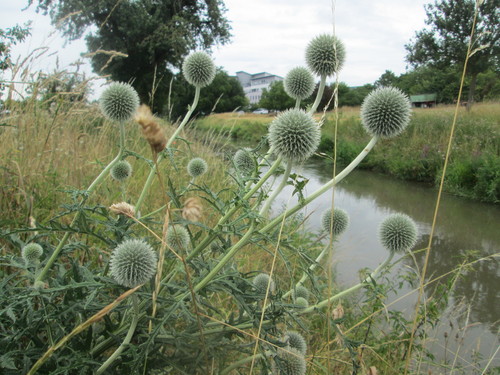
Echinops exaltatus is an upright, clumping, herbaceous perennial reaching 48–72 inches (120–180 cm) tall with a spread of 24–36 inches (60–90 cm). This is the largest species in the genus commonly grown in gardens, and the name 'exaltatus' means tall or elevated. The spherical flower heads are 1.5–2 inches (4–5 cm) across, silvery-gray to pale blue-white—lighter in color than E. bannaticus or E. ritro. The globes are borne on tall, sturdy, branching stems with gray-white tomentum in July–August. The basal leaves are large, deeply pinnately lobed, 8–16 inches (20–40 cm) long, dark green above and densely white-tomentose beneath. Growth rate is moderate to fast. The tall stature and pale globe color give this a different character than the shorter, more intensely blue species. Deep taproot. Self-seeds readily—can become weedy in some settings. Hardy to zone 3.
Native Range
Echinops exaltatus is native to southeastern Europe and western Asia (Balkans, Ukraine, Turkey, Caucasus), in dry meadows, waste ground, and steppe habitats.Suggested Uses
Planted at the back of borders, in meadow gardens, and in large-scale naturalistic plantings at 24–36 inch (60–90 cm) spacing. The tall, silvery-white globes provide a strong vertical accent and contrast with lower, blue or pink perennials. Functions in dried flower arrangements. The bristly globes attract bees. Self-seeds readily—may be problematic in small, tidy gardens. Not suitable for shade, wet soils, small spaces, or front-of-border positions.How to Identify
Appearance
Size & Dimensions
Height4' - 6'
Width/Spread2' - 3'
Bloom Information
Spherical, silvery-gray to pale blue-white globe flower heads 1.5–2 inches (4–5 cm) across in July–August. Bloom duration is 3–4 weeks. The globes dry well.
Detailed Descriptions
Flower Description
Silvery-gray to pale blue-white, spherical bristly globesFoliage Description
Dark green above, densely white-tomentose beneath; large, deeply lobedGrowing Conditions
Sun Requirements
Requires 6-12 hours of direct sunlight daily
• Full Sun: 6+ hours of direct sunlight
• Partial Shade: 3-6 hours of direct sunlight
• Full Shade: Less than 3 hours of direct sunlight
Care & Maintenance
Care Guide
Plant in full sun in well-drained, lean to average soil. Drought-tolerant once established. Hardy to zone 3. Self-seeds readily—deadhead to control spread unless naturalization is desired. May need staking in rich soils where the tall stems become top-heavy. Deep taproot makes transplanting difficult.Pruning
Cut back spent flower stems after bloom to prevent excessive self-seeding. Cut back all foliage to the ground in late fall or early spring. Staking may be needed in rich soils.Pruning Schedule
Prune: September
fall