Dryopteris, Genus, marginalis, Species,
- Genus & species
marginal wood fern
Overview
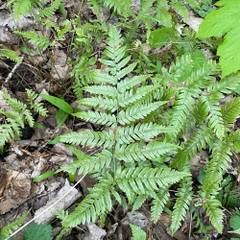
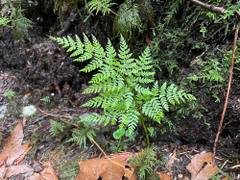
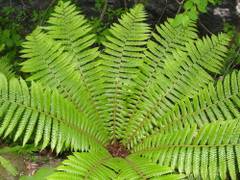
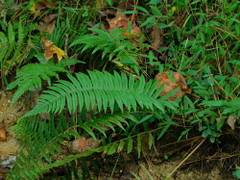
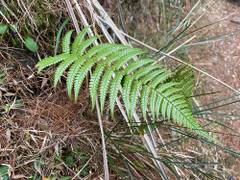
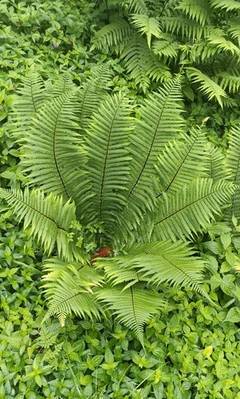
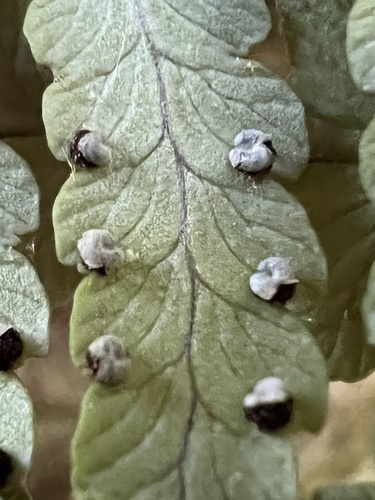
Marginal wood fern is an evergreen fern of eastern North American woodlands, forming a tight, vase-shaped clump 12-24 inches (30-60 cm) tall and 18-30 inches (45-75 cm) wide. The fronds are leathery and blue-green, lance-shaped in outline, and divided into deeply cut leaflets that give a coarse, sturdy texture. New fronds unfurl from a stout, scaly crown in spring and persist through winter, lying flatter under snow before standing again the following season. The common name comes from the round spore cases lined up along the very edges of the leaflet lobes on the frond undersides, a placement that separates this species from related wood ferns. Clumps expand slowly from a short, woody rhizome and do not spread by runners, staying where they are planted for many years. Dryopteris marginalis grows in rocky, humus-rich soil on shaded slopes and ledges, tolerating drier, leaner ground than most woodland ferns once its roots are established. Growth is slow, and a young division may take three to four years to reach full size, so it builds a planting gradually rather than filling space in a single season.
Native Range
Native to eastern North America, from Nova Scotia and Ontario south to Georgia and Alabama and west to Oklahoma. Dryopteris marginalis grows on rocky, wooded slopes, shaded cliffs, and ravine banks, often rooted in crevices and leaf litter.Suggested Uses
Used in shade and woodland gardens, along shaded foundations, and among rocks or on slopes where its evergreen fronds hold structure through winter. It pairs with spring ephemerals and other shade perennials as a steady green anchor. The clumping habit suits small shaded beds and crevice plantings.How to Identify
Appearance
Size & Dimensions
Height1' - 2'
Width/Spread1'6" - 2'6"
Colors
Foliage Colors
Fall Foliage Colors
Bloom Information
As a fern, it produces no flowers and reproduces by spores. Round spore cases ripen along the leaflet margins from midsummer into autumn, shedding spores from the frond undersides. The evergreen fronds carry the previous season's spent sori into the following spring.
Detailed Descriptions
Foliage Description
blue-greenGrowing Conditions
Sun Requirements
Tolerates up to 4 hours of direct sunlight daily
• Full Sun: 6+ hours of direct sunlight
• Partial Shade: 3-6 hours of direct sunlight
• Full Shade: Less than 3 hours of direct sunlight
Care & Maintenance
Care Guide
Grows in part to full shade in moist but well-drained, humus-rich soil with a pH from 5.0 to 7.0. Established clumps tolerate short dry spells and poorer, rockier ground better than many ferns, though deep drought scorches the frond edges. A yearly mulch of leaf litter or compost feeds the shallow roots and keeps the crown cool. The plant has no serious pests and needs no routine feeding beyond that mulch. Clumps can be divided in early spring as growth resumes, though slow regrowth makes division occasional rather than regular. Standing water in winter rots the crown, so the site needs to drain freely.Pruning
Old or winter-damaged fronds are cut away at the base in early spring before the new croziers unfurl. No other pruning is needed, since the clump holds its shape on its own. Removing tattered fronds keeps the crown tidy and lets new growth stand cleanly.Container Growing
Suitable for container growing