Delphinium, Genus, nuttallianum, Species,
- Genus & species
upland larkspur
Western North America from British Columbia to Arizona
Overview
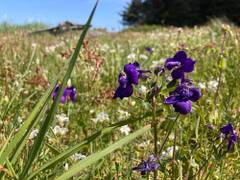
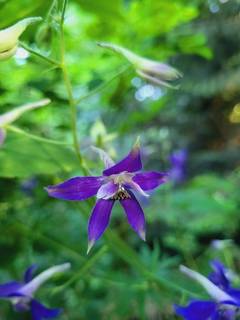
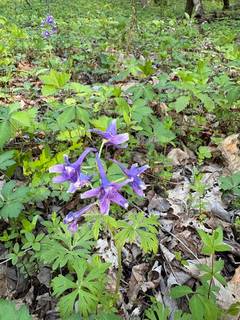
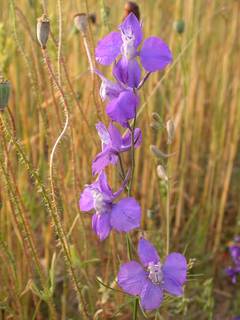
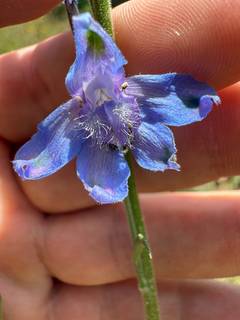
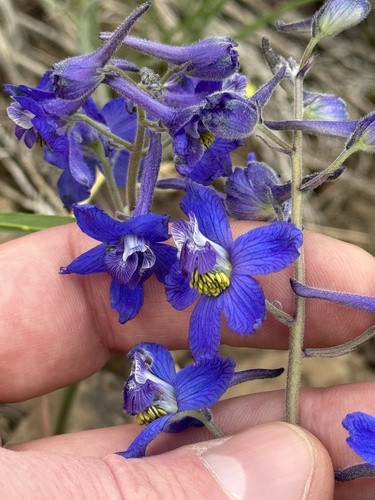
A clump-forming herbaceous perennial reaching 4-16 inches (10-40 cm) tall and 3-6 inches (7.5-15 cm) wide, growing from a short, fleshy taproot. Basal leaves few, palmately divided into 3-5 narrow primary lobes that are further cut into linear segments 0.04-0.1 inch (1-3 mm) wide — narrower than those of D. menziesii. Stems carry 3-15 flowers in a loose raceme; flowers blue to violet-blue with whitish upper petals, 0.6-1 inch (15-25 mm) across including a straight to gently down-curved spur 0.4-0.7 inch (10-18 mm) long. Foliage withers and stems collapse by July as plants enter summer dormancy; the rootstock persists through summer drought and resumes growth in early spring. Seedlings carry one slender divided leaf in year one and may not flower until year 3-4. All parts contain norditerpenoid alkaloids; the species causes a substantial fraction of recorded cattle losses on western US rangelands. Plants do not transplant from established stands and are short-lived in cultivation under regular irrigation.
Native Range
Native to western North America from southern British Columbia south through eastern Washington and Oregon, the Sierra Nevada and Great Basin, to northern Arizona and New Mexico. Found in sagebrush steppe, montane meadows, ponderosa pine woodlands, and dry grasslands at 1,000-10,000 feet (300-3,050 m) elevation.Suggested Uses
Used in xeric meadow restorations, sagebrush-steppe gardens, and dry rock garden plantings within zones 4-8, at 6-10 inch (15-25 cm) spacing. Stands integrate with bunchgrasses and other summer-dormant geophytes that share the dry-summer pattern. Container culture is rarely sustained beyond a single season because the taproot resents pot constraint.How to Identify
Appearance
Size & Dimensions
Height4" - 1'4"
Width/Spread3" - 6"
Bloom Information
April through July depending on elevation; lowland populations bloom April-May, montane populations bloom May-July. Individual flowers last 5-7 days; total bloom per stand 4-6 weeks. Snowmelt timing controls bloom onset in mountain populations, with stands flowering 1-3 weeks after exposure of the soil.
Detailed Descriptions
Flower Description
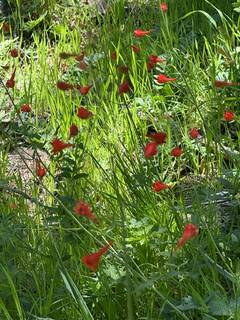
Blue to violet-blue with white upper petalsFoliage Description
Mid-greenGrowing Conditions
Sun Requirements
Requires 6-10 hours of direct sunlight daily
• Full Sun: 6+ hours of direct sunlight
• Partial Shade: 3-6 hours of direct sunlight
• Full Shade: Less than 3 hours of direct sunlight
Care & Maintenance
Care Guide
Seed requires 8-12 weeks of moist cold stratification at 32-40°F (0-4°C) before germination. Seedlings benefit from supplemental water in their first summer but enter summer dormancy by year two. Crown rot develops within 1-2 seasons in summer-irrigated beds in zones 7-9. Mature plants are damaged by transplanting because the taproot does not recover from disturbance. All parts contain norditerpenoid alkaloids; livestock and humans are at risk of severe cardiac and respiratory effects from ingestion. Stands are usually maintained by autumn-sown replacement seed rather than long-term plant survival.Pruning
Spent stems are removed at ground level once seed has dispersed if self-seeding is not desired. Foliage is left to senesce naturally; pulled stems leave a clean break at the rootstock by August. Cutting during active growth weakens the plant because cut surfaces bleed sap and recovery is slow in dry summers.Pruning Schedule
Prune: July
summer
Container Growing
Minimum container size: 1 gallons