Image 1 of 14
1 / 14
Plant Reference
Delphinium, Genus, hybrids, Species,
- Genus & species
delphinium
Garden hybrid origin; derived primarily from {D. elatum}, native to subalpine meadows and open woodland margins across central and eastern Europe and Siberia, with contributions from {D. cardinale}, {D. nudicaule}, and other species; the genus includes approximately 300 species distributed across the Northern Hemisphere and Africa; true blue flower colors in the hybrids sit among the more sought-after shades in perennial breeding
Overview
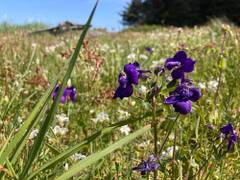
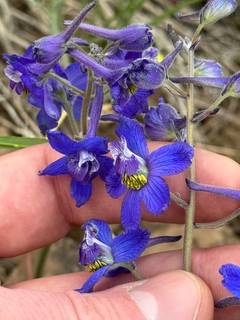
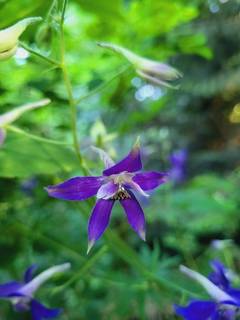
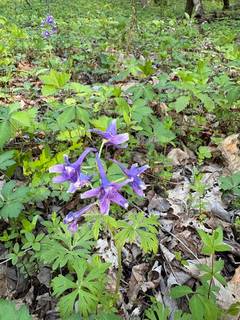
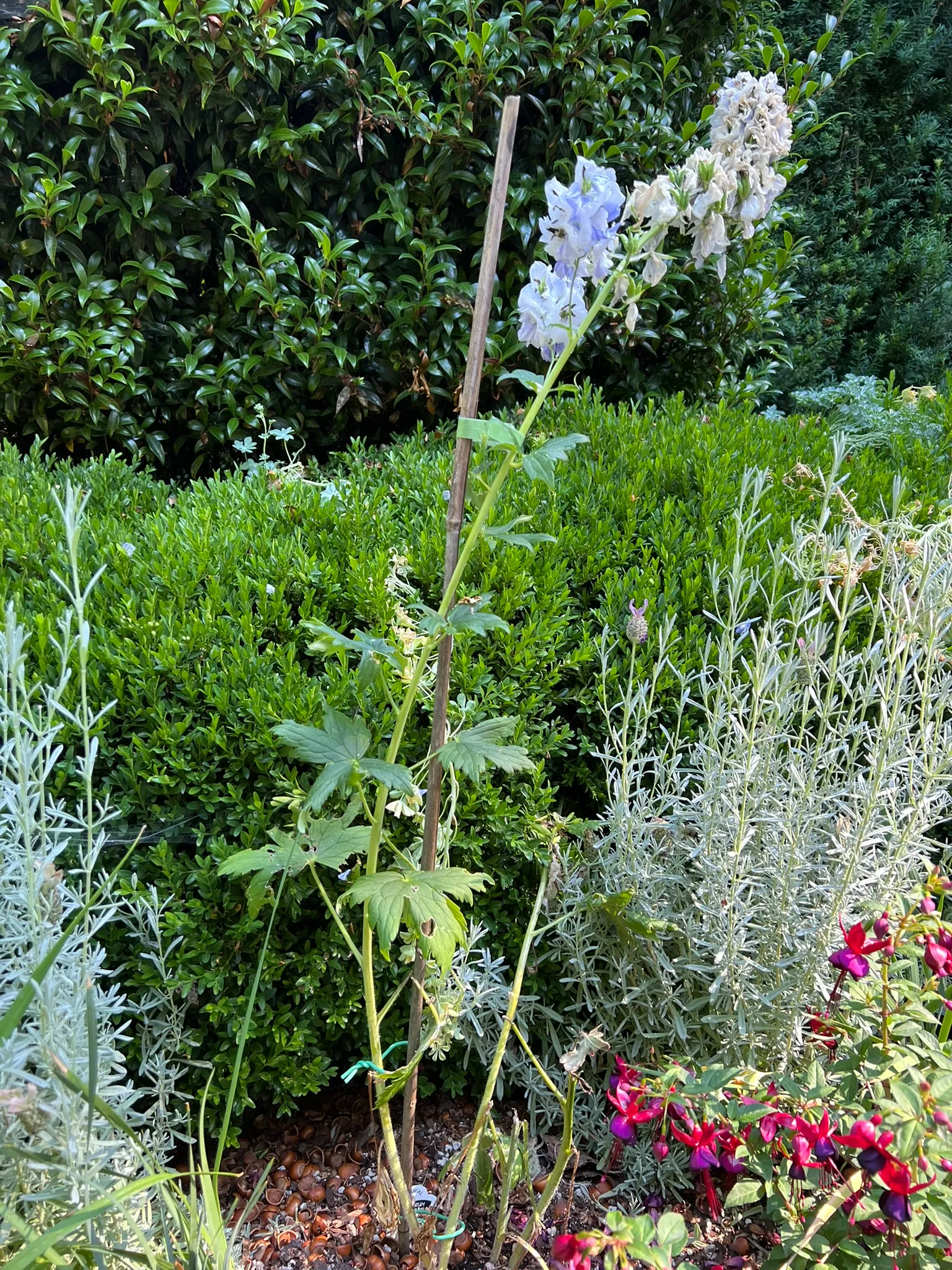
Delphinium Hybrids are a group of tall clump-forming perennials in the buttercup family (Ranunculaceae), derived primarily from Delphinium elatum and related species and encompassing thousands of named cultivars. Plants produce stout upright stems 3-8 feet (90-240 cm) tall carrying large deeply palmate-lobed leaves 3-6 inches (8-15 cm) across. Flowers are arranged in dense erect racemes 12-36 inches (30-90 cm) long; individual flowers 1-2 inches (2.5-5 cm) across have five petal-like sepals surrounding a small central cluster of modified petals called the 'bee', often in a contrasting color. The color range includes white, cream, pale pink, lavender, mid-blue, deep blue, violet, and purple. True blue shades — rare in the herbaceous perennial world — sit among the more sought-after colors in perennial breeding, and the Delphinium genus is one of the handful of genera that carries true blue reliably. All parts of the plant are toxic if ingested. Delphiniums are cool-season plants that do most strongly in cool summers and decline rapidly in heat and humidity; they are typically short-lived at 2-4 years in zones 7-8 and longer-lived in cooler zones. Staking is required for all tall types — wind damage to unstaked stems is the most common cause of plant loss.
Native Range
Garden hybrid delphiniums are predominantly derived from D. elatum, native to subalpine meadows and open woodland margins across central and eastern Europe and Siberia, with genetic contributions from D. cardinale, D. nudicaule, and other species. The genus Delphinium comprises approximately 300 species distributed across the Northern Hemisphere and Africa.Suggested Uses
Planted at the back of mixed perennial borders in zones 3-7 at 24-36 inch (60-90 cm) spacing, giving vertical accents through June. Traditional companions in the cottage-garden style include roses and peonies, and the color combination of blue delphinium against pink and white rose flowers is one of the long-established pairings of the English border tradition. Cut flowers last 5-7 days in water when cut with the bottom third of the spike open. Hot humid climates rule out the cultivar group — zones 8-9 summer conditions weaken plants rapidly and reduce bloom quality. The coastal Pacific Northwest and the cool-summer regions of zones 3-6 carry the plant most successfully.How to Identify
Appearance
Size & Dimensions
Height3' - 8'
Width/Spread2' - 3'
Bloom Information
Blooms June through July in zones 3-7; peak bloom runs through June in most temperate climates. A second lighter flush is possible in September if plants are cut back to 12 inches (30 cm) immediately after the first bloom fades and then watered and fertilized through the interval to encourage regrowth. In zones 8-9, summer heat reduces flower quality substantially and plants are often grown as cool-season annuals rather than true perennials.
Detailed Descriptions
Flower Description
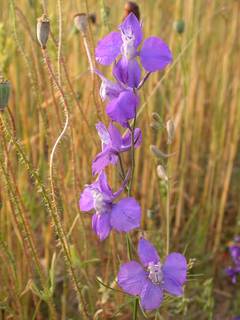
White, cream, pale pink, lavender, mid-blue, deep blue, violet, and purple; spurred flowers 1-2 inches (2.5-5 cm) across with five petal-like sepals and a central 'bee' in a contrasting color, arranged in dense erect racemes 12-36 inches (30-90 cm) long; true blue shades sit among the more sought-after colors in perennial breedingFoliage Description
Medium green deeply palmate-lobed leaves 3-6 inches (8-15 cm) across carried on stout upright stemsGrowing Conditions
Sun Requirements
Requires 6-8 hours of direct sunlight daily
• Full Sun: 6+ hours of direct sunlight
• Partial Shade: 3-6 hours of direct sunlight
• Full Shade: Less than 3 hours of direct sunlight
Care & Maintenance
Care Guide
Grows in full sun in deep fertile well-drained soil at pH 6.5-7.5; delphiniums are heavy feeders and require rich soil with ample organic matter. Stake stems when they reach 12-18 inches (30-45 cm) — staking later allows wind damage to unstaked stems, which is the most common cause of plant loss. Water deeply and regularly; the soil cannot be allowed to dry out. Fertilize every 3-4 weeks during the growing season with a balanced fertilizer. After the first bloom, cut spikes back to 12 inches (30 cm) and fertilize to encourage a fall rebloom. Slugs are a serious pest — protect emerging shoots in spring with slug controls. In zones 7-8, treat as short-lived perennials and replace every 2-3 years; zones 3-6 support longer-lived plantings.Pruning
Cut spent flower spikes back to 12 inches (30 cm) immediately after bloom fades to encourage a second flush of bloom in September. After the second bloom, or in late fall, cut all stems to ground level. Hollow stems cannot be left standing through winter — they collect water and promote crown rot. Divide in early spring every 2-3 years; replant vigorous outer sections and discard the old center.Pruning Schedule
Prune: July & October
summerfall