Overview
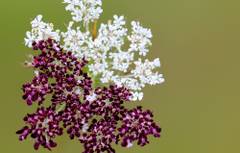
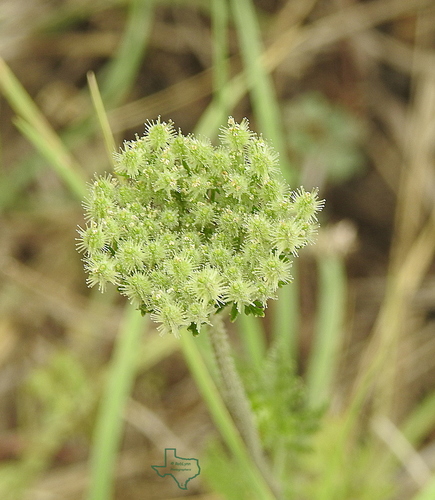
Daucus pusillus is a slender annual in the carrot family, growing 8-32 inches (20-80 cm) tall on a single bristly stem from a thin taproot. The leaves are finely divided into many narrow segments, giving a ferny appearance, and are mostly clustered toward the base. In late spring it bears small, flat-topped to slightly domed umbels of tiny white flowers, 1-2 inches (2.5-5 cm) across, that draw together into a concave bird's-nest shape as the seed ripens. The bristly, ribbed seeds catch on fur and clothing, aiding dispersal. It is the native North American counterpart of the introduced Queen Anne's lace, but is generally smaller, more slender, and earlier blooming. The plant grows in dry, open, often disturbed ground, including grasslands, roadsides, and rocky slopes, and completes its cycle in a single cool season. It germinates with autumn or winter moisture, flowers in spring, and dries by summer. The flowers draw small bees, flies, and other insects.
Native Range
Daucus pusillus is native to North and South America, ranging across much of the United States, especially the South, West, and Pacific Coast, into Mexico and southern South America. It grows in dry, open, and disturbed ground such as grasslands, roadsides, fields, and rocky slopes.Suggested Uses
Daucus pusillus is used in native plant gardens, wildflower mixes, and restoration of dry, disturbed sites for its early umbels and pollinator value. It suits naturalized meadows and low-input plantings where it can self-sow. Because it resembles a small roadside weed, it fits informal and habitat plantings more than formal beds.How to Identify
Appearance
Size & Dimensions
Height8" - 2'8"
Width/Spread4" - 10"
Bloom Information
Flowering occurs in spring, mainly March to June depending on region, after cool-season growth. The small white umbels open over a few weeks and then curl inward as the seeds mature. Small bees, flies, wasps, and beetles visit the open flowers. Bristly seeds form by early summer and cling to passing animals for dispersal.
Detailed Descriptions
Foliage Description
greenGrowing Conditions
Sun Requirements
Requires 6-10 hours of direct sunlight daily
• Full Sun: 6+ hours of direct sunlight
• Partial Shade: 3-6 hours of direct sunlight
• Full Shade: Less than 3 hours of direct sunlight
Water & Climate
Water Needs
Drought Tolerance
Drought tolerant when established
Care & Maintenance
Care Guide
Daucus pusillus grows in full sun and dry, well-drained soil, tolerating poor, rocky, sandy, and disturbed ground. As a cool-season annual it relies on autumn and winter rainfall, germinating in the cool months and flowering in spring before summer heat. It needs no fertilizer or supplemental water in its native range. Seed is sown in autumn on open soil, and the plant self-sows where ground stays bare. It does not transplant well because of its taproot, so direct sowing suits it. After it sets seed and dries in summer, the dead stalks can be cleared.Pruning
No pruning is needed for this small annual. Spent stalks can be pulled or cut once the seed has ripened. Removing seed heads before they dry limits self-sowing and reduces the bristly seeds that cling to clothing.Toxicity
Non-toxicPlanting Guide
Planting Methods & Timing
Planting Method
direct sow
Direct Sow Timing
Autumn, before winter rains
Days to Maturity
120–180 days
Plant Spacing
6 inches
Companion Planting
Good Companions