Daucus, Genus, spp., Multiple species,
- Genus
- Multiple species
carrots
Europe, the Mediterranean, North Africa, and southwest Asia
Overview
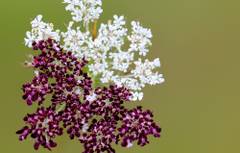
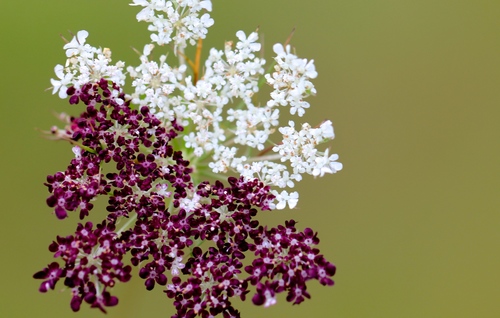
Daucus is a genus of about 20 to 40 species of annual and biennial herbs in the carrot family, Apiaceae, native to Europe, the Mediterranean, North Africa, southwest Asia, and with outliers in the Americas and Australia. The widely known species is Daucus carota, which includes both wild carrot, or Queen Anne's lace, and the cultivated carrot (D. carota ssp. sativus). Plants form a rosette of finely divided, fern-like leaves in the first year and a branched flowering stem 30-120 cm (12-47 in) tall in the second. The flowers are tiny and white, packed into flat or domed compound umbels 3-10 cm (1.2-4 in) across, often with a single dark purple floret at the center; as seed ripens, the umbel curls inward into a concave bird's-nest shape. The fruit is a bristly schizocarp that clings to fur and clothing. Cultivated carrots are grown for the swollen orange, purple, white, or yellow taproot, while wild forms have a thin, tough, pale root. Wild carrot self-seeds heavily, is treated as a weed in pastures, and is regulated as noxious in several regions.
Native Range
Daucus is native to Europe, the Mediterranean region, North Africa, and southwest and central Asia, with a few species in North America and Australia. Daucus carota has naturalized across temperate regions worldwide and is among the plants regulated as noxious weeds in parts of North America.Suggested Uses
Cultivated Daucus carota is grown as a root vegetable in gardens and on farms worldwide, and the ferny foliage and lacy white umbels of wild carrot are used in cottage and meadow plantings. The flowers attract predatory and pollinating insects, so the plant is sometimes grown as an insectary plant. Wild carrot is regulated as a noxious weed in some regions and is restricted from pasture.How to Identify
Appearance
Size & Dimensions
Height1' - 3'11"
Width/Spread8" - 2'
Bloom Information
Wild and weedy forms flower from late spring through summer in their second year, May to September, while cultivated carrots flower only if left to bolt. The white umbels open over many weeks and draw a wide range of bees, wasps, flies, and beetles. Bristly seeds ripen from late summer and detach to cling to animals and clothing.
Detailed Descriptions
Flower Description
White, often with one dark purple central floretFoliage Description
GreenGrowing Conditions
Sun Requirements
Requires 6-10 hours of direct sunlight daily
• Full Sun: 6+ hours of direct sunlight
• Partial Shade: 3-6 hours of direct sunlight
• Full Shade: Less than 3 hours of direct sunlight
Water & Climate
Water Needs
Drought Tolerance
Drought tolerant when established
Care & Maintenance
Care Guide
Daucus grows in full sun on loose, deep, well-drained soil and tolerates dry, poor, and stony ground in its wild forms. Cultivated carrots need deep, stone-free soil to form straight roots and steady moisture to prevent splitting. Wild carrot is drought-tolerant once the taproot is established and self-seeds freely on disturbed land. The plants are biennial, forming roots and foliage the first year and flowering the second before dying. Wild forms can spread into pasture and are difficult to remove because of the deep taproot. Cool soil slows germination, and the foliage of all species can cause skin irritation in sunlight in sensitive people.Pruning
These herbs are not pruned. Wild carrot is mown or pulled before the seed ripens to limit its spread, with the deep taproot easiest to lift from moist ground. Cultivated carrots are thinned as seedlings to give the roots room to expand.Container Growing
Suitable for container growing
Minimum container size: 3 gallons
Toxicity
Non-toxicPlanting Guide
Planting Methods & Timing
Planting Method
direct sow
Days to Maturity
60–80 days
Plant Spacing
3 inches