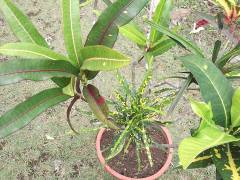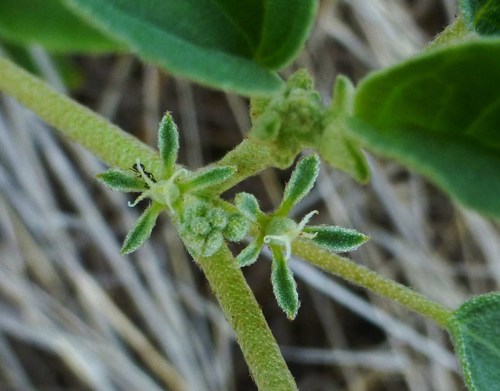
Croton, Genus, monanthogynus, Species,
- Genus & species
prairie tea
Central and southern United States to northern Mexico
Overview
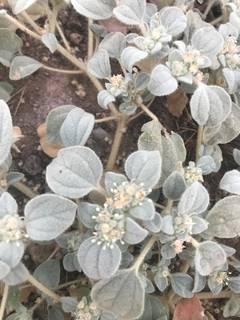
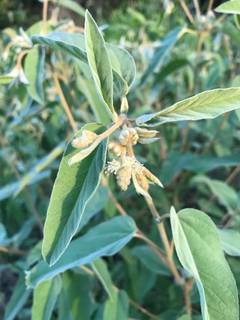
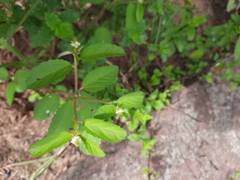
Croton monanthogynus is a much-branched annual herb in the Euphorbiaceae, forming a low, rounded, bushy plant 6-20 inches (15-50 cm) tall and about as wide in a single season. The stems and oval to oblong leaves, 0.5-1.5 inches (1.5-4 cm) long, are covered in tiny star-shaped (stellate) hairs that give the whole plant a grayish or silvery-green, slightly mealy look. Crushed foliage is aromatic. It is monoecious, carrying separate, small, petalless male and female flowers in the same clusters; the species name refers to the single-seeded fruit that usually follows each female flower, unlike the three-seeded capsules of many relatives. It is native to prairies, glades, pastures, roadsides, and other dry, open ground across the central and southern United States and into Mexico, often on limestone or disturbed soils. It germinates in late spring, grows through summer, and sets seed before dying with frost. Tolerant of heat, drought, and poor soil, it can spread on overgrazed and disturbed land where other plants are sparse. Like other members of its family, the sap may irritate skin in sensitive people.
Native Range
Native to the central and southern United States, from Illinois and Nebraska south to Texas, and into northern Mexico. It grows on prairies, rocky glades, pastures, and disturbed open ground, often over limestone.Suggested Uses
Croton monanthogynus has little ornamental use and is most often encountered as a wild plant of prairies and dry rangeland. Its seeds are eaten by quail, doves, and other birds, and the dried foliage was once steeped as a tea substitute, the source of the name prairie tea. It can be part of native grassland and restoration plantings on dry, poor soils.How to Identify
Appearance
Size & Dimensions
Height6" - 1'8"
Width/Spread6" - 1'6"
Bloom Information
Detailed Descriptions
Foliage Description
grayish-greenGrowing Conditions
Sun Requirements
Requires 6-12 hours of direct sunlight daily
• Full Sun: 6+ hours of direct sunlight
• Partial Shade: 3-6 hours of direct sunlight
• Full Shade: Less than 3 hours of direct sunlight
Water & Climate
Water Needs
Drought Tolerance
Drought tolerant when established