Croton, Genus, californicus, Species,
- Genus & species
California croton
California, Baja California, and southwestern US
Overview
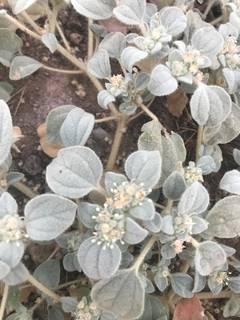
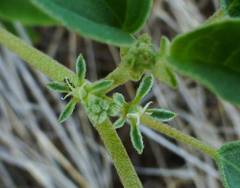
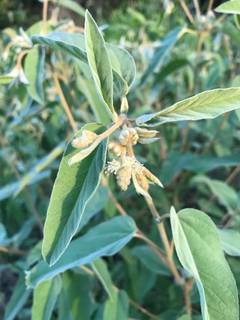
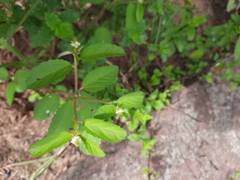
Croton californicus, California croton, is a low, soft-wooded subshrub of the spurge family, native to California, Baja California, and the southwestern deserts, reaching 1-3 feet (30-90 cm) tall and spreading wider. The whole plant is grey-green to silvery, coated in tiny star-shaped (stellate) hairs that give the leaves a scurfy, felted surface. The narrow, oblong leaves are 0.5-2 inches (1.3-5 cm) long. Male and female flowers grow on separate plants and are small, greenish, and without petals, appearing over much of the warm season and followed by small three-lobed capsules. C. californicus grows on coastal dunes, sandy flats, and desert washes, spreading by rhizomes into loose patches. It tolerates heat, drought, salt spray, and shifting sand, and helps stabilize dunes. The milky, acrid sap can irritate skin and is reported to be toxic to grazing animals.
Native Range
Native to California, Baja California, and the southwestern United States, including Arizona and Nevada. It grows on coastal dunes, sandy flats, desert washes, and disturbed sandy ground, often near the coast or in arid interior basins.Suggested Uses
Used in dune restoration, coastal and desert native plantings, and erosion control on loose sand. Its drought and salt tolerance suit harsh, sandy sites where few plants hold. It also serves as a larval host plant for some native butterflies and moths.How to Identify
Appearance
Size & Dimensions
Height1' - 3'
Width/Spread2' - 4'
Bloom Information
Small, greenish, petalless flowers appear over much of the warm season, roughly spring through fall, on separate male and female plants. The flowers are inconspicuous, with male and female plants needed for seed. Three-lobed capsules ripen through summer and fall.
Detailed Descriptions
Foliage Description
silvery grey-greenGrowing Conditions
Sun Requirements
Requires 6-12 hours of direct sunlight daily
• Full Sun: 6+ hours of direct sunlight
• Partial Shade: 3-6 hours of direct sunlight
• Full Shade: Less than 3 hours of direct sunlight