Croton, Genus, lindheimeri, Species,
- Genus & species
Lindheimer's doveweed
South-central United States and northern Mexico
SunFull Sun
Overview
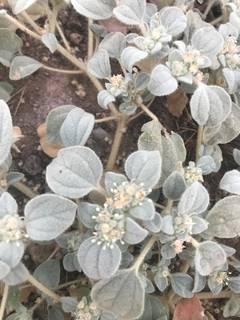
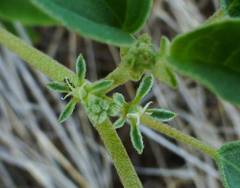
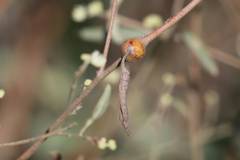
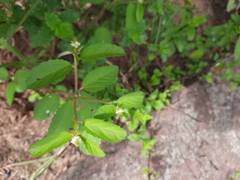
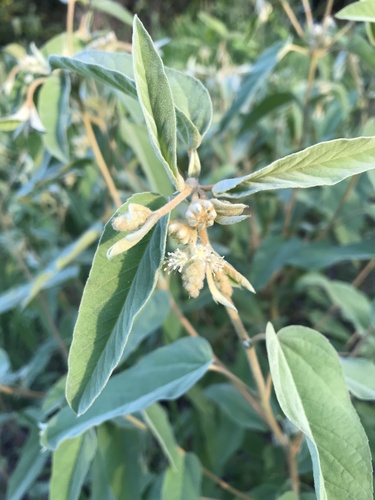
Croton lindheimeri, Lindheimer's doveweed, is an annual to short-lived herb in the spurge family, growing 1-3 feet (30-90 cm) tall on erect, branching stems clothed in dense, silvery, star-shaped hairs. The alternate, ovate to lance-shaped leaves are 1-3 inches (2.5-8 cm) long, grey-green above and white-woolly beneath, giving the whole plant a frosted look. Small separate male and female flowers appear in short terminal clusters, the males with tiny white petals and the females reduced to a three-parted ovary without petals. The fruit is a three-lobed capsule about 0.3 inch (7 mm) wide that splits to release three mottled seeds. Native to the south-central United States and northern Mexico, C. lindheimeri grows on dry, sandy, and gravelly soils in fields, rangeland, roadsides, and disturbed open ground. The oil-rich seeds are a major food for mourning doves and bobwhite quail, the source of the common name. As an annual it dies after autumn seed set. One limitation is the irritant, oily sap, which can inflame skin and is poisonous if the seeds are eaten by people or pets. It self-sows freely on bare ground.
Native Range
Croton lindheimeri is native to the south-central United States, centred on Texas and adjacent states, and into northern Mexico. It grows on dry, sandy, and gravelly ground in prairies, rangeland, fields, and disturbed sites.Suggested Uses
Croton lindheimeri is grown chiefly in wildlife and habitat plantings as a seed source for doves and quail across the southern plains. It suits dry, sunny restoration and rangeland seed mixes. It is seldom used as an ornamental because of its weedy habit and irritant sap.How to Identify
Appearance
Size & Dimensions
Height1' - 3'
Width/Spread1' - 2'
Bloom Information
Flowering runs from summer into autumn, roughly June through October, until frost. The small white-petalled male flowers and petal-less female flowers are wind- and insect-pollinated. Three-lobed capsules ripen a few weeks later and shed their seed for ground-feeding birds.
Detailed Descriptions
Foliage Description
grey-green, white beneathGrowing Conditions
Sun Requirements
Requires 6-10 hours of direct sunlight daily
• Full Sun: 6+ hours of direct sunlight
• Partial Shade: 3-6 hours of direct sunlight
• Full Shade: Less than 3 hours of direct sunlight
Water & Climate
Water Needs
Drought Tolerance
Drought tolerant when established
Care & Maintenance
Care Guide
Croton lindheimeri grows in full sun on dry, sandy or gravelly, sharply drained soils across a pH of about 6.5 to 8.0. As a warm-season annual it germinates in late spring once soils warm and flowers through summer with little water. It tolerates heat, drought, and poor, alkaline soil but declines in shade or wet ground. The seed self-sows on open soil and needs no special treatment. Plants colonize disturbed, sandy ground and rangeland. Frost ends the plant in autumn.Pruning
As an annual, C. lindheimeri is not pruned. Cutting before the capsules ripen reduces self-sown seed, though the cut stems release irritant sap. Frost-killed plants need only clearing of the dry stems.Toxicity Warning
Toxic to pets and humansPlanting Guide
Planting Methods & Timing
Planting Method
direct sow
Plant Spacing
12 inches