Berried Shrub
Cotoneaster, Genus, lacteus, Species,
- Genus & species
Milkflower cotoneaster
Southwestern China (Yunnan, Sichuan, Guizhou)
Overview
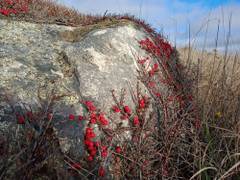
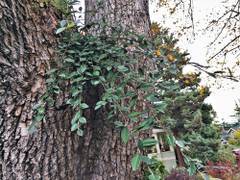
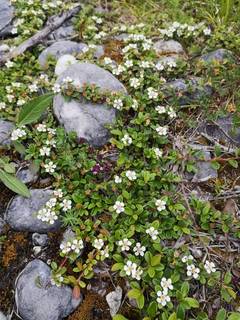
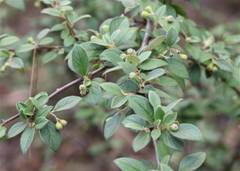
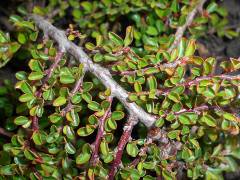
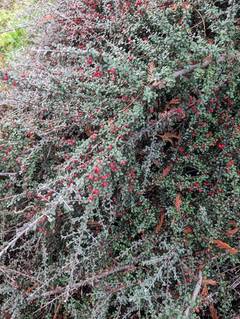
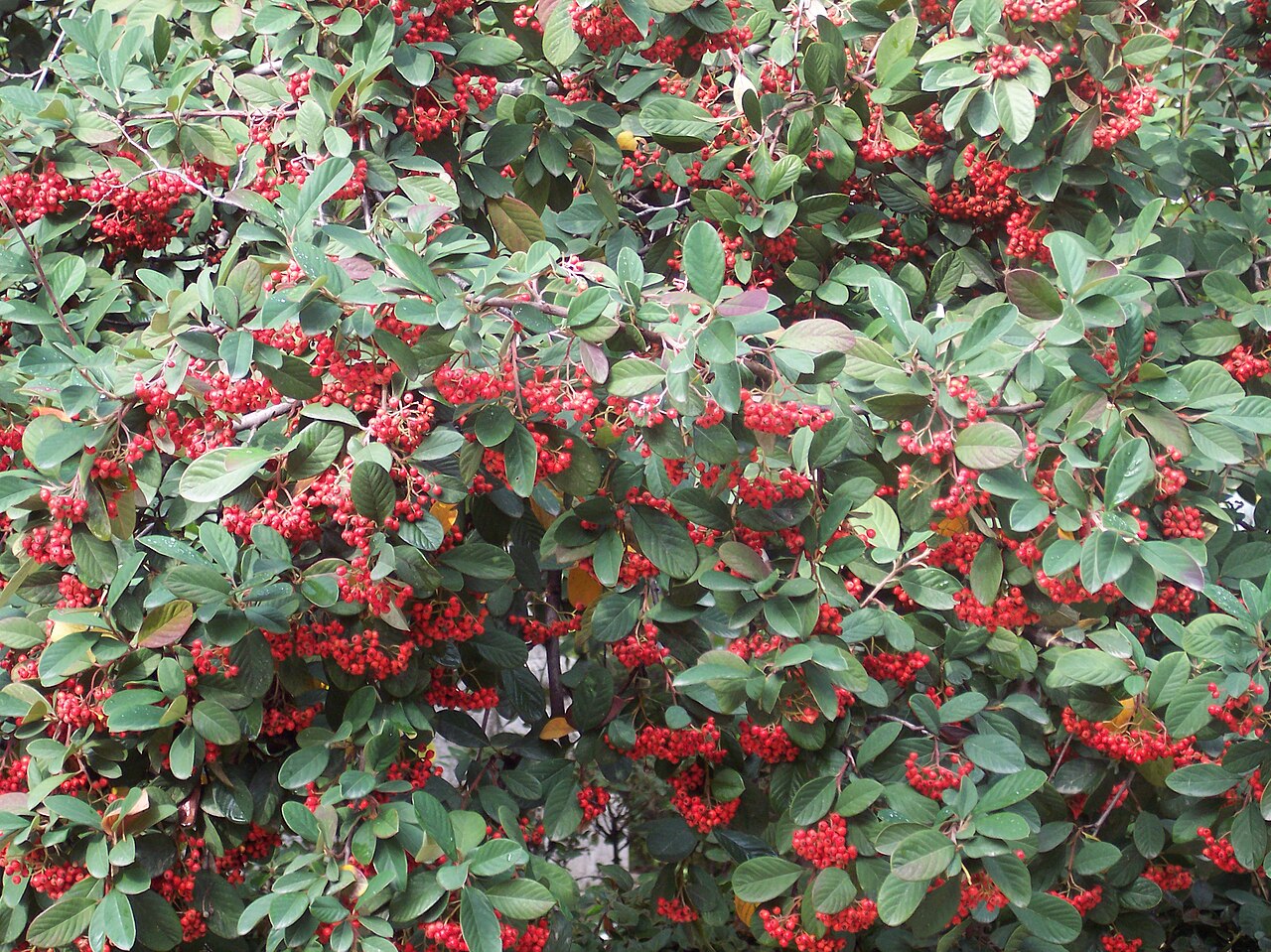
Cotoneaster lacteus is a broadleaf evergreen shrub with arching, multi-stemmed growth to 6–12 feet (1.8–3.7 m) tall and 6–10 feet (1.8–3 m) wide. Leaves are elliptic to ovate, 1.5–3 inches (4–8 cm) long, leathery, dark green and veined above, and covered with dense white to buff wool on the underside. Flowers are small, cream-white, 0.25 inch (6 mm) across, and borne in flat-topped clusters 1.5–3 inches (4–8 cm) wide in early to midsummer. Fruits are rounded pomes 0.25 inch (6–8 mm) in diameter, ripening from orange-red to deep red in autumn, and persisting on stems into winter. The species is hardy in USDA zones 7–10 and tolerates drought and a range of soil types once established. Birds eat the fruit and disperse the seeds, and C. lacteus has naturalized in Australia, New Zealand, and coastal California, where it is listed as an invasive plant. Leaves and fruit contain cyanogenic glycosides.
Native Range
Cotoneaster lacteus is native to Yunnan and adjacent Sichuan and Guizhou provinces in southwestern China, where it grows in thickets and on mountain slopes. It has naturalized in Australia, New Zealand, South Africa, and coastal California.Suggested Uses
Cotoneaster lacteus is used as a hedge, screen, and slope cover in dry, mild-winter regions, and as a source of fruit for birds. Hedge plants are spaced 4–6 feet (1.2–1.8 m) apart.How to Identify
Appearance
Size & Dimensions
Height6' - 12'
Width/Spread6' - 10'
Bloom Information
Cotoneaster lacteus blooms in early to midsummer, typically June to July, with clusters of cream-white flowers lasting 2–3 weeks. Flowers have a heavy scent and are visited by bees and flies. Fruits ripen from September to November.
Detailed Descriptions
Foliage Description
Dark green above, white-woolly beneathGrowing Conditions
Sun Requirements
Requires 4-10 hours of direct sunlight daily
• Full Sun: 6+ hours of direct sunlight
• Partial Shade: 3-6 hours of direct sunlight
• Full Shade: Less than 3 hours of direct sunlight
Care & Maintenance
Care Guide
Cotoneaster lacteus grows in full sun to part sun, with 4–8 hours of direct light, in soil of pH 6.0–8.0 that drains quickly; it tolerates clay, sand, and chalk. Established plants need watering during extended dry periods, and wet soil promotes root rot. Hardiness is USDA zones 7–10, and plants survive to about 0°F (−18°C). Fire blight (Erwinia amylovora), cotoneaster webworm, and lace bugs affect Cotoneaster species. Fruit set is heavier in full sun. Seedlings establish readily under bird perches and along fence lines.Pruning
Pruning takes place in late winter or immediately after fruiting, removing crossing stems and shortening shoots by up to one-third. Plants regrow from old wood after hard pruning to 12 inches (30 cm). Flowers form on the previous year's growth, so heavy pruning in late winter removes part of that season's fruit crop.Pruning Schedule
Prune: February–March & November
early springwinter