Cornus, Genus, alba, Species,
- Genus & species
Red-barked dogwood
Siberia, Mongolia, northern China, and Korea
Overview
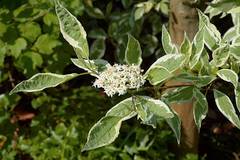
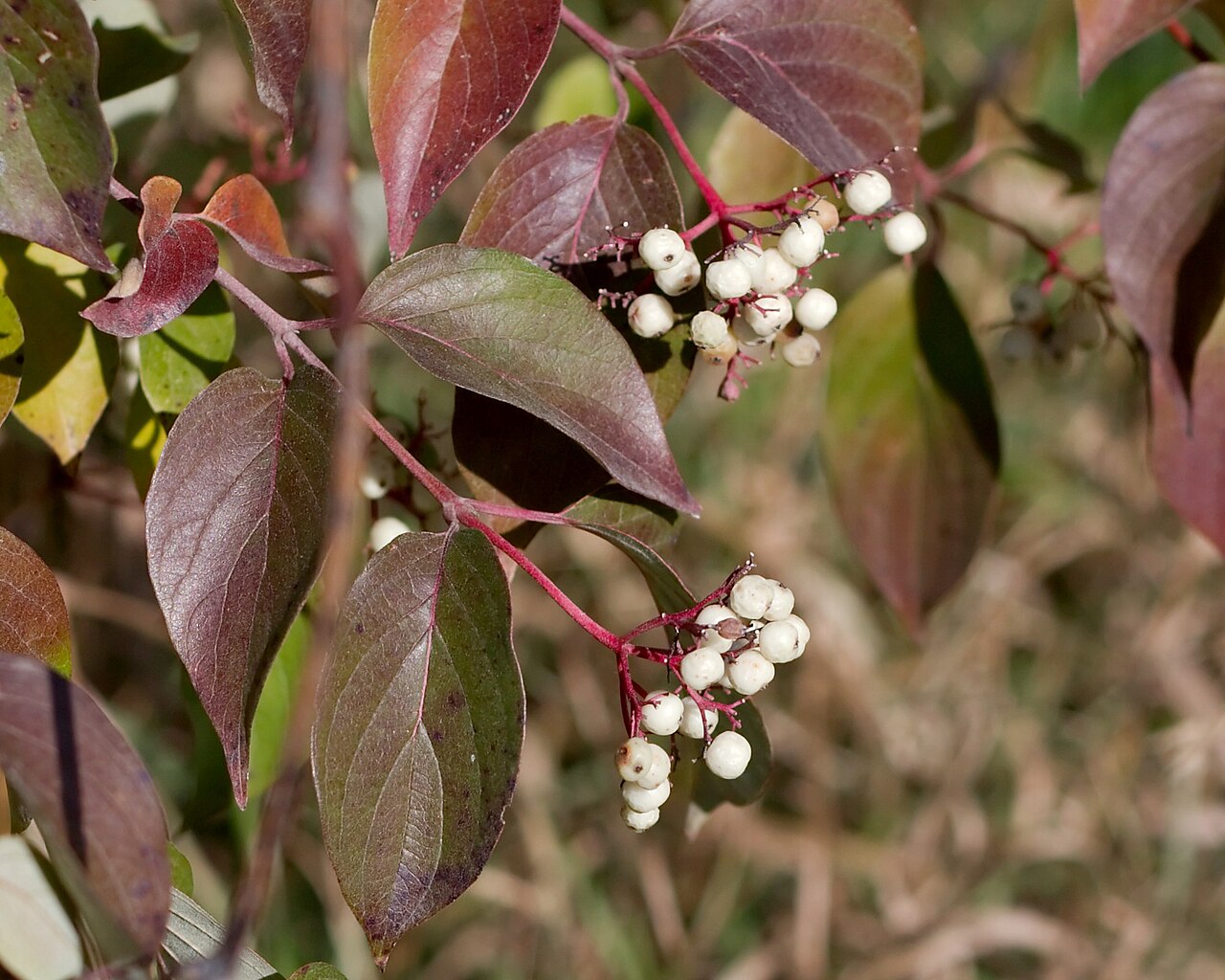
Cornus alba is a deciduous, multi-stemmed, suckering shrub in the family Cornaceae, native to Siberia, northern China, and Korea. Plants reach 6–10 feet (1.8–3 m) tall and 6–10 feet (1.8–3 m) wide, forming a dense, upright thicket that spreads by stem layering and root suckers. Stems are bright red to purple-red in winter, and color is most saturated on shoots 1–2 years old; older stems turn gray-brown. Leaves are opposite, ovate to elliptic, 2–4 inches (5–10 cm) long, with 5–6 pairs of curved veins, dark green above and glaucous beneath. Fall foliage ranges from red to purple. Flowers are creamy white, in flat cymes 1.5–2 inches (4–5 cm) across, opening in May and June. Fruit is a round, white to bluish-white drupe 0.25 inch (6 mm) across that ripens from July to September and is eaten by birds. Plants are hardy in USDA zones 3–7 and tolerate wet, poorly drained soil. Foliage is prone to leaf spot, powdery mildew, and anthracnose in warm, humid summers, and stem color fades with age.
Native Range
Native to Siberia, Mongolia, northern China, and Korea, where it grows along streams and in moist woodland margins. Widely grown in temperate gardens outside its native range.Suggested Uses
Used in winter-interest borders, along streams and ponds, and in mass plantings for slope stabilization, spaced 4–6 feet (1.2–1.8 m) apart. Fruit is eaten by birds. Suckering habit and 6–10 foot (1.8–3 m) spread limit use in small gardens.How to Identify
Appearance
Size & Dimensions
Height6' - 10'
Width/Spread6' - 10'
Bloom Information
Detailed Descriptions
Foliage Description
Dark green above, glaucous beneathGrowing Conditions
Sun Requirements
Requires 4-8 hours of direct sunlight daily
• Full Sun: 6+ hours of direct sunlight
• Partial Shade: 3-6 hours of direct sunlight
• Full Shade: Less than 3 hours of direct sunlight
Care & Maintenance
Care Guide
Growth and stem color are heaviest in full sun to part shade in moist to wet soil of pH 5.5–7.5, and plants tolerate clay and periodically flooded sites. Water is applied at 1 inch (2.5 cm) per week during establishment, and established plants require supplemental water in dry summers. Cold hardiness is USDA zones 3–7, and plants decline in hot summers above zone 7. A 2–3 inch (5–8 cm) layer of mulch conserves soil moisture. Anthracnose, canker, and powdery mildew are the main disease problems.Pruning
Pruning is done in late winter or early spring before buds break, because the red stem color is strongest on new shoots. Removing one-third of the oldest stems at ground level each year maintains color. Cutting all stems to 6–12 inches (15–30 cm) every 2–3 years produces the most vigorous new shoots, and flowering is reduced the following summer. Dead stems are removed at any time.Pruning Schedule
Prune: February–March
winterearly spring