Cereus, Genus, spp., Multiple species,
- Genus
- Multiple species
cereus cacti
South America, Caribbean, Central America
Overview
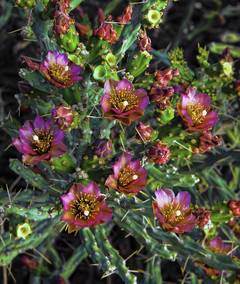
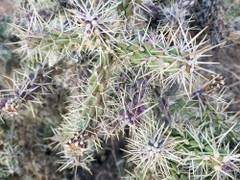
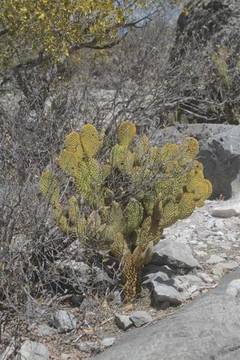
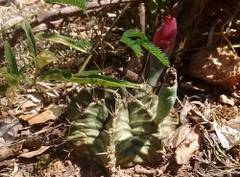
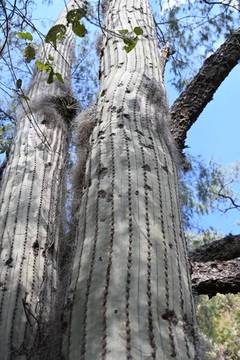
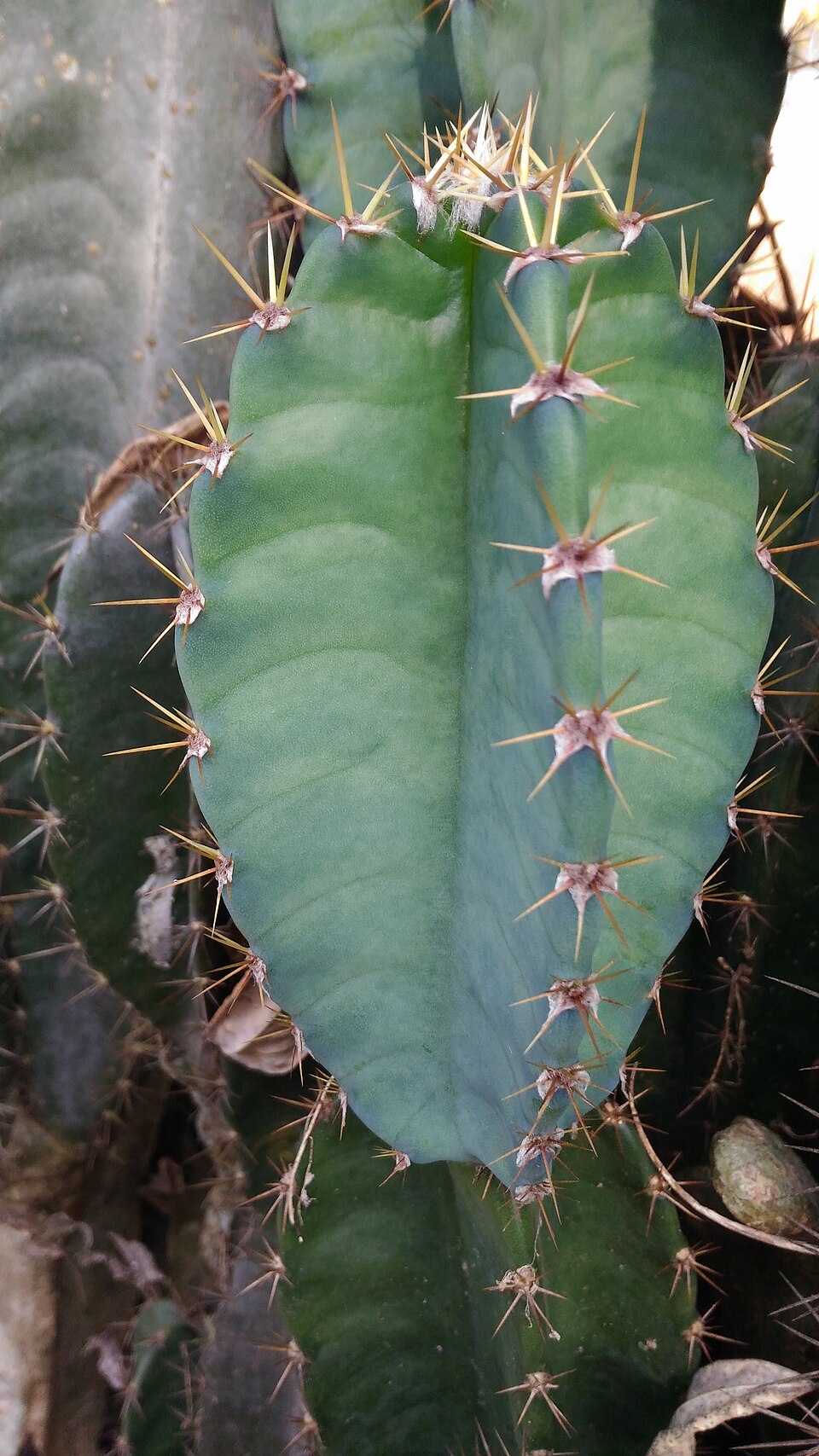
Cereus is a genus of about 30 species of columnar and tree-like cacti in the family Cactaceae, native to South America, the Caribbean, and parts of Central America. Plants form erect, ribbed green stems that branch with age into candelabra-like forms, reaching 10 to 33 feet (3 to 10 m) tall in the larger species. The stems have several prominent ribs lined with clusters of spines, and they store water that carries the plants through long dry periods. Large funnel-shaped flowers, 6 to 12 inches (15 to 30 cm) long, open at night and are usually white inside with greenish or brownish outer segments; they are pollinated by moths and bats and close by the following day. The flowers are followed by fleshy, often edible fruit, which in C. repandus is known as Peruvian apple. The genus grows in dry scrub, savanna, and rocky ground in warm climates. A limitation is sensitivity to frost and to prolonged wet, which causes the stems to rot, and the spines, which are a factor when positioning the plants near paths.
Native Range
Cereus is native to South America, especially Brazil, Argentina, and the Andean foothills, with species extending into the Caribbean and Central America. Plants grow in dry scrub, thorn forest, savanna, and rocky slopes in warm, low-rainfall regions.Suggested Uses
Cereus species are grown as architectural specimens in desert and dry gardens, as container plants on sunny patios, and as night-flowering features in frost-free climates. Tall species are used as living screens and accents, while the fruit of C. repandus is grown for eating.How to Identify
Appearance
Size & Dimensions
Height10' - 33'
Width/Spread3' - 10'
Colors
Bloom Information
Cereus flowers in late spring and summer, with large white flowers that open after dark and close by the next day. Individual flowers are short-lived, but mature plants produce them in succession over several weeks. The fleshy fruit ripens in summer and autumn.
Detailed Descriptions
Foliage Description
green to blue-greenGrowing Conditions
Sun Requirements
Requires 6-12 hours of direct sunlight daily
• Full Sun: 6+ hours of direct sunlight
• Partial Shade: 3-6 hours of direct sunlight
• Full Shade: Less than 3 hours of direct sunlight
Care & Maintenance
Care Guide
Across the genus, Cereus grows in full sun and sharply drained, sandy or gritty soil, with a soil pH of about 6.0 to 7.5. Plants store water in their stems and are watered when the soil dries during active growth, then kept dry and cool through winter to prevent rot. Warmth is needed for growth, and most species are damaged by frost and grown under cover where winters are cold. In containers a fast-draining cactus mix is used and pots are sized to support the tall stems. Propagation is from seed or from stem cuttings allowed to callus before planting. The stems bear sharp spines along the ribs.Pruning
Pruning is generally limited to removing damaged or rotted segments and to taking cuttings for propagation. Whole branches can be cut at a rib joint to control height or shape, and cut surfaces are allowed to callus before they are rooted or sealed. Spines make any cutting work slow and deliberate.Container Growing
Suitable for container growing
Minimum container size: 5 gallons