Cylindropuntia, Genus, kleiniae, Species,
- Genus & species
Klein's cholla
Chihuahuan Desert region of southwestern Texas and northern Mexico
Overview
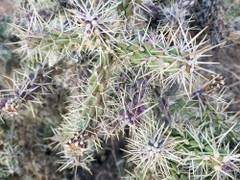
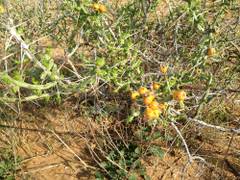
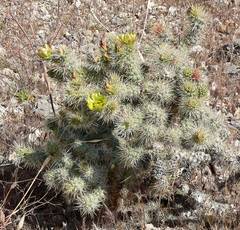
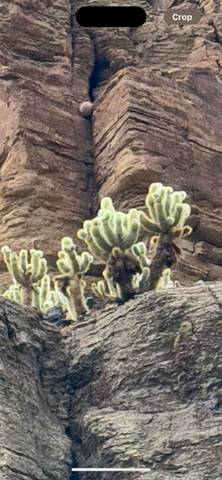
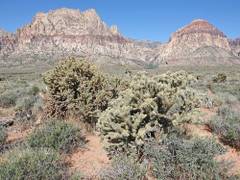
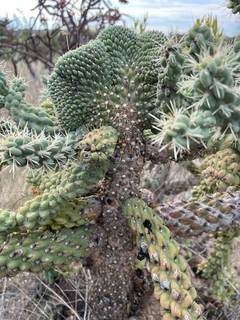
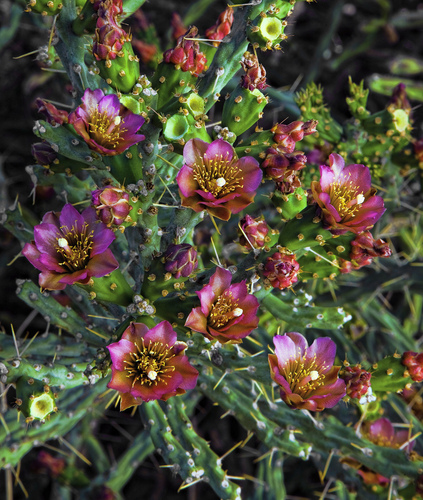
Cylindropuntia kleiniae is a branching cholla cactus that grows 24–60 inches (60–150 cm) tall and 24–48 inches (60–120 cm) wide. Slender cylindrical stem segments 0.5–0.75 inch (1.3–2 cm) in diameter are gray-green in summer and develop a purple tint during cold weather, giving seasonal color variation on the stems themselves. Short, sparse spines are less dense than on C. imbricata, making the plant somewhat less hazardous to work around. Small bronze-red to brownish-red flowers 0.75–1 inch (2–2.5 cm) across appear at stem tips in May and June. The bronze-red flower color stands apart from typical cholla blooms in magenta, pink, or yellow. The slender stem segments give this species a more delicate, narrow-textured appearance than the thick-stemmed C. imbricata. The species is native to the Chihuahuan Desert and is less cold-hardy than C. imbricata, reliably perennial only to zone 7. In wet or heavy soils, root rot develops quickly. The species is named for Jacob Klein, a nineteenth-century plant collector in Texas. Fallen stem segments root where they land. Deer avoid the spiny stems. Barbed spines require careful handling with thick gloves and tongs.
Native Range
Cylindropuntia kleiniae is native to the Chihuahuan Desert region of southwestern Texas (Trans-Pecos) and northern Mexico (Chihuahua, Coahuila). It grows on dry, rocky limestone hillsides, desert scrub, and alluvial fans at elevations of 3,000–5,500 feet (900–1,700 m).Suggested Uses
Used in xeriscape gardens, Chihuahuan Desert-themed landscapes, and cactus collections. The slender stems and purple winter tinting add narrow-textured sculptural interest. Container culture works in pots of 5 gallons (19 L) or more with gritty, dry media, allowing overwintering indoors in cold zones.How to Identify
Appearance
Size & Dimensions
Height2' - 5'
Width/Spread2' - 4'
Bloom Information
Detailed Descriptions
Flower Description
Bronze-red to brownish-redFoliage Description
Gray-green to purple-tinged cylindrical stem segments with short spinesGrowing Conditions
Sun Requirements
Requires 8-12 hours of direct sunlight daily
• Full Sun: 6+ hours of direct sunlight
• Partial Shade: 3-6 hours of direct sunlight
• Full Shade: Less than 3 hours of direct sunlight
Care & Maintenance
Care Guide
Plant in full sun with at least 8 hours of direct light. Dry, sharply drained sandy or rocky soil is required. No irrigation or fertilizer is needed once established. Hardy to zone 7; in zone 7 boundary areas, planting against a south-facing wall gives additional heat. Barbed spines require thick gloves and tongs for any handling. Fallen stem segments can be removed to prevent unwanted rooting.Pruning
No pruning is needed. Fallen stem segments can be removed from the ground using thick gloves and tongs.Container Growing
Suitable for container growing
Minimum container size: 5 gallons