Cylindropuntia, Genus, bigelovii, Species,
- Genus & species
Teddybear cholla
Sonoran and Mojave Deserts, southwestern North America
Overview
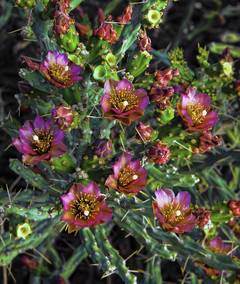
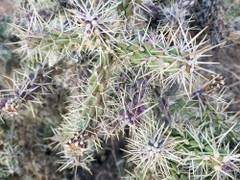
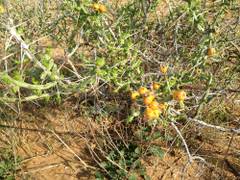
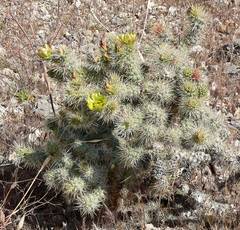
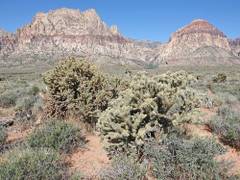
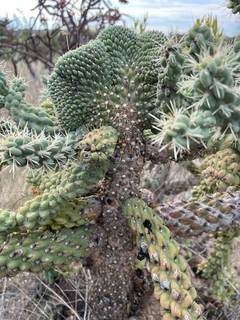
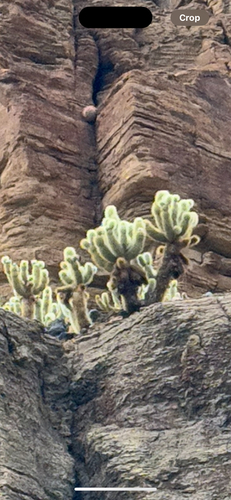
Cylindropuntia bigelovii is a cactus reaching 3-5 feet (90-150 cm) tall, occasionally to 6 feet (1.8 m), with a single short trunk topped by a dense crown of cylindrical branches. Stem segments are 4-10 inches (10-25 cm) long and 1-2 inches (2.5-5 cm) thick, covered so densely in silvery to straw-yellow spines that the green stem surface is largely hidden. Each areole carries 6-12 barbed spines up to 1 inch (2.5 cm) long, each sheathed in a papery covering that catches light and creates the furred outline behind the common name. Detached terminal segments cling to skin, clothing, and animal fur, which is the main means of spread. Flowers open at branch tips in spring, 1-1.5 inches (2.5-4 cm) across, with pale green to yellow tepals sometimes streaked lavender. Fruits are spineless, yellowish, 0.5-0.75 inch (1.3-2 cm) long, and often sterile, so reproduction is largely clonal. Lower branches drop with age, leaving a dark corky trunk. Growth is slow, and plants form dense stands on rocky bajadas and desert slopes below 3,000 feet (900 m). One trade-off is the barbed spines, which detach on the lightest contact and resist removal.
Native Range
Native to the Sonoran and Mojave Deserts of the southwestern United States, including Arizona, southeastern California, and southern Nevada, and extending south into Sonora and Baja California in northwestern Mexico. It grows on rocky slopes, bajadas, and desert flats below 3,000 feet (900 m).Suggested Uses
Used in desert and xeriscape gardens, rock gardens, and native restoration plantings on well-drained slopes. It is set in spots back from walkways, seating, and pet runs because the barbed segments detach on contact.How to Identify
Appearance
Size & Dimensions
Height3' - 6'
Width/Spread2' - 3'
Bloom Information
Flowers open at the tips of the uppermost segments from February to May, timed to winter rainfall. Individual blooms are 1-1.5 inches (2.5-4 cm) across with pale green to yellow tepals sometimes flushed lavender, opening during the day over several weeks. Fruit set is low because many plants are self-incompatible clones, so fruits are sparse.
Detailed Descriptions
Flower Description
Pale green to yellow, sometimes lavender-tingedFoliage Description
Green stems obscured by silvery to straw-yellow spinesGrowing Conditions
Sun Requirements
Requires 6-12 hours of direct sunlight daily
• Full Sun: 6+ hours of direct sunlight
• Partial Shade: 3-6 hours of direct sunlight
• Full Shade: Less than 3 hours of direct sunlight
Care & Maintenance
Care Guide
Grows in full sun in sharp-draining mineral soils such as decomposed granite, gravel, and sandy loam at pH 6.5-8.0. Established plants live on rainfall alone in zones 9-11 and need no added irrigation once rooted, while standing moisture and clay soils cause root and stem rot. It withstands brief drops to about 15-20F (-9 to -7C), with frost injury showing as soft blackened segments. Propagation is almost entirely from detached segments, which root within a few weeks on dry mineral soil. The barbed spines penetrate skin readily and separate from the plant on contact, making the species hazardous to work around.Pruning
Routine pruning is not carried out, since the form develops from a basal trunk and a crown of jointed segments. Dead or rot-damaged segments can be removed at the joint with tongs. Cut or fallen segments root quickly, so removed material left on soil establishes new plants.Container Growing
Suitable for container growing
Minimum container size: 5 gallons