Cylindropuntia, Genus, acanthocarpa, Species,
- Genus & species
buckhorn cholla
Southwestern United States and northwestern Mexico
Overview
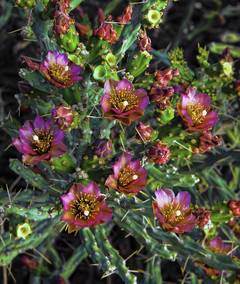
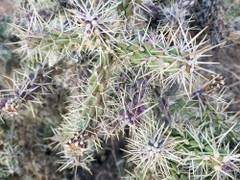
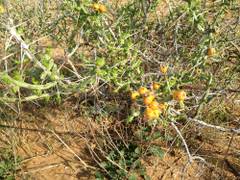
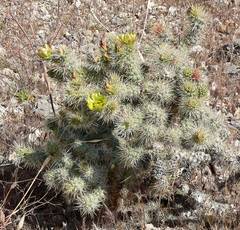
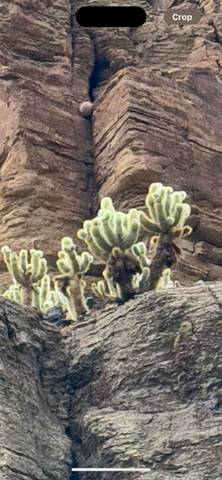
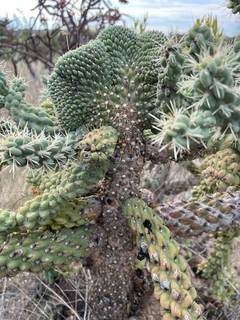
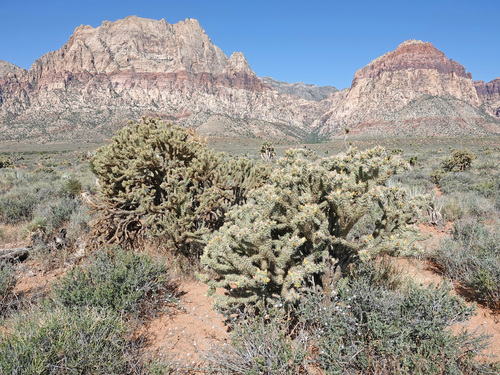
Cylindropuntia acanthocarpa is a shrubby to small treelike cactus in the family Cactaceae, reaching 3-9 feet (0.9-2.7 m) tall with an open, branching, candelabra-like form. The cylindrical green stems are divided into segments and covered with raised tubercles, each bearing clusters of 10-25 spines 0.5-1.2 inches (1-3 cm) long inside straw-colored papery sheaths. Short, quickly shed leaves appear on new growth. Flowers open at the branch tips in spring, 1.5-2.5 inches (4-6 cm) across, in shades of yellow, bronze, orange, or red that vary between plants. The fruit is a dry, spiny, tubercled burr 0.8-1.5 inches (2-4 cm) long that often persists on the plant. The dense spines and barbed sheaths cling to skin, clothing, and animals on contact. C. acanthocarpa grows in well-drained desert soils and stores water in its stems to survive long dry spells, slowing to dormancy in extreme heat or cold.
Native Range
Native to the southwestern United States and northwestern Mexico, Cylindropuntia acanthocarpa occurs across the Mojave and Sonoran Deserts in California, Nevada, Arizona, Utah, and into Baja California and Sonora. It grows on desert flats, bajadas, and rocky slopes below about 3,000 feet (900 m).Suggested Uses
Used in desert and xeriscape gardens, native cactus plantings, and rock gardens in hot, dry regions. The spiny, branching form suits barrier and security plantings. Flowers feed desert bees, and the stems and fruit shelter and feed desert wildlife such as cactus wrens and woodrats.How to Identify
Appearance
Size & Dimensions
Height3' - 9'
Width/Spread3' - 6'
Bloom Information
Flowers open in spring, generally April to May, one to a few at a time at the branch tips over several weeks. Bloom color varies from yellow and bronze to orange and red between individual plants. Native bees are the main pollinators, and the dry burrs that follow can stay on the plant for a year or more.
Detailed Descriptions
Flower Description
yellow to red, variableFoliage Description
greenGrowing Conditions
Sun Requirements
Requires 6-12 hours of direct sunlight daily
• Full Sun: 6+ hours of direct sunlight
• Partial Shade: 3-6 hours of direct sunlight
• Full Shade: Less than 3 hours of direct sunlight
Care & Maintenance
Care Guide
Grows in full sun on sharply drained, gritty or sandy desert soils with a neutral to alkaline pH around 6.5-8.5. It needs heat and sharp drainage; standing water or heavy soil causes rot. Once established it survives on rainfall alone and needs no irrigation in desert climates. In cultivation it tolerates brief frost but is damaged by prolonged cold and wet winters. New plants root easily from detached stem segments. Spacing accounts for the wide-reaching, barbed spines that catch passersby.Pruning
No routine pruning is needed. Stray or damaged segments are removed with tongs at the joints, since the barbed spines make handling hazardous. Detached segments root where they fall, so they are cleared away rather than left on the ground.Container Growing
Suitable for container growing
Minimum container size: 5 gallons