Buxus, Genus, microphylla, Species,
- Genus & species
Japanese box
Overview
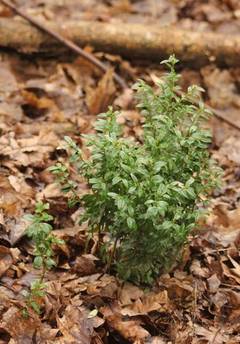
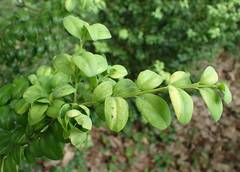
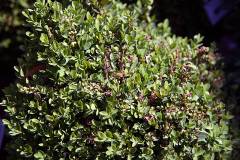
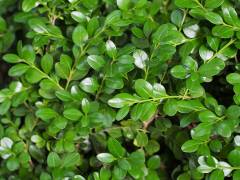
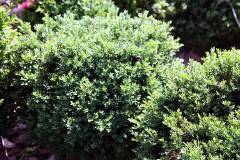
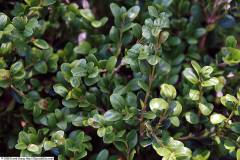
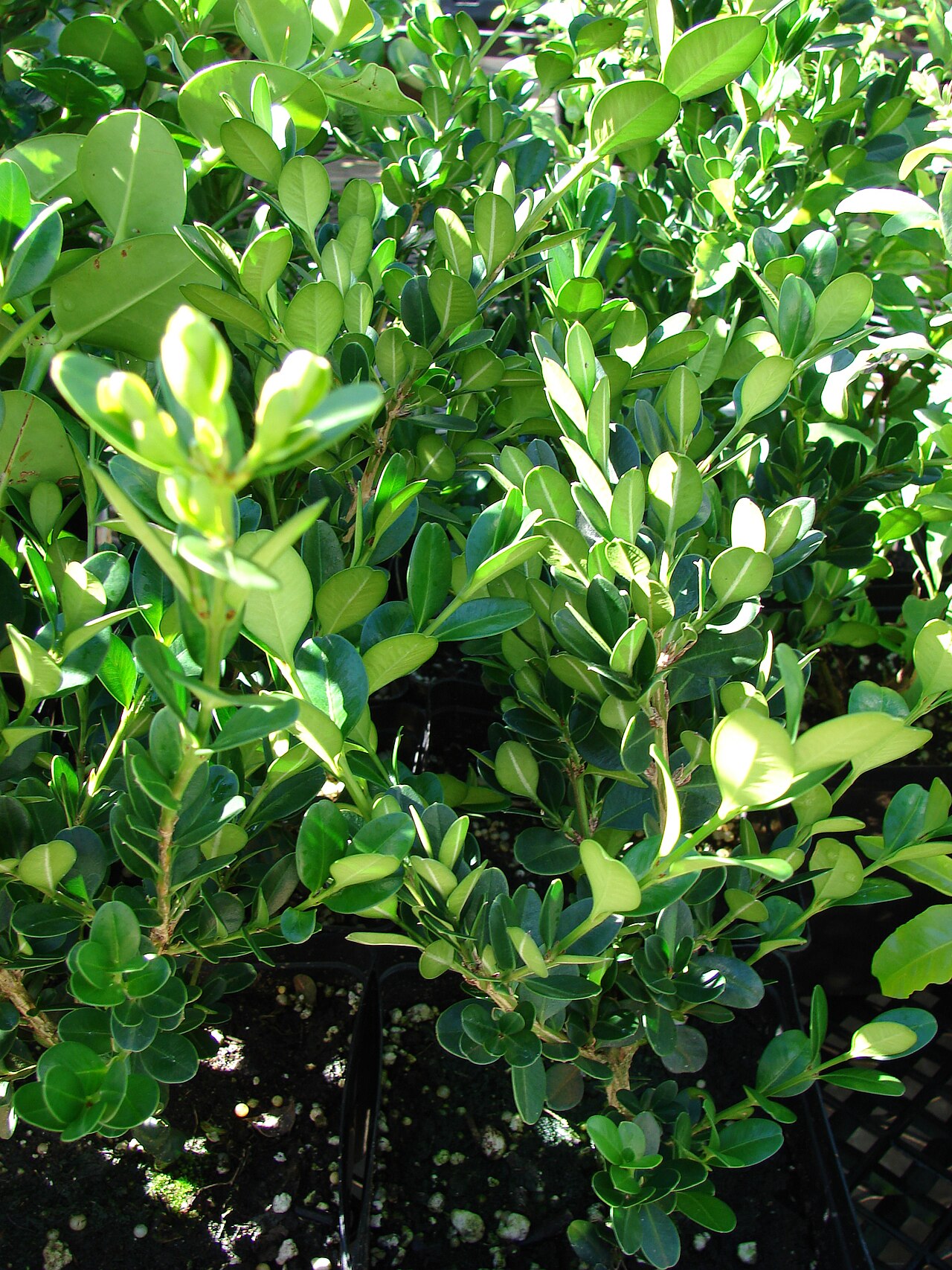
Buxus microphylla is an evergreen shrub reaching 3-4 feet (0.9-1.2 m) tall and wide, forming a dense rounded mound without pruning. Growth runs 1-3 inches (2.5-8 cm) per year, so a plant takes 8-10 years to reach full size. Leaves are opposite, obovate to elliptic, 0.4-1 inch (1-2.5 cm) long and 0.2-0.5 inch (5-13 mm) wide, glossy mid green, leathery, and notched at the tip. Foliage turns bronze-yellow in winter sun and wind in USDA zone 6 and the colder parts of zone 7, returning to green in spring. Flowers are pale green-yellow, 0.1-0.2 inch (3-5 mm) across, clustered in the leaf axils in April, scented of honey, and without petals. Fruit is a three-horned capsule about 0.3 inch (8 mm) long. Roots are shallow and run within the top 12 inches (30 cm) of soil, so plants in full sun are mulched to hold soil moisture. All parts contain buxine and related alkaloids, which cause vomiting and diarrhoea on ingestion by dogs, cats, and livestock. Boxwood blight caused by Calonectria pseudonaviculata strips plants from the base up, and box tree moth caterpillars defoliate plantings across Europe and eastern North America.
Native Range
Buxus microphylla is native to Japan, known mainly from long cultivation there and from scattered populations on southern hillsides. Related taxa run west through Korea, China, and Taiwan, and older nursery listings group several of them under this name. The species reached Western horticulture in 1860 and is grown across USDA zones 6-9 in Europe, North America, and Australia.Suggested Uses
Planted at 18-24 inch (45-60 cm) spacing as a low clipped hedge or parterre edging, and at 3 foot (0.9 m) spacing as individual mounds across USDA zones 6-9. Grown in containers of 7 gallons (26 L) or larger for doorway pairs and roof terraces, where the slow growth holds a clipped shape for 3-4 years between root prunings. The dense structure gives nesting cover for small birds in mixed hedging.How to Identify
Appearance
Size & Dimensions
Height3' - 4'
Width/Spread3' - 4'
Bloom Information
Flowering runs 2-3 weeks in April, before the new leaf flush extends. Clusters of pale green-yellow flowers 0.1-0.2 inch (3-5 mm) across sit in the leaf axils, each cluster holding one female flower surrounded by several males, none of them with petals. The scent resembles honey and carries a few feet on warm days, drawing honeybees and hoverflies. Capsules ripen in August and split to throw seed 3-6 feet (0.9-1.8 m).
Detailed Descriptions
Foliage Description
Glossy mid green, bronze-yellow in winter sunGrowing Conditions
Sun Requirements
Requires 4-8 hours of direct sunlight daily
• Full Sun: 6+ hours of direct sunlight
• Partial Shade: 3-6 hours of direct sunlight
• Full Shade: Less than 3 hours of direct sunlight
Care & Maintenance
Care Guide
Growth continues from full sun through moderate shade, with winter bronzing heaviest on plants in full sun and wind. Free-draining soil at pH 6.5-7.5 suits the roots, and plants decline on ground that stays wet, where Phytophthora root rot follows. Water at 1 inch (25 mm) per week through the first three seasons and during summer dry spells after that, applied at the base, since foliage that stays wet supports blight. A 2-3 inch (5-8 cm) mulch layer over the root zone, held back from the stems, steadies soil temperature and moisture for the shallow roots. Boxwood leafminer blisters the leaves from May, box tree moth caterpillars strip foliage in Europe and eastern North America, and boxwood blight moves on wet foliage, clippings, and pruning tools. One application of a balanced fertilizer in early spring at 1 ounce per square yard (30 g per square meter) covers the year's slow growth.Pruning
Clipping is carried out from late spring, once the first flush hardens, and again in midsummer where a formal outline is held. Cuts made after early September produce soft growth that browns in the first hard frost. Thinning by hand, taking whole shoots out at intervals through the canopy, admits light and air to the interior and lowers blight pressure compared with shearing alone. Tools are cleaned between plants, since blight spores travel on blades and clippings.Pruning Schedule
Prune: May–July
late springsummer
Container Growing
Suitable for container growing
Minimum container size: 7 gallons