Baptisia, Genus, tinctoria, Species,
- Genus & species
eastern wild indigo
Overview
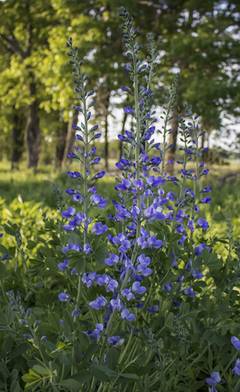
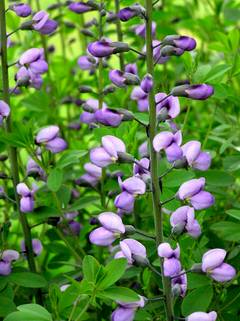
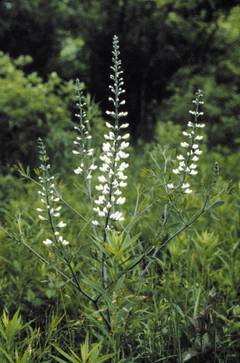
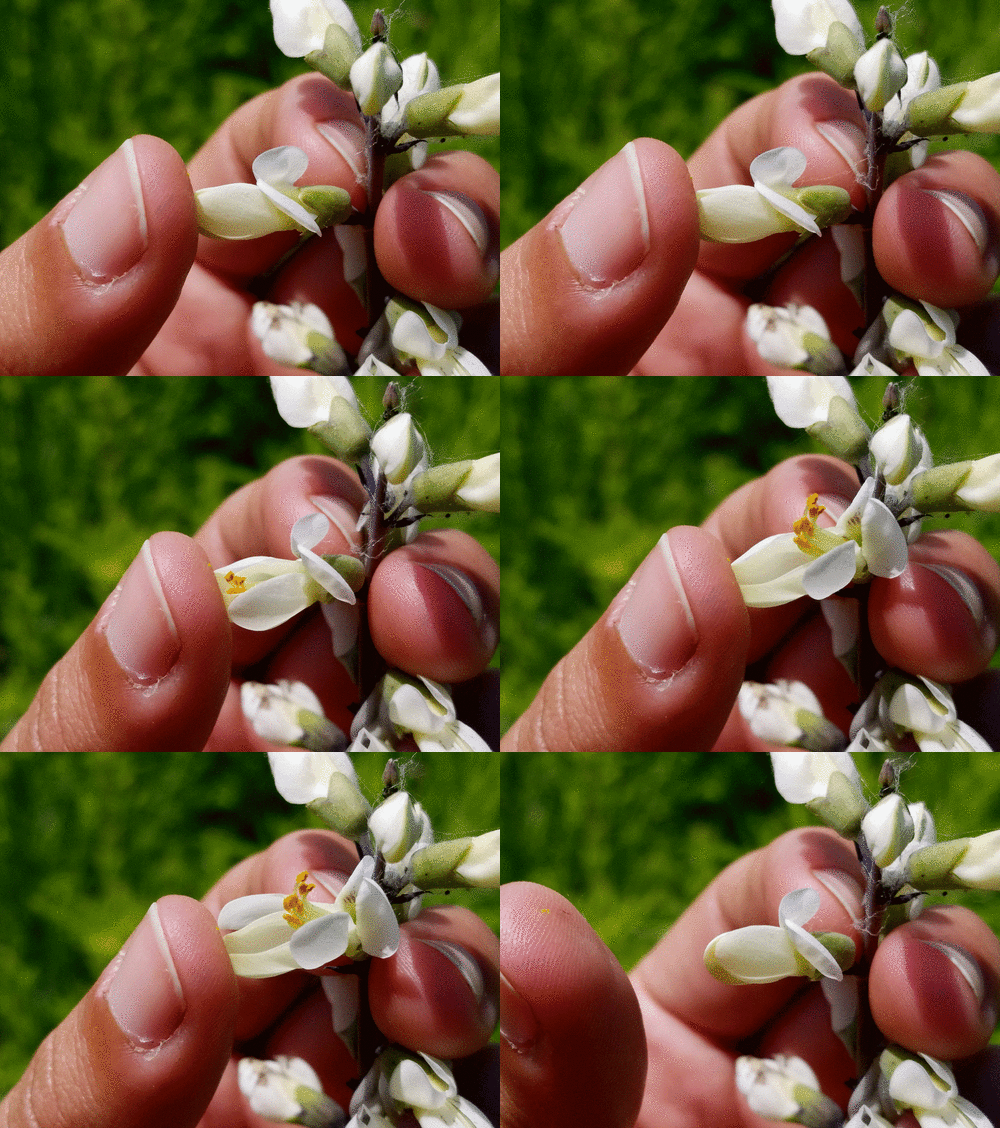
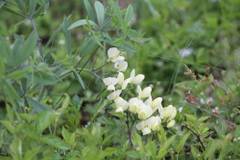
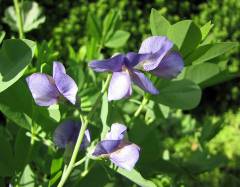
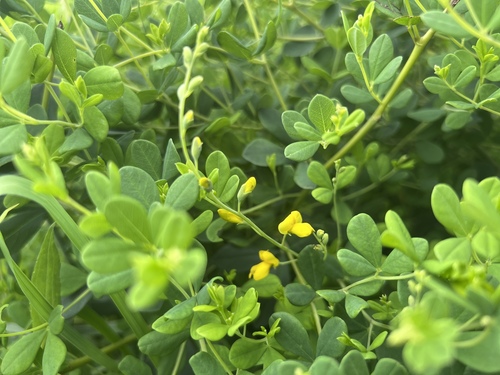
Baptisia tinctoria, yellow wild indigo, is a bushy perennial legume of dry, open ground in eastern North America, forming a rounded mound 24–36 inches (60–90 cm) tall and about as wide. Its slender, much-branched stems carry small blue-green leaves divided into three rounded leaflets, each 0.5–1 inch (1.5–2.5 cm) long, giving a clover-like texture. In early to midsummer short upright clusters of yellow pea-shaped flowers about 0.5 inch (1.5 cm) long open near the branch tips. The flowers are followed by small, inflated seed pods that ripen to black and rattle when dry. The plant grows from a deep, woody taproot that makes it drought-tolerant but slow to establish and difficult to move once settled. All parts contain quinolizidine alkaloids that can cause digestive upset if eaten. It grows in sandy and rocky soils of dry woodland edges, clearings, and barrens, and it fixes nitrogen through its roots. The whole plant often blackens after frost and was once used as a source of blue dye.
Native Range
Baptisia tinctoria is native to eastern North America, from Maine and Ontario south to Florida and Louisiana and west to the Mississippi River. It grows in dry, sandy, and rocky soils of open woodland, clearings, barrens, and roadsides.Suggested Uses
Used in dry meadows, native and pollinator gardens, sandy borders, and naturalized plantings. Its deep roots suit poor, sandy soils and slopes, though its slow start and dislike of transplanting make it less suited to frequently rearranged beds.How to Identify
Appearance
Size & Dimensions
Height2' - 3'
Width/Spread2' - 3'
Bloom Information
Flowering occurs in early to midsummer, roughly June and July. The yellow pea flowers open in short upright clusters at the branch tips over a few weeks. Inflated seed pods follow and darken to black as they dry.
Detailed Descriptions
Foliage Description
Blue-greenGrowing Conditions
Sun Requirements
Requires 6-10 hours of direct sunlight daily
• Full Sun: 6+ hours of direct sunlight
• Partial Shade: 3-6 hours of direct sunlight
• Full Shade: Less than 3 hours of direct sunlight