Baptisia, Genus, spp., Multiple species,
- Genus
- Multiple species
wild indigos
Overview
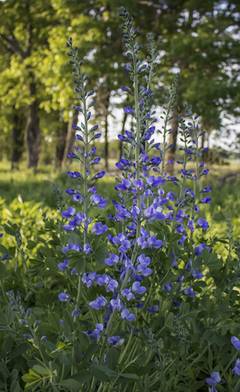
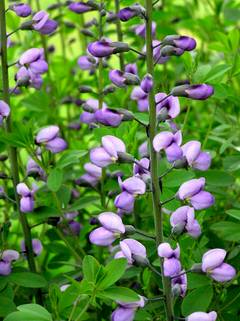
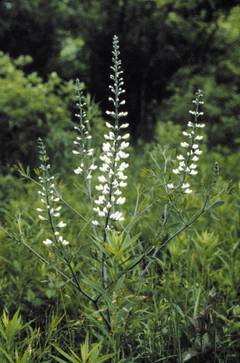
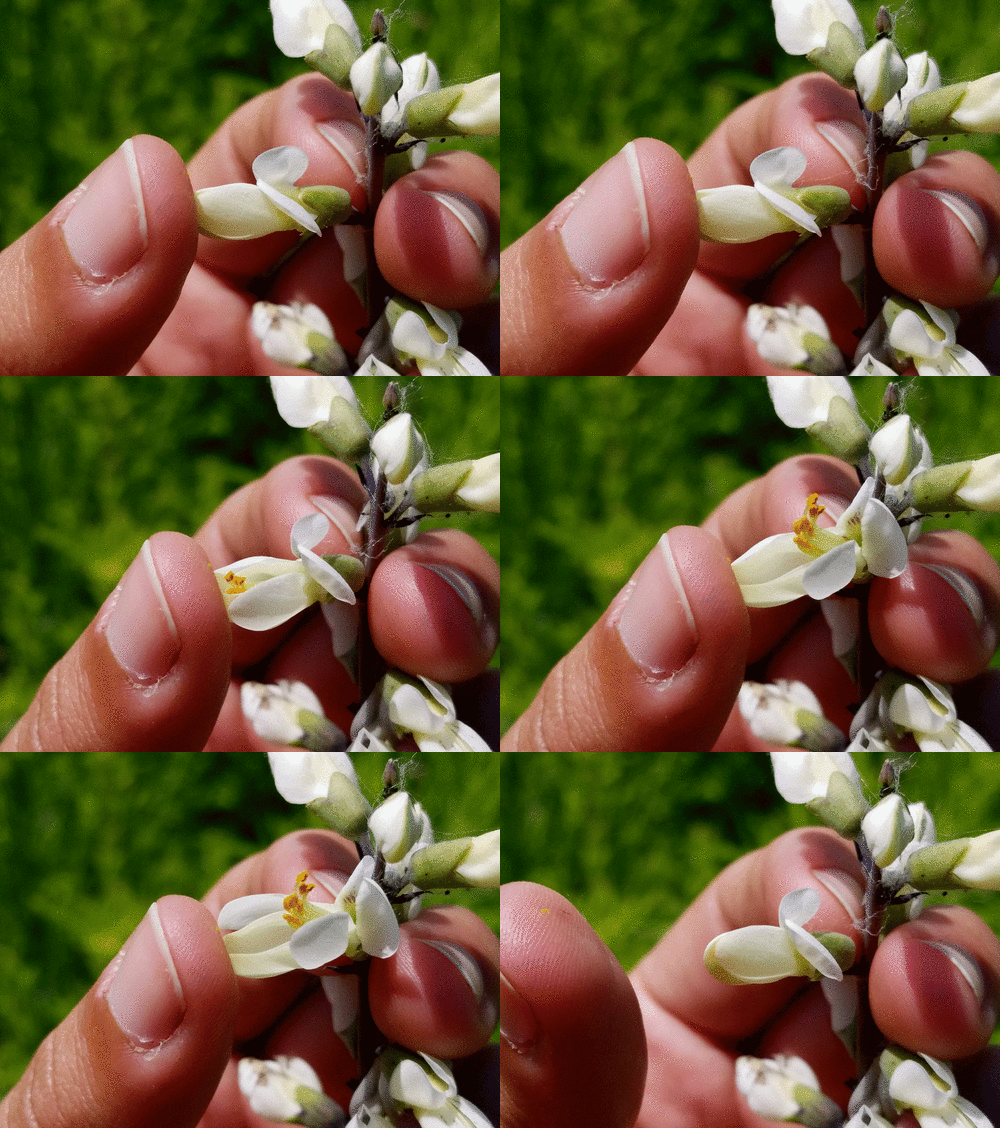
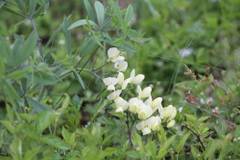
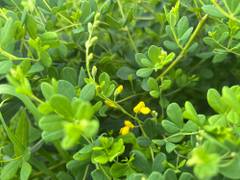
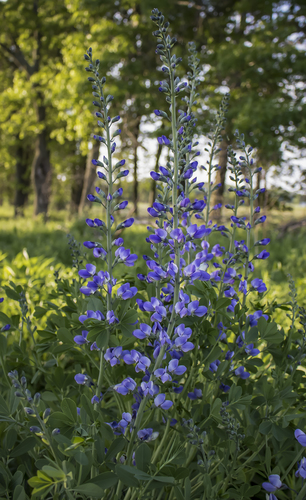
Baptisia is a genus of about 20 species of herbaceous perennials in the pea family, Fabaceae, native to the prairies, open woods, and roadsides of eastern and central North America. Plants grow from a deep, woody rootstock into rounded, shrub-like clumps 2 to 4 feet (60 to 120 cm) tall and nearly as wide. The leaves are usually divided into three leaflets, blue-green to grey-green, on smooth, upright stems. In late spring and early summer the plants send up erect spikes of pea-shaped flowers in blue, violet, yellow, cream, or white depending on species, with bicolour shades in garden hybrids. The flowers are followed by inflated pods 1 to 3 inches (2.5 to 7.5 cm) long that ripen from green to charcoal-black and rattle when the dry seeds loosen inside. Baptisia grows slowly at first, building a deep taproot that lets established plants tolerate drought, heat, and poor soil while making them hard to transplant. The genus includes B. australis, blue wild indigo, and B. tinctoria, once used as a source of indigo-like dye. Foliage and seeds contain alkaloids that are toxic if eaten in quantity. Plants are long-lived and return from the same crown for many years.
Native Range
Baptisia is native to eastern and central North America, from the Great Plains to the Atlantic coast, growing in tallgrass prairie, open woodland, glades, and along roadsides. B. australis ranges through the central and eastern states. The genus is North American and not native elsewhere.Suggested Uses
Grown in perennial borders, prairie and meadow plantings, and as a shrub substitute in low-water gardens for its long-lived clumps and pea flowers. The blackened pods are cut for dried arrangements. Baptisia also suits naturalized plantings and pollinator gardens.How to Identify
Appearance
Size & Dimensions
Height2' - 4'
Width/Spread2' - 4'
Bloom Information
Most Baptisia species flower in late spring and early summer, roughly April to June, with erect spikes of pea flowers lasting about three weeks. Each clump blooms once per season. The inflated seed pods that follow ripen to black by late summer and persist into winter.
Detailed Descriptions
Flower Description
blue, violet, yellow, cream, or whiteFoliage Description
blue-green to grey-greenGrowing Conditions
Sun Requirements
Requires 6-12 hours of direct sunlight daily
• Full Sun: 6+ hours of direct sunlight
• Partial Shade: 3-6 hours of direct sunlight
• Full Shade: Less than 3 hours of direct sunlight
Care & Maintenance
Care Guide
Baptisia grows in full sun in average to poor, well-drained soil and tolerates drought, heat, and a wide pH range once the deep root is established. Young plants grow slowly and may take three to four years to reach flowering size, after which they are long-lived and rarely need division. The deep taproot makes established clumps hard to move, so plants are set in their permanent place while young. They need little fertilizer and grow open and floppy in rich soil or shade. Pests and diseases are few, though voles sometimes damage the crown. The foliage and seeds contain quinolizidine alkaloids and are toxic if eaten in quantity.Pruning
Baptisia is cut back to the ground in late autumn or late winter once the blackened stems decline. Some growers shear the clump lightly after flowering to keep a tighter dome, though this removes the decorative pods. No other pruning is needed.Pruning Schedule
Prune: February & November
fallwinter