Baptisia, Genus, alba, Species, var., Variety, macrophylla, Variety,
- Genus & species
- Variety
large-leaved white wild indigo
Central and eastern North America (Ontario to Texas and Florida)
Overview
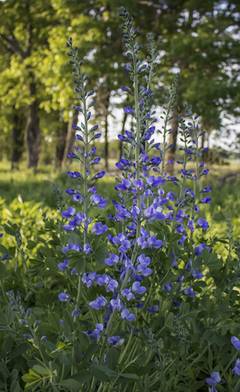
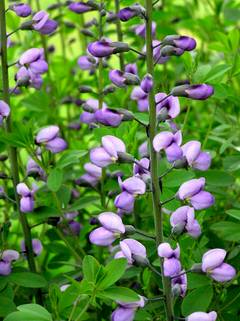
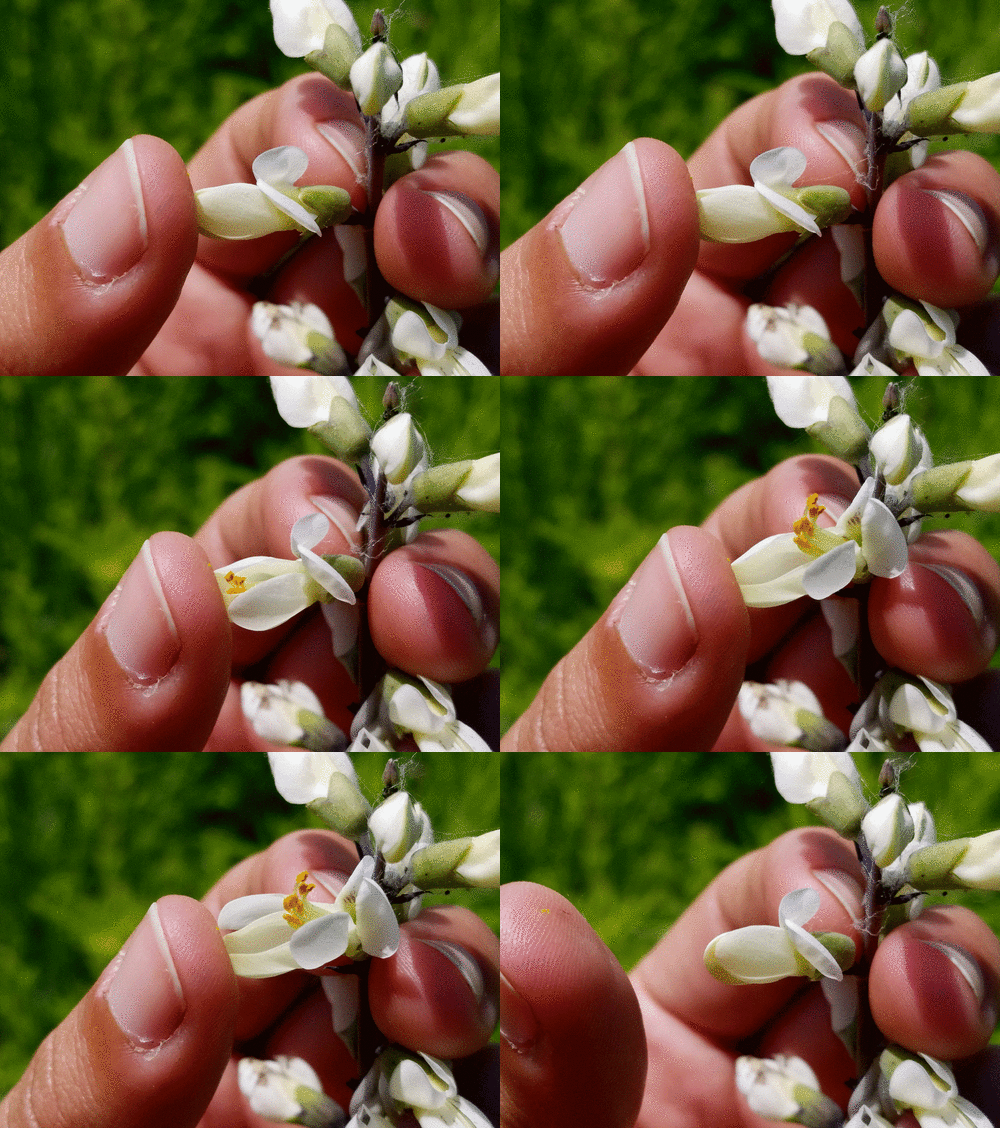
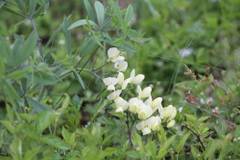
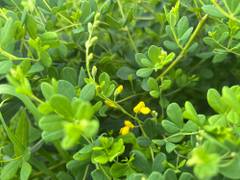
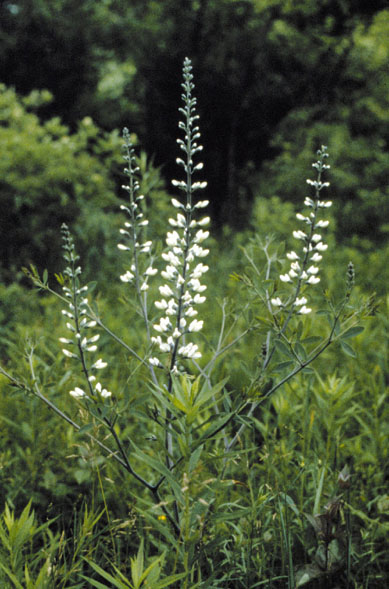
Baptisia alba var. macrophylla is an upright, clump-forming herbaceous perennial reaching 36–60 inches (90–150 cm) tall with a spread of 36–48 inches (90–120 cm). Stems are stout, dark brown to nearly black, upright to slightly arching. Leaves are trifoliate (3 leaflets per leaf), with individual leaflets 2–4 inches (5–10 cm) long, blue-green, turning blue-gray by mid-summer. Var. macrophylla has larger leaflets than the species type, hence the varietal name. Upright racemes 12–24 inches (30–60 cm) long bear white, pea-shaped flowers 0.8–1 inch (2–2.5 cm) long in May–June. Flowers are followed by inflated, dark brown to black seed pods 1–2 inches (2.5–5 cm) long that persist through fall and winter and rattle in the wind. The plant develops a deep, woody taproot system that makes transplanting difficult once established. Growth is slow in the first 2–3 years while the root system develops; mature clumps expand by 2–4 inches (5–10 cm) per year. The dark stems and seed pods provide strong structural interest after bloom. Foliage may blacken after the first hard frost.
Native Range
Baptisia alba var. macrophylla is native to central and eastern North America, from Ontario and Ohio south to Texas and Florida. It occurs in open prairies, savanna edges, woodland clearings, and along roadsides on calcareous to neutral soils.Suggested Uses
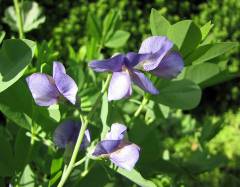
Planted in prairie gardens, native plant borders, and mixed perennial plantings at 36–48 inch (90–120 cm) spacing. The white flowers contrast with the blue-flowered B. australis in spring, and the dark seed pods add winter structure. Suitable for meadow plantings and naturalized areas. Not suitable for containers due to the deep taproot. Tolerates poor, dry soils where other perennials struggle.How to Identify
Appearance
Size & Dimensions
Height3' - 5'
Width/Spread3' - 4'
Bloom Information
White pea-shaped flowers appear on upright racemes 12–24 inches (30–60 cm) long in May–June. Individual flowers are 0.8–1 inch (2–2.5 cm) long. Bloom duration is 2–3 weeks. Inflated seed pods develop within 3–4 weeks of flowering, turning from green to dark brown to black. Pods persist through fall and winter, rattling in the wind.
Detailed Descriptions
Foliage Description
Blue-green to blue-gray, trifoliateGrowing Conditions
Sun Requirements
Requires 5-10 hours of direct sunlight daily
• Full Sun: 6+ hours of direct sunlight
• Partial Shade: 3-6 hours of direct sunlight
• Full Shade: Less than 3 hours of direct sunlight
Care & Maintenance
Care Guide
Plant in well-drained to average soil in full sun to part sun. Tolerates poor, dry soils once the deep taproot is established. The taproot makes transplanting difficult; site plants in their permanent location from the outset. Growth is slow during the first 2–3 establishment years while the root system develops. In rich, moist soils, stems may flop outward; lean, well-drained soils produce sturdier growth. No serious pest or disease problems. Nitrogen fixation through root nodules reduces the need for fertilization. Do not divide; propagation is by seed.Pruning
Allow spent flower racemes to develop into the dark seed pods, which provide structural interest through fall and winter. Cut all stems to 2–4 inches (5–10 cm) above ground level in late fall after frost blackens the foliage or in early spring before new growth emerges. Do not attempt to divide the deep taproot.Pruning Schedule
Prune: March & November
fallearly spring