Baptisia, Genus, lactea, Species,
- Genus & species
prairie false indigo
Overview
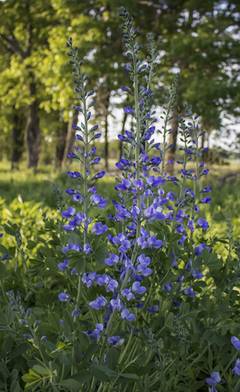
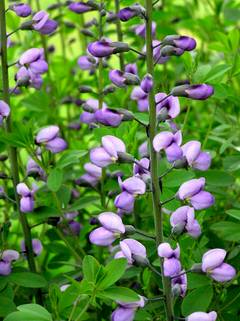
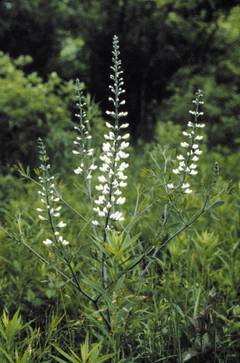
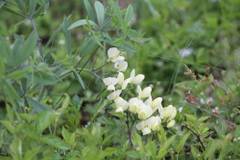
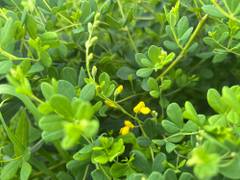
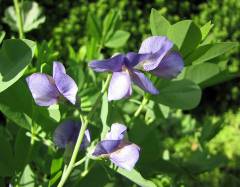
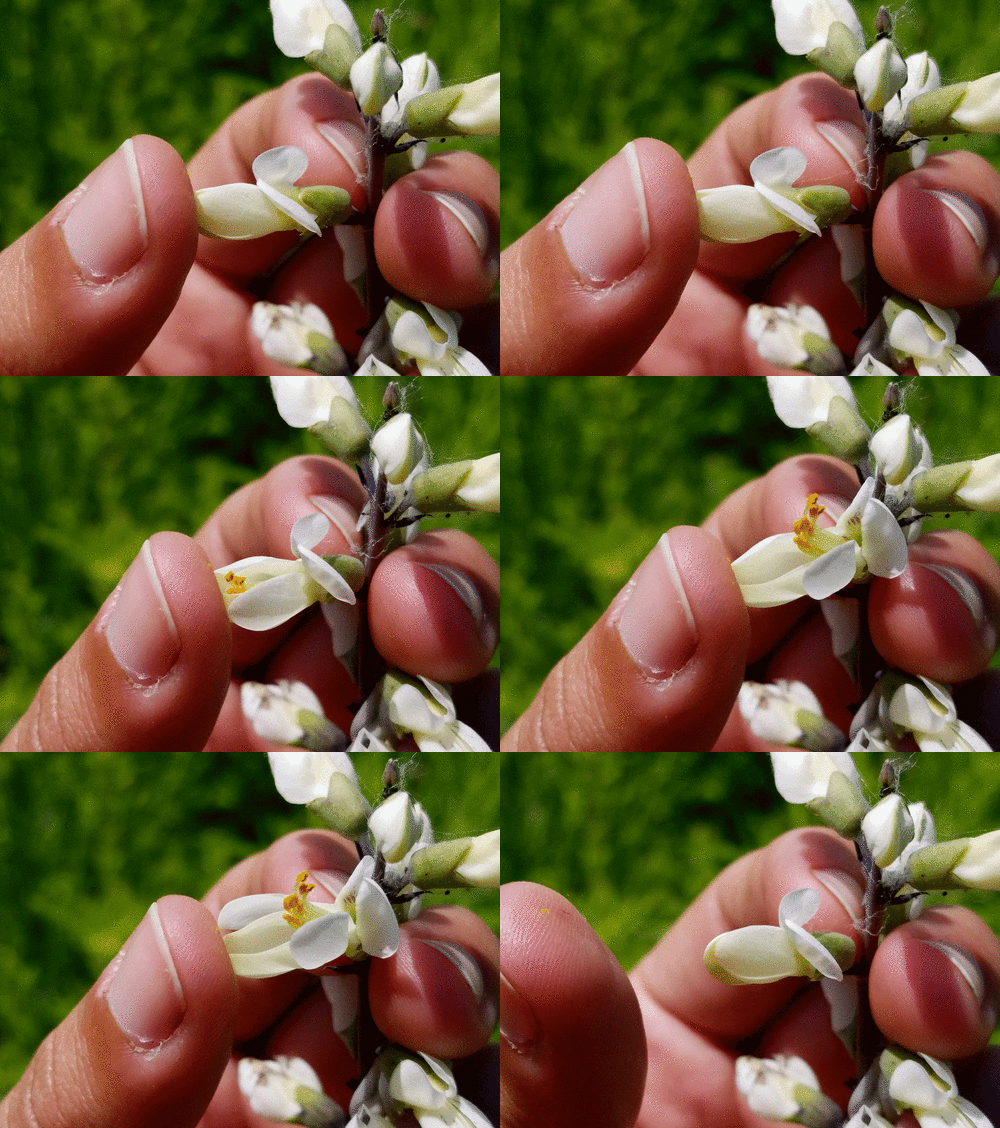
Baptisia lactea is an upright, long-lived perennial in the legume family growing 3-5 feet (0.9-1.5 m) tall and 2-4 feet (0.6-1.2 m) wide, forming a shrub-like clump from a deep, woody taproot. The blue-green stems carry three-part leaves with oval leaflets 1-3 inches (2.5-8 cm) long. In late spring to early summer it sends up erect spikes 1-2 feet (30-60 cm) long lined with white, pea-like flowers, sometimes marked with purple. These give way to inflated seed pods that ripen charcoal-black and rattle the loose seeds when shaken, lasting into winter. B. lactea grows in prairies, open woods, savannas, and roadsides across the central and eastern United States, tolerating drought, heat, and lean soils once established. The deep taproot makes mature plants hard to move or divide, and seedlings are slow, often taking two to three years to bloom. It fixes nitrogen and needs no fertilizer. Bees and other insects work the flowers, and the plant is a larval host for several butterflies. Foliage and seeds contain alkaloids that are toxic if eaten in quantity.
Native Range
Native to the central and eastern United States, from the Great Plains and Midwest east to the Atlantic states and south to Texas and the Gulf, growing in prairies, savannas, and open woods.Suggested Uses
Used in prairie plantings, native borders, and meadow gardens as a long-lived, shrub-like perennial. It anchors the middle or back of sunny beds and tolerates drought once established. The deep taproot makes it slow to establish and unsuited to frequent moving.How to Identify
Appearance
Size & Dimensions
Height3' - 5'
Width/Spread2' - 4'
Bloom Information
Detailed Descriptions
Foliage Description
blue-greenGrowing Conditions
Sun Requirements
Requires 6-12 hours of direct sunlight daily
• Full Sun: 6+ hours of direct sunlight
• Partial Shade: 3-6 hours of direct sunlight
• Full Shade: Less than 3 hours of direct sunlight