Athyrium, Genus, niponicum, Species, var., Variety, pictum, Variety,
- Genus & species
- Variety
Japanese Painted Fern
East Asia — Japan, Korea, China, and Taiwan
Overview
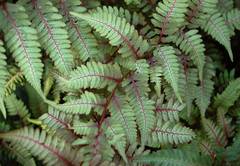
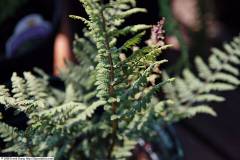
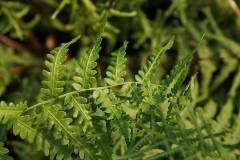
Athyrium niponicum var. pictum is widely planted as a shade perennial worldwide and carries a metallic, multi-toned frond pattern that no other temperate fern matches. Plants form a low, spreading clump 12–18 inches (30–45 cm) tall and 18–24 inches (45–60 cm) wide. The variety name 'pictum' means 'painted', describing the metallic coloring: each frond shows a gradient from burgundy-purple along the central rachis, transitioning through blue-green to silvery-gray at the pinna tips. A metallic sheen gives the fronds a luminous, almost iridescent quality in shade. The Perennial Plant Association named it Perennial Plant of the Year in 2004 — the first fern to receive the honour. Fronds emerge in spring from a slowly creeping rhizome and persist until hard frost. The silver-and-purple palette adds cool, metallic tones to shade gardens otherwise dominated by green; few flowering plants for shade cover the colour range that this fern achieves with foliage alone. Morning light or dappled shade produces the most vivid coloring; deep shade reduces the metallic contrast, and hot afternoon sun bleaches the colour. Consistently moist, humus-rich soil is needed. The fronds are somewhat more fragile than green-leaved ferns and may tatter in windy, exposed sites. Deer rarely browse ferns.
Native Range
Athyrium niponicum var. pictum is native to eastern Asia, including Japan, China, Korea, and Taiwan. It occurs in moist deciduous forests and woodland margins from near sea level to 5,000 feet (1,500 m) elevation. Var. pictum occurs naturally within the species range and was introduced to Western cultivation in the late 19th century.Suggested Uses
Used widely in shade gardens for metallic foliage colour. Sits alongside hostas, heucheras, and woodland perennials to add cool silver-purple tones. Mass plantings of 5–9 at 15-inch (38 cm) spacing create a metallic ground-cover carpet. Container culture in pots of 3 gallons (11 L) or more in shaded positions. Pairs with gold-leaved hostas and blue-flowered brunnera for a cool-toned shade palette.How to Identify
Appearance
Growing Conditions
Sun Requirements
Requires 2-5 hours of direct sunlight daily
• Full Sun: 6+ hours of direct sunlight
• Partial Shade: 3-6 hours of direct sunlight
• Full Shade: Less than 3 hours of direct sunlight
Care & Maintenance
Care Guide
Plant in humus-rich, consistently moist soil in partial to full shade with 2–5 hours of filtered light. Bright filtered light produces the strongest frond coloration; direct morning sun with afternoon shade is the optimal exposure in most climates. Full sun bleaches the silver tones and scorches frond margins; deep shade reduces the burgundy coloring. Consistent moisture is essential; drought stress causes rapid frond desiccation. Slugs and snails feed on emerging croziers. Divide clumps every 3–4 years in spring. Mulch with 2–3 inches (5–8 cm) of leaf mold or composted bark. Remove brown fronds in early spring. Fertilization is unnecessary in humus-rich soil. The rhizomatous spread is moderate and rarely aggressive enough to require containment.Pruning
Remove brown fronds in early spring before new growth emerges. No other maintenance is required.Pruning Schedule
Prune: March
early spring
Container Growing
Suitable for container growing
Minimum container size: 3 gallons