Astilbe, Genus, chinensis, Species, 'Vision in Pink', Cultivar,
- Genus & species
- Cultivar
vision in pink Chinese astilbe
Garden selection; species {Astilbe chinensis} is native to China, Japan, and Korea
Overview
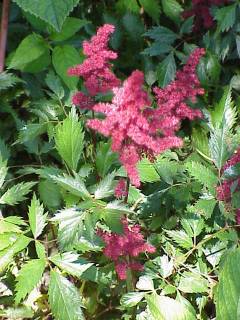
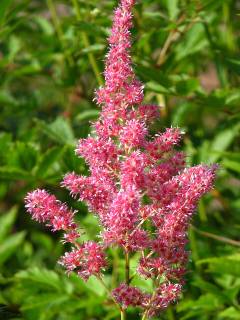
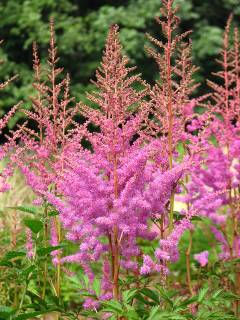
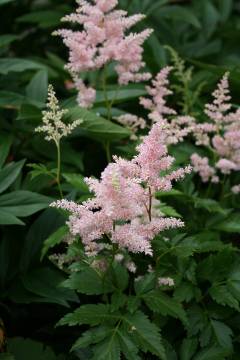
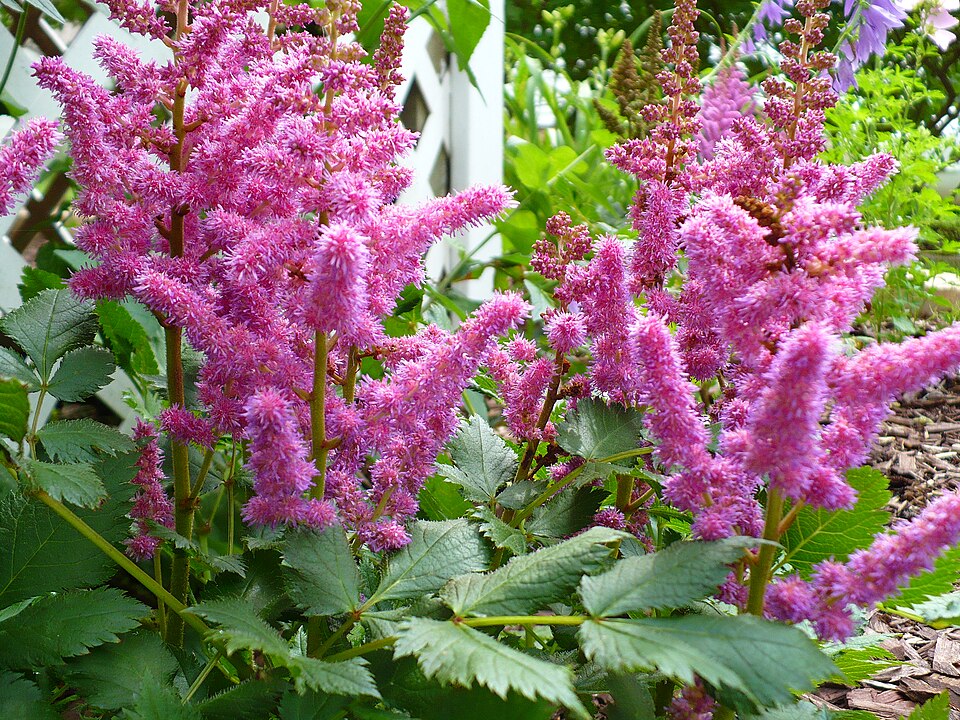
Astilbe chinensis 'Vision in Pink' is a compact Chinese astilbe from the Vision series that grows 16–20 inches (40–50 cm) tall and wide. Dense, upright plumes of soft pink to rose-pink florets appear from July through August above a mound of dark green, glossy ternately compound foliage. The Vision series was bred for compact stature, dense flower production, and improved drought tolerance compared to standard astilbe cultivars. While no astilbe is truly drought-tolerant, 'Vision in Pink' withstands brief dry periods that would cause immediate scorch in A. × arendsii hybrids. The 16–20 inch (40–50 cm) size suits this cultivar to front-of-border positions and containers where taller astilbes at 36 inches (90 cm) or more would be too large. Bronze-tinted new growth in spring transitions to dark green through summer. The dense plume form holds together more tightly than open-panicled astilbes, creating a concentrated color mass. Rhizome spread is moderate; clumps expand slowly and hold a compact shape for several years before benefiting from division. Dried plumes hold form through winter, turning bronze-brown. In full sun or dry soil, leaf scorch occurs and flower plumes are reduced in size. Deer avoid the foliage.
Native Range
The species Astilbe chinensis is native to China, Japan, and Korea. 'Vision in Pink' is from the Vision series, bred in the Netherlands for compact habit and improved garden performance.Suggested Uses
Planted at the front of shaded borders, along woodland paths, and in containers of 5 gallons (19 L) or more with moisture-retentive media. The compact form suits small shade gardens. Mass plantings of 5–7 give a concentrated pink display. Pairs with blue hostas, ferns, and white-flowered shade companions.How to Identify
Appearance
Size & Dimensions
Height1'4" - 1'8"
Width/Spread1'4" - 1'8"
Colors
Bloom Information
Flowering occurs in July and August. Dense, upright pink plumes open from the base upward over approximately 4 weeks. The compact plume form creates a concentrated color mass. Dried plumes persist through winter.
Detailed Descriptions
Flower Description
Soft pink to rose-pinkFoliage Description
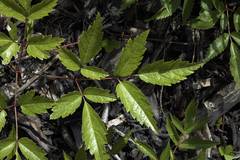
Dark green, glossy, ternately compound with bronze-tinted new growthGrowing Conditions
Sun Requirements
Requires 3-6 hours of direct sunlight daily
• Full Sun: 6+ hours of direct sunlight
• Partial Shade: 3-6 hours of direct sunlight
• Full Shade: Less than 3 hours of direct sunlight
Care & Maintenance
Care Guide
Plant in partial shade with 3–6 hours of filtered or morning light. Humus-rich, consistently moist soil supports the fullest plumes and healthiest foliage, though this cultivar tolerates brief dry spells better than most astilbes. Water regularly during the growing season. Mulch with 2–3 inches (5–8 cm) of organic material. Clumps can be divided every 3–4 years in spring. Dried plumes can be left for winter interest. No heavy fertilization is needed.Pruning
Dried flower plumes can be left standing through winter. All growth is cut to ground level in early spring before new shoots emerge. No other pruning is required.Pruning Schedule
Prune: March
early spring
Container Growing
Suitable for container growing
Minimum container size: 5 gallons