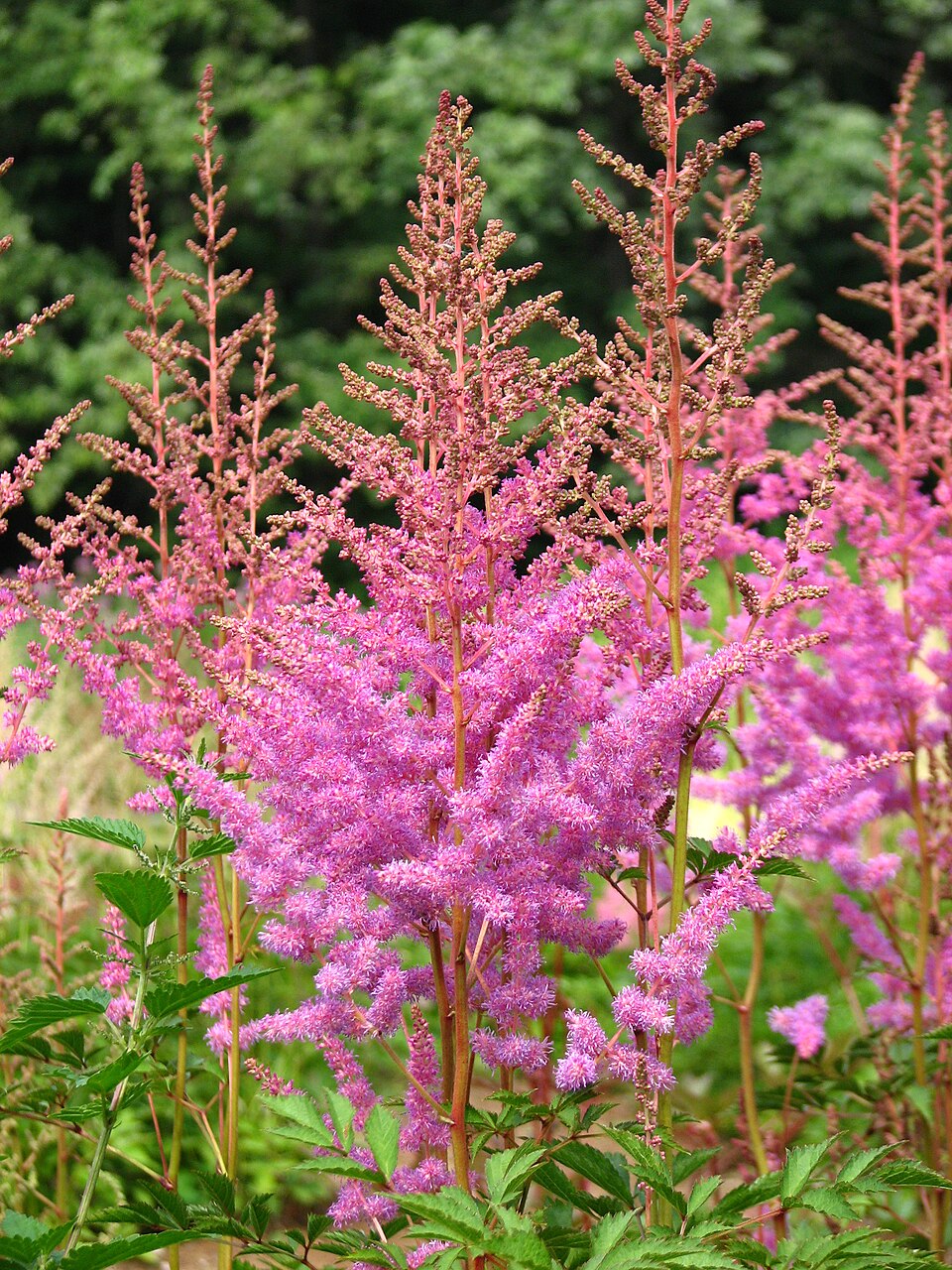
Astilbe, Genus, 'Amethyst', Cultivar,
- Genus
- Cultivar
amethyst astilbe
Overview
Astilbe 'Amethyst' is a clump-forming herbaceous perennial reaching 30-36 inches (75-90 cm) tall in bloom and forming dense clumps 24-30 inches (60-75 cm) wide from a fibrous rhizomatous crown. Plumed flower panicles measure 8-12 inches (20-30 cm) long and 3-4 inches (7.5-10 cm) wide at the base, carrying thousands of tiny lilac-purple to violet-amethyst flowers in feathery upright cones from late June through July. Foliage is glossy bronze-green when emerging in spring, maturing to dark green by mid-summer, with twice or thrice-pinnately divided compound leaves carrying serrated leaflets. The cultivar is part of the Astilbe × arendsii hybrid group developed by Georg Arends in Germany in the early 20th century, drawing parentage from A. chinensis, A. japonica, and A. thunbergii. Plants are hardy through USDA zones 4-8 and require consistent soil moisture; brief drought causes leaf-edge browning that does not recover until the following spring. Foliage is non-toxic to humans, dogs, and cats, and is rarely browsed by deer or rabbits due to its tough leathery texture. Spent flower plumes hold their dried form through autumn and winter, providing 4-6 months of structural interest after color fades to russet-brown. Crowns expand at 1-2 inches (2.5-5 cm) per year and benefit from division every 4-5 years to maintain bloom density.
Native Range
The Astilbe genus is native to mountain forests, stream banks, and shaded ravines across eastern Asia (China, Japan, Korea, Russia) and a small part of eastern North America (the Appalachian A. biternata). 'Amethyst' is a hybrid cultivar in the A. × arendsii group developed by Georg Arends in Ronsdorf, Germany in the early 20th century. The cultivar does not occur in the wild.Suggested Uses
Used in shade and woodland gardens, along stream banks and pond margins, and in mixed shaded borders spaced 24-30 inches (60-75 cm) apart, paired with companion plants such as Hosta, Hakonechloa macra, Brunnera macrophylla, and ferns for foliage contrast and consistent moisture preferences. Used as a mid-season replacement for fading shade perennials in plantings that have bloomed earlier in spring. Container culture is workable in 5-gallon (19 L) or larger containers in zones 4-8 with consistent water (twice-weekly summer irrigation), though long-term performance is stronger with in-ground placement.How to Identify
Appearance
Size & Dimensions
Height2'6" - 3'
Width/Spread2' - 2'6"
Bloom Information
Blooms from late June through July in zones 5-7, mid-June through early July in zones 8, and early to mid-July through early August in zones 4. Each established clump produces 8-15 flower stems with plumes opening from the base upward over 2-3 weeks; full plume color persists 14-21 days before fading to dried russet-brown. Cool nights below 65°F (18°C) extend plume color life by 5-7 days, while temperatures above 85°F (29°C) shorten color persistence. Bloom timing places 'Amethyst' in the mid-season Astilbe window, after early A. × japonica cultivars and before late-season A. chinensis 'Tacquetii' selections.
Detailed Descriptions
Flower Description
lilac-purple to violet-amethystFoliage Description
glossy bronze-green emerging, maturing to dark greenGrowing Conditions
Sun Requirements
Requires 2-4 hours of direct sunlight daily
• Full Sun: 6+ hours of direct sunlight
• Partial Shade: 3-6 hours of direct sunlight
• Full Shade: Less than 3 hours of direct sunlight
Care & Maintenance
Care Guide
Performs in part shade to full shade with 2-4 hours of morning sun and afternoon protection in zones 5-7, with full shade required in zones 8 where summer temperatures exceed 90°F (32°C). Soil should be deeply amended, moisture-retentive loam with pH 5.5-7.0 and high organic matter content; sandy soils dry too quickly to support consistent bloom. Watering needs are deep weekly soaks during the first growing season, continued throughout summer in years 2 and beyond — the genus does not tolerate drought, and brief dry spells cause irreversible leaf-edge browning. Apply 2-3 inches (5-7.5 cm) of leaf mold or composted bark mulch in autumn to maintain consistent soil moisture and protect crowns from frost heave. A balanced 5-10-10 fertilizer applied at 2 oz per square yard in early spring supports plume development and reduces foliage yellowing on alkaline soils. Powdery mildew in dry shade, root rot in waterlogged sites, and leaf-spot fungi are the main pressures, all reduced by adequate spacing of 24-30 inches (60-75 cm) and consistent moisture.Pruning
Spent flower plumes can be left in place through autumn and winter to provide structural dried interest and overwintering pollinator habitat, then cut at the base in early spring before new growth emerges. Foliage is left intact through autumn frost and cut back to 4 inches (10 cm) above the crown in late autumn or early spring. Clumps are divided every 4-5 years in early spring as new shoots emerge, splitting the crown into 4-fan sections for replanting at original soil depth.Pruning Schedule
Prune: March
early spring
Container Growing
Suitable for container growing
Minimum container size: 5 gallons
Toxicity
Non-toxicRelated Astilbe species
 Vision in pink Chinese astilbeAstilbe chinensis 'Vision in Pink'
 Vision in white Chinese astilbeAstilbe chinensis 'Vision in White'
 Fanal astilbeAstilbe × arendsii 'Fanal'
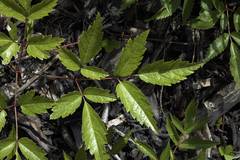 Deutschland astilbeAstilbe × japonica 'Deutschland'
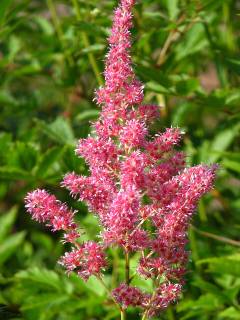 Rheinland astilbeAstilbe × japonica 'Rheinland'
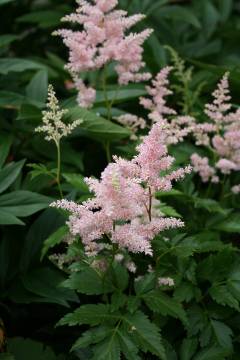 Japanese astilbeAstilbe japonica 'Europa'